


Japan’s oldest floral art school — Ikenobo — has 550 years of history. Ikenobo professor Kao Yi-hung has been teaching this form of floriculture in Taitung County for nearly two decades, using its methods to cultivate people’s minds and bring more peace and joy to their households.
Kao and her students are holding an Ikenobo floral exhibition at National Taitung Living Art Center to share the philosophies of Ikenobo with other people. The traditional art form is meant to nourish one’s inner beauty while simultaneously seeking out the highest possible floral beauty.
As a professor of the floral art form, Kao is part of the highest Ikenobo echelon in Taiwan, and apart from being a teacher she also serves as a judge for its official certification exam. Nearly 20 years ago she moved to Taitung with her husband for missionary work and effectively brought the art of Ikenobo to Taitung.
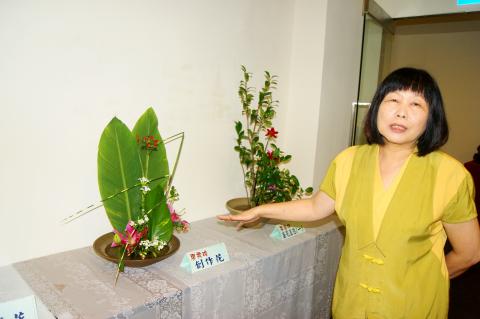
Photo: Huang Ming-tang, Liberty Times
照片:自由時報記者黃明堂
With its philosophical pursuits concerning aesthetic beauty and various schools of thought, floriculture is quite different from the commercial floristry typically seen at flower shops, Kao says. Ikenobo is Japan’s oldest school of floral art and a world-renowned floriculture school. Kao says that there are five main types of floral arrangement in Ikenobo, which are further split into subcategories. Students must be separated into different classes based on their prerequisite knowledge, starting from the basics and gradually reaching the highest floral art realm.
(Liberty Times, Translated by Kyle Jeffcoat)
日本「池坊」花藝已有五百五十年歷史,花藝教授高一紅引進台東推廣近廿年,習藝經花道陶治心性,家庭更和樂。
高一紅與門生正在台東生活美學館舉辦池坊花藝展,向外界推廣池坊的花藝哲學,在追求花美的同時,更注重內在美的培養。
高一紅在台灣池坊花藝界享有最高位階的花藝教授身分,不只從事教學,也具考核學員取得證照的裁判資格。她在近廿年前,隨夫到台東宣道,將池坊花藝帶進台東。
她說,花藝不同於一般花店的商用插花,它追求美及哲理,也有門派之分,源自日本的池坊就是世界知名且歷史悠久的門派,以插法共分五大法再往下細分,學員須按部就班,從基礎學起,才能在花藝逐步邁入更高意境。
(自由時報記者黃明堂)


You’re sitting in class when a classmate asks to borrow a pencil. It seems like a small favor, so you agree without hesitation. The following week, the same classmate asks to share your notes. Later, they request help with a group project. You agree each time — after all, you helped out the first time — but before you know it, it has become automatic. This scenario demonstrates the “foot-in-the-door technique,” a psychological concept that shows how agreeing to small, acceptable demands makes it easier to accept larger ones later on. The name for this strategy comes from door-to-door

A: The four-day Tomb Sweeping Day long weekend begins Friday and will run until Monday. Are you going to sweep your ancestors’ tombs? B: I did in advance last weekend, so I can go to Kaohsiung to see the musical “The Phantom of the Opera.” A: Wow, is “Phantom” touring Taiwan again? It debuted in 1986, so this year marks the 40th anniversary of the show. B: And it’s not just touring Kaohsiung starting March 31, but also Taipei starting April 21 and Taichung starting May 26. A: “Phantom” is one of the world’s Four Major Musicals. I’ve seen all of them, except “Les

A: Apart from the musical The Phantom of the Opera, off-Broadway classic “I Love You, You’re Perfect, Now Change” and musical-themed concert “Broadway Hits Live” are also touring Taiwan. B: Musical-themed concert? That sounds interesting. A: Set for April 18 and 19, the show will feature a group of Broadway vocalists and dancers — with British singer Keala Settle as a special guest. B: So the audience can enjoy all the timeless hits from various shows at one concert. . . I like that. A: And there’s more: Andrew Lloyd Webber’s classic musical Jesus Christ Superstar will finally visit Taiwan for the first time

Despite being a basic tool, pens come in a wide variety of forms. Classic styles include fountain pens, which deliver liquid ink smoothly through metal tips. Another common type is the ballpoint pen, which is easy to use. There are even special felt pens that are especially popular among artists. __1__ They have a small hole at the top. So why is it there in the first place? Could it actually be a design flaw? __2__ Since 1991, companies such as BIC have been producing ballpoint pens with holes in their caps for two main reasons: quality control


 RSS
RSS