


A bodybuilder who has set the record for the world’s biggest arms has dismissed accusations that he used banned or artificial substances.
Moustafa Ismail’s arms measure 79cm around — or as much as the waist of a lean man — earning him recognition in the 2013 edition of the Guinness World Records.
“They call me Popeye, the Egyptian Popeye,” said the 24-year-old. Unlike the cartoon character, however, he does not like spinach.

Photo: EPA
照片:歐新社
Ismail, who lives in Massachusetts, has been dogged by accusations that he uses steroids, implants or other artificial means to augment his muscles.
But he insists his arms are the result of punishing workouts and a diet of about 3kg of protein, 4kg of carbohydrates and 11 liters of water each day.
Still, Guinness appears to be having second thoughts.
It hastily removed references to Ismail from its Web site.
(Liberty Times)
一名締造全世界最粗手臂紀錄的健美先生,駁斥他使用禁藥或合成物的指控。
幕斯塔法.依斯梅爾的手臂周長達七十九公分—或說幾乎是一名纖瘦男子的腰圍—因此獲得二○一三年版金氏世界紀錄認證。
「我被稱為卜派,埃及版卜派,」這名埃及出生的二十四歲男子說,但跟卡通人物卜派不同的是,他並不喜歡吃菠菜。
目前住在麻薩諸塞州的依斯梅爾,一直飽受他使用類固醇、填充物或其他人工方式增大其肌肉指控的糾纏。
但他堅稱,他的手臂是歷經千辛萬苦的訓練,以及每天攝取約三公斤蛋白質、約四公斤碳水化合物,與十一公升水的飲食結果。
儘管如此,金氏世界紀錄顯然打算重新考慮(對依斯梅爾的認證)。
該機構網站已倉促撤下有關依斯梅爾的介紹。
(自由時報/翻譯:張沛元)
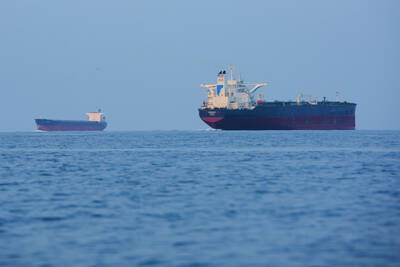
The US-Israeli war with Iran, which began on Feb. 28, has killed thousands of people, destabilized the Middle East and rocked global energy markets by effectively closing the strait. WHAT IS THE STRAIT OF HORMUZ? Lying between Oman and Iran and linking the Gulf north of it with the Gulf of Oman to the south and the Arabian Sea beyond, the strait is 33km wide at its narrowest point, with a shipping lane just 3km wide in either direction. Perhaps the world’s most important energy shipping channel, the waterway is about 167km long. Following through on an old threat, Tehran effectively closed the strait
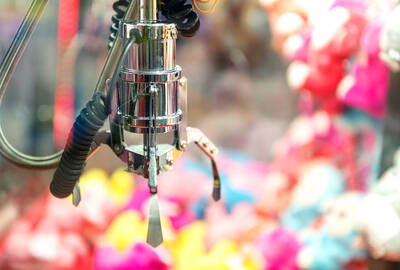
Have you ever found yourself desperately feeding coins into a claw machine just because you’ve already spent so much trying to win that stuffed animal? Or maybe you’ve continued watching a boring movie simply because you already paid for the ticket? If so, you’ve experienced the “sunk cost fallacy.” A sunk cost refers to time, money or effort that has already been spent and cannot be recovered. This psychological trap is surprisingly common. You might keep playing a video game you no longer enjoy because you’ve invested countless hours in building your character, or maintain a toxic friendship because you’ve known

A: Which TV drama series have been global hits so far this year? B: The US drama “Stranger Things 5,” South Korean drama “Can This Love Be Translated?” and Chinese megahit “Pursuit of Jade” are all popular lately. A: Isn’t “Pursuit of Jade” the costume idol drama about the romance between a charming marquis and a pig-slaughterer? Actor Zhang Linghe and actress Tian Xiwei are both so attractive. B: Plus, Netflix’s Korean-Japanese gay romance drama “Soul Mate” — starring Korea’s Ok Taec-yeon and Japan’s Hayato Isomura — is set to premiere in May. A: These hit international dramas

1. 他甚至還自認為是個了不起的領導人。 ˇ He even went so far as to think himself a great leader. ˇ He even went so far as to think of himself as a great leader. χ He even went so far as to think himself as a great leader. 註:認為某人或某事為何等樣人或何等樣事,可用 think+受詞+受詞補語,或 think of ... as ...,正句第一句比第二句普遍些。用了 of,後面用 as;沒有 of,就不可以用 as。又如: I thought him quite a joke. I thought of him as quite a joke. 2. 你不應該打擾他休息。 ˇ You should not intrude upon him during his time off. χ You should not intrude him during his time off. 註:intrude 作「闖進」、「打擾」、「侵入」解時,是不及物動詞,後面跟 upon。 3. 男孩正在玩陀螺。 ˇ The boy is playing with his top. χ


 RSS
RSS