


The first thing that comes to mind when talking about Taipei’s Neihu District may be the Neihu Technology Park, teeming with modern high-rise office buildings. That, however, is not the whole picture of Neihu. Admired for its beautiful mountain and lake scenery, Neihu is also home to several historical sites. Among them, the newly renovated Guo Ziyi Memorial Hall — formerly the Neihu Guo Family Estate, also known as Neihu’s “Red House” — has been officially open to the public since Feb. 3. It was established in honor of a Tang Dynasty statesman Guo Ziyi (697-781), known for his impressive feats 1,250 years ago.
Guo Ziyi — the ancestor of the world’s Guo (often spelled “Kuo” in Taiwan) clan — earned his fame for ending the An Shi Rebellion in 755 and other disturbances and served under four Tang emperors, namely the Xuanzong, Suzong, Daizong, and Dezong emperors. In 762, Guo was made Prince of Fenyang for his achievements. In addition, there is an anecdote about Guo Ziyi in a popular Peking opera titled “Hitting the Princess While Drunk,” which tells of the harmonious and intellectual relationship between him and the Daizong Emperor.
Built in 1917, the 130-ping (426.2m2) two-story Western-style red-brick house spreads out over a 360-ping (1,178m2) area. The roughly T-shaped building was decorated with washed terrazzo, earthen sculptures, colored tiles imported from Japan, and Baroque-style embellishments. The red bricks are larger (about 4 inches) and denser than those of today. The floors were made of wood and supported by a good number of fir wood beams. There were also painted beams for hanging traditional Taiwanese censers and lanterns. The windows on the front facade are in different shapes, and there is an arc-shaped balcony and a charming Baroque-style balustrade with charming curves on top of the wall. A statue of Guo Ziyi is placed in the main hall. A variety of historical documents are on display, including the Tang poet Li Bai’s poem in praise of the Prince of Fenyang, rubbings from Tang Dynasty tablets by the Prince of Fenyang, and other calligraphy works and paintings. In addition, Fenyang wine and miniature figurines of Guo Ziyi are sold in the hall.
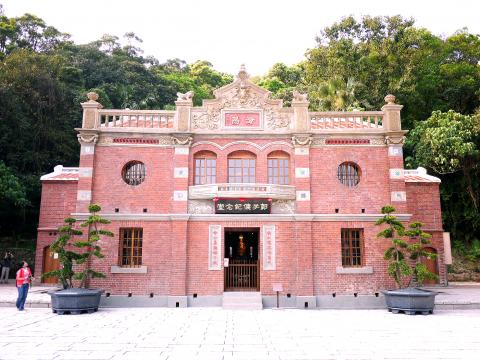
Photo: Lin Ya-ti, Taipei Times
照片:台北時報林亞蒂
The Guo Ziyi Memorial Hall was the home of the first Neihu Village mayor Kuo Hua-jang during the Japanese colonial era, and it was designated as a municipal historical heritage site by the Taipei City Government in 1999. Despite being designated as a historical site, the house continued to be neglected for more than a decade. Thank to the efforts of the World Guo’s Clan Association President Kuo Shih-chi, starting October, 2010, the house was given a year-long facelift by Guo Ching-po — another member of the Guo clan and a master craftsman specialized in the restoration work of historical sites. The total renovation cost was approximately NT$50 million. The World Guo’s Clan Association donated more than NT$30 million of these funds and the Taipei City Government provided more than NT$10 million. Today, the once dilapidated house is coming back to life once more, inviting people to appreciate the beauty of its architecture and soak up the ambience of times gone by. Admission to the Guo Ziyi Memorial Hall is free and the hall is closed every Monday. Address: 19, Ln 267, Wende Rd, Neihu District, Taipei. Tel: (02) 2659-8787.
(Lin Ya-ti, Taipei Times)
說到台北市內湖區,腦海可能會出現現代辦公大樓林立的內湖科技園區,但這並非內湖的全貌。好山好水的內湖,也富含人文古韻,坐擁多處古蹟,其中位於捷運文德站一號出口旁的小山丘上,就藏著一棟剛修建完成素有「內湖紅樓」之稱的內湖郭氏古宅,二月三日正式以「郭子儀紀念堂」之名對外開放,紀念唐朝軍事政治家郭子儀(西元六九七至七八一),在一千兩百五十年前的豐功偉績。
郭子儀是世界郭氏宗親先祖,曾平定西元七五五年的安史之亂以及諸多亂事,戰功彪炳,歷事唐朝玄、肅、代、德四帝,於西元七六二年被封為汾陽郡王。另外,中國民間戲曲有一齣膾炙人口的傳統曲目《醉打金枝》,即是講述唐代宗與郭子儀君臣之間相處圓融與智慧的趣聞軼事。
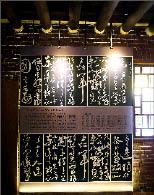
Photo: Lin Ya-ti, Taipei Times
照片:台北時報林亞蒂
這棟建於一九一七年以紅磚堆砌而成的一百三十坪(四百二十六點二平方公尺)兩層洋樓,占地三百六十坪(一千一百七十八平方公尺)。建築平面略呈T字形,有洗石子、泥塑、日本進口彩瓷,以及巴洛克繁飾。磚頭比起現代用的紅磚來得大(約四吋)且密度更高。室內樓板為木造,以眾多杉木木樑支撐,另外還有彩繪燈樑,可懸掛台灣傳統的天公爐與燈籠。正立面的窗子形式富變化,弧形陽台,山頭造型仿巴洛克風格,富捲草曲線之美。郭子儀像供奉在正廳,而周圍則展示著各式文物,包含唐朝詩人李白的《汾陽王贊》、唐代碑刻《汾陽王置寺表》拓本,以及各式書畫。除此以外,館內還販售汾陽酒與郭子儀迷你公仔。
「郭子儀紀念堂」原是內湖在日據時期首任庄長郭華讓的宅第,一九九九年被台北市政府列為市定古蹟,但這棟年久失修的古蹟,繼續被閒置十多年,直到二○一○年十月,在世界郭氏宗親總會理事長郭石吉的努力下,由古蹟匠師同時也是郭氏宗親的郭清波承攬修建工程,修復工程總共耗資新台幣五千萬元,其中郭氏宗親認捐三千多萬,而台北市政府則補助一千多萬。歷經一年多的修復努力,原來破舊不堪的古厝,如今再度被賦予生機,吸引民眾前來領略其建築之美、發思古之幽情。「郭子儀紀念堂」免費參觀,每週一休館。地址:台北市內湖區文德路二六七巷十九號。電話:(02) 2659-8787。
(台北時報記者林亞蒂)
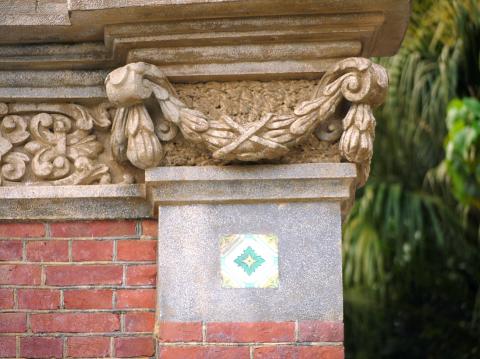
Photo: Lin Ya-ti, Taipei Times
照片:台北時報林亞蒂
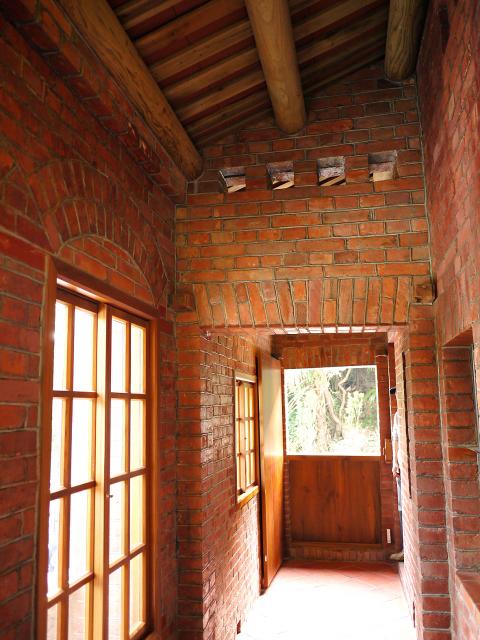
Photo: Lin Ya-ti, Taipei Times
照片:台北時報林亞蒂
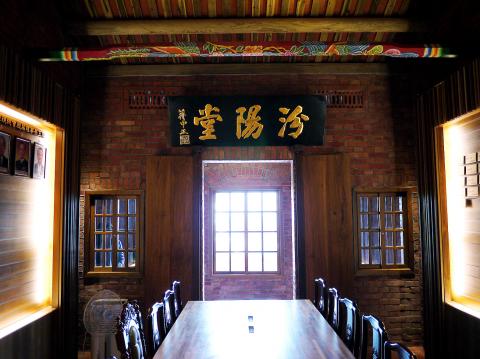
Photo: Lin Ya-ti, Taipei Times
照片:台北時報林亞蒂
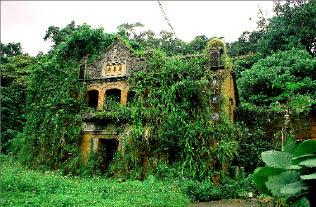
Photo: Perry Svensson, Taipei Times
照片:台北時報蘇沛

★ Bilingual Story is a fictionalized account. 雙語故事部分內容純屬虛構。 The fog came before the knock. It covered the street and pressed against the window. Chao Gung-dao lit a small oil lamp, but his makeshift hut stayed dim. Another knock. Chao opened the door. The inspector stepped inside and removed his hat. He did not smile. “You remember me?” the inspector said. Chao resented the question. The inspector looked around the small room. His eyes stopped on a wooden box resting on a low beam above Chao’s head. “What is that?” Chao stayed silent. The inspector pulled the box down and
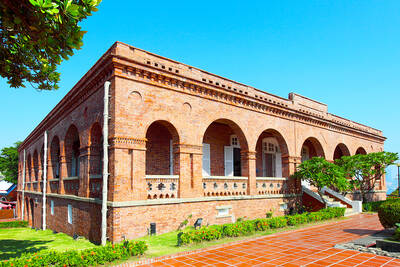
★ 本文由生成式 AI 協作,本刊編輯編修。 For tourists looking for a scenic way to spend an afternoon in Kaohsiung, heading to the British Consular Residence of Takao is the perfect choice. Its elevated position allows one to take in the bustling Kaohsiung Harbor to the east and the dazzling sunset over Sizihwan Bay to the west. This elegant red-brick building also serves as a portal to the city’s rich history. Interestingly, for 70 years, many people mistakenly identified this residence as the actual consulate. The history of “Takao,” the former name of Kaohsiung, began its international chapter in the mid-19th century. As European powers

Every February, the US observes Black History Month, a time dedicated to recognizing the contributions, experiences, and achievements of African Americans. The tradition began in 1926, when historian Carter G. Woodson proposed a national week to promote the teaching of Black history in schools. He deliberately chose the second week of February to honor the birthdays of Abraham Lincoln and Frederick Douglass, two figures held in high esteem by the Black community for their roles in ending slavery. In 1976, the initiative expanded into a month-long observance, with then US president Gerald Ford urging Americans to acknowledge the accomplishments of
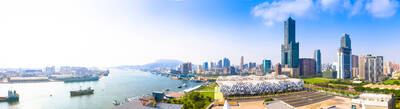
★ 本文由生成式 AI 協作,本刊編輯編修。 Continued from yesterday(延續自昨日) https://www.taipeitimes.com/News/lang Kaohsiung’s deep connection with the sea continues to thrive, with Kaohsiung Harbor remaining a crucial hub for global shipping. In addition to the port, the city has emerged as a major player in another world-class maritime industry—yacht manufacturing, responsible for producing 80 percent of all Taiwan-made yachts. The yacht industry in Taiwan originated in the post-World War II era, when the US military presence in Taiwan provided local boat builders with guidance on making wooden yachts. The resulting craftsmanship was so exquisite that orders soon poured in. In 1977, Taiwan replaced Canada as the main yacht


 RSS
RSS