


A sense of transformation has been in the air in Greater Kaohsiung ever since the World Games were held there in 2009. Residents have stopped focusing on issues such as labor movements, industrial migration, or the relocation of Chinese Petroleum Corp. Instead, they are talking about going to concerts at the Kaohsiung Arena, attending lawn concerts of the Kaohsiung Spring Arts Festival, visiting the Kaohsiung Design Exhibition at the Pier-2 Art Center, and getting early-bird tickets for the Kaohsiung Film Festival. The vibrant cultural and arts scene is giving the younger generation cause to believe that the city is getting ever closer to its goal of being the city of happiness.
According to Kaohsiung Bureau of Cultural Affairs Director-General Shih Che, a survey showed that people in the 20 to 29 age bracket are under the greatest pressure from work, compared to those from all other age groups. These people — mostly recent graduates or newbie parents — have high hopes for their future, but are also discovering that this is the toughest time in terms of developing their careers. People in this age group, however, tend to know what they are about, and are often outspoken critics of the government. If these people are satisfied with what the city government is doing, then it shows that they are happy with the food, fashion, housing, transport, entertainment, and leisure facilities in the city.
The survey serves as confirmation that the city government’s efforts are paying off, and is very encouraging to local performing arts groups such as the Kaohsiung City Ballet, Spring Wind Art Theater, Taiwan Drama Performance, Sun Hope Taiwanese Opera Troupe, Counterpoint Chamber Music, Fan Mei Dance Company, Firefly Theatre, and others, all of which have been seeing much larger audiences and higher box office takings in recent years.
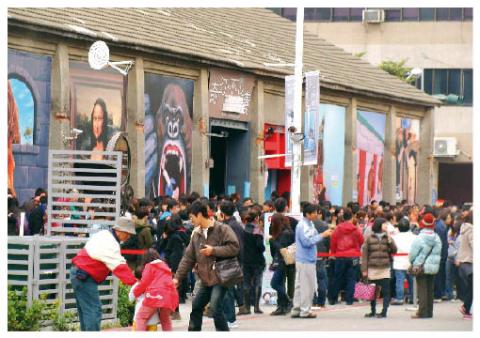
Photo: Yang Ching-ching, Taipei Times
照片:自由時報記者楊菁菁
International-level exhibitions on view at the Kaohsiung Museum of Fine Arts have included works by Andy Warhol, Pixar Animation, the Bauhaus movement, Amedeo Modigliani, and Alfons Mucha. These exhibitions have achieved the most successful attendance records in the museum’s history. The Pier-2 Art Center draws a huge crowd, especially during winter and summer vacations, but also on other holidays. Greater Kaohsiung’s burgeoning development not only attracts visitors from abroad, it also provides a model for other cities and counties in Taiwan to follow.
(LIBERTY TIMES, TRANSLATED BY LIN YA-TI)
高雄從二○○九世界運動會開始嗅到蛻變氣息!民眾話題不再鎖定勞工運動、產業外移或是中油遷廠等,而是討論著高雄巨蛋聽演唱會、春天藝術節草地音樂會、駁二特區設計展、高雄電影節早鳥票等。豐富多元的藝文展演,讓新世代深刻感受到高雄朝著幸福城市生活目標邁進。
文化局長史哲表示,一份問卷調查顯示,二十至二十九歲年齡層是人生面臨工作壓力最大的階段,多半是社會新鮮人或新手爸媽,對人生期許很高,但也是最打拚艱苦的期間。這個年齡層相對主張自我,會對施政有諸多批評。因此這群人對於市府團隊滿意度高,顯示高雄城市生活品質獲得肯定,食、衣、住、行、娛樂、休閒各方面需求獲得滿足。
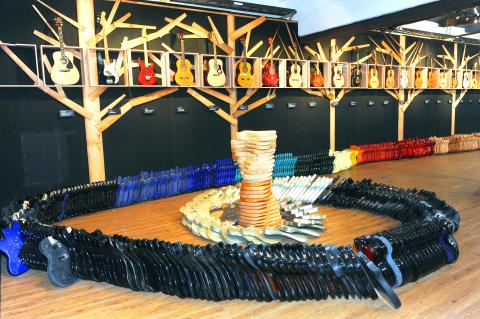
Photo: Chang Chung-yi, Taipei Times
照片:自由時報記者張忠義
這項問卷調查肯定市府團隊努力,也鼓舞高雄藝文展演團體信心,高雄城市芭蕾舞團、南風劇團、台灣戲劇表演家、尚和歌仔戲、對位室內樂團、汎美舞蹈團、螢火蟲劇團等表演藝術團體,也感受到這幾年來觀眾群增加及市場票房熱潮。
美術館幾檔國際特展:安迪‧沃荷、皮克斯動畫、包浩斯、亞美迪歐‧莫迪里亞尼、阿爾豐斯‧慕夏也創下開館來新高,駁二特區寒暑假及假日強強滾的人潮。高雄迅速發展的經驗不僅吸引國內外旅客到訪,更成為外縣市取經的範本。
(自由時報記者楊菁菁)
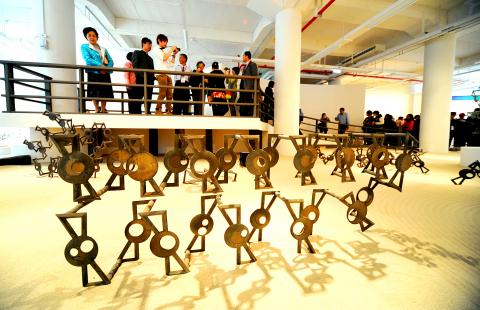
Photo: Chang Chung-yi, Taipei Times
照片:自由時報記者張忠義
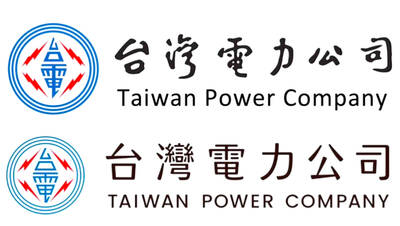
The debate surrounding Taipower’s recent corporate identity reboot has gone well beyond the design community. The controversy began after Taipower replaced the familiar “Taiwan Power Company” wording — widely regarded as the calligraphy of Yu You-ren (1879-1964), former Control Yuan president and master calligrapher — with a modern logotype by designer Aaron Nieh’s team, Aaron Nieh Workshop. Taipower said the change was not a wholesale replacement of old signage, but an “optimization of its identity system,” aimed at meeting the needs of digital media, electronic bills, apps, social media graphics and various small-format applications. Existing physical markings, such as building

Since 2005, the third Monday in January has come to be known as “Blue Monday.” In other words, that day is believed to be the most depressing day of the year. This concept seems logical at first. After all, Monday marks the start of the school or workweek after two days of rest and fun. Also, blue is a color that is often associated with sadness. Furthermore, in many parts of the world, January is a time when the weather is cold, rainy, and gloomy. But is there any scientific proof that this January day is truly sadder than any of

Continued from yesterday(延續自昨日) https://www.taipeitimes.com/News/lang For the most part, the idea of “Blue Monday” has been rejected as a myth. Some mental health experts also say there is a danger in labeling a certain day as the most depressing time of the entire year. Some argue that if people expect to feel sadder on the third Monday in January, this belief alone may increase their anxiety. One group that is worried about the negative effect of believing in Blue Monday is Samaritans. A mental health charity based in the UK, Samaritans is working to turn Blue Monday into “Brew Monday.” In this

1. 他兩天後回來。 ˇ He will return in two days. χ He will return after two days. 註︰從現在開始,說「多久以後」,應該用 in,不用 after,例如: He plans to finish the work in three months. I am sure we will hear from him in a few days. 請注意 in a few days、in three months 許多人誤以為是「幾天內」、「三個月內」,其實是「幾天後」、「三個月後」。 如指「某個時刻或日期或事件以後」,可用 after。例如: I will be back after four o’clock.(或 after 4 August,或 after lunch)。 2. 他要在那牆上開一扇門。 ˇ He wants to put a door in that wall. χ He wants to put a door on that wall. 註︰門不是掛在牆上,也不是靠在牆上,而是開在牆裡,應該用 in。 比較下列各句: There is a painting on the wall. Why is that plank of wood leaning against the wall? The thief made a hole in the wall. 3. 我在報上看到這個消息。 ˇ I


 RSS
RSS