


A robot that accompanied rock band Mayday on their world tour earlier this year has been put to new use as part of a beautification project at Wanhua’s Park No. 406. The robot and other decorations, such as balloon birds, fairies and multicolored driftwood have transformed the dilapidated and gloomy historical site into a vibrant park.
The exhibit’s most eye-catching feature is a six-story-high Transformers-style robot. The robot, known as “Transformer DNA,” is no ordinary robot. It accompanied Mayday on their world tour, but when the tour was over it wasn’t turned into scrap. Instead it stands in this park which was almost completely forgotten about, symbolizing dreams and hope.
Wanhua’s Park No. 406 is located at the intersection of Zhonghua Road and Changsha Street on the site of the old Nishi-Hongan Temple, but years of neglect have left the site dilapidated and lighting in the area is poor. Locals don’t go near the place, saying it’s “a ruin by day, and haunted by night.”
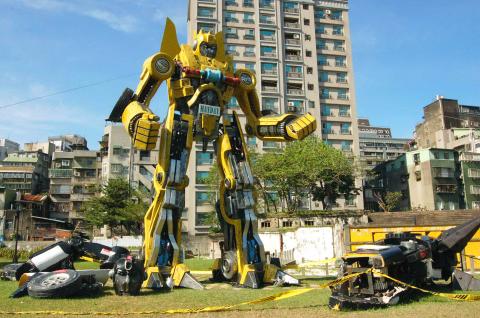
PHOTO: CHIU SHAO-WEN 照片:自由時報記者邱紹雯
Park No. 406 is scheduled for renovation next year, but in the meantime it will play host to a “Majestic Art Supply” exhibition. The exhibitions are run by the Taipei City Department of Cultural Affairs and Taipei Museum of Contemporary Art, and are aimed at connecting the public with the city’s historical buildings.
According to authorities, the Majestic Art Supply exhibitions will run until the end of February. On public holidays, there are plans to hold a flea market, small music shows, and handicraft activities to engage the public and turn the haunted house into a family park.
(LIBERTY TIMES, TRANSLATED BY TAIJING WU)
今年陪同五月天樂團進行世界巡迴演唱會的一個機器人,最近重新利用,進駐「萬華406號廣場」美化環境;機器人與其他裝飾品,如氣球鳥、藝術精靈、七彩漂流木,將殘破、陰森的古蹟園區變成繽紛樂園。
展區中最引人注目的就是身高有六層樓高的「變形金剛」,這個名為「變形DNA」的機器人來頭不小,曾在今年陪同五月天樂團進行世界巡迴演唱會,隨著演唱會結束,它沒有成為破銅爛鐵。現在它站立在幾乎被遺忘的公園,代表夢想與希望。
「萬華406號廣場」位於台北市中華路一段與長沙街交叉口,為市定古蹟「西本願寺」的遺址。但多年來欠缺整體規劃、殘破不堪,加上夜間照明不足,被當地居民形容,「白天像廢墟,晚上像鬼屋」,沒人敢靠近。
「萬華406號廣場」預計明年才會重新整建,在此之前,北市文化局與當代藝術館策劃「氣象萬千Art Supply」公共藝術展,提前注入藝術活水,拉近古蹟與民眾的距離。
當局表示,「氣象萬千Art Supply」藝術展將展至明年二月底
,假日也將規劃創意市集、小型音樂表演、手繪創作活動,與民眾互動,讓「鬼屋」也能成為親子樂園。
(自由時報記者邱紹雯)
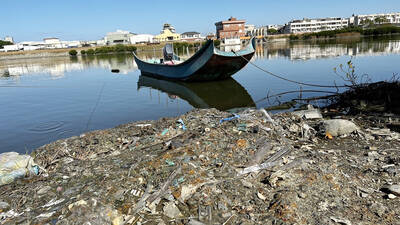
Many consumers are guilty of filling drawers or closets with old laptops, cellphones, fitness trackers and other electronic devices once they are no longer needed. It’s hard to know where to recycle such items, or it seems costly and inconvenient to do so. The world generates millions of tons of electronic waste — also called e-waste — each year. According to the UN’s most recent estimate, people worldwide produced 62 million metric tons of e-waste in 2022, and only about 22 percent of it was properly recycled. The US’ Environmental Protection Agency estimates that less than a quarter of e-waste is
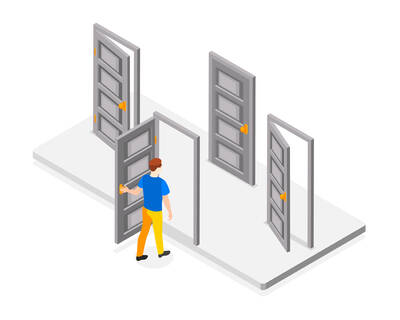
You’re sitting in class when a classmate asks to borrow a pencil. It seems like a small favor, so you agree without hesitation. The following week, the same classmate asks to share your notes. Later, they request help with a group project. You agree each time — after all, you helped out the first time — but before you know it, it has become automatic. This scenario demonstrates the “foot-in-the-door technique,” a psychological concept that shows how agreeing to small, acceptable demands makes it easier to accept larger ones later on. The name for this strategy comes from door-to-door
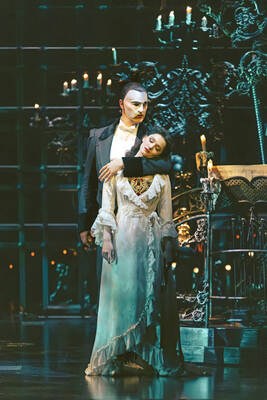
A: The four-day Tomb Sweeping Day long weekend begins Friday and will run until Monday. Are you going to sweep your ancestors’ tombs? B: I did in advance last weekend, so I can go to Kaohsiung to see the musical “The Phantom of the Opera.” A: Wow, is “Phantom” touring Taiwan again? It debuted in 1986, so this year marks the 40th anniversary of the show. B: And it’s not just touring Kaohsiung starting March 31, but also Taipei starting April 21 and Taichung starting May 26. A: “Phantom” is one of the world’s Four Major Musicals. I’ve seen all of them, except “Les

Dos & Don’ts — 想想看,這句話英語該怎麼說? 1. 我們很早到達電影院。 ˇ We arrived at the theater very early. χ We arrived the theater very early. 註︰arrive 為不及物動詞,後面如果有受詞要用 at 或 in。例如:They arrived in Taipei yesterday.。一般大地方,如國家、省、大城市等前面用 in,凡小地方城鎮、學校等則用 at。 2. 開車半小時以後,我們到達了海灘。 ˇ After half an hour’s drive, we got to the beach. χ After half an hour’s drive, we got the beach. 註︰come, go, get(來、去、到達)某地時,在表示地點的名詞前面應該用 to,如 go to school, go to Taipei, come to Shanghai 等。如果這些動詞後面所跟的是 here, there, home 等副詞,則不用 to。 3. 明天我會回辦公室。 ˇ I will be back in the office tomorrow. χ I will be back to office tomorrow. 註︰to be back 一語裡的 back 是副詞,不是介詞,所以後面要用 at (the market) 或 in (the office)。 假如假期結束,要回學校上課了則可說: ? Kids will be back


 RSS
RSS