


Week 24 詞法—名詞
1. 人們一致稱讚他。
ˇ People praised him unanimously.

Photo: AdobeStock l 圖片:AdobeStock
χ Peoples praised him unanimously.
註:people 作「人們」(= men and women)解時,是單數形式,作複數用。peoples 是「多個民族」、「各國人民」,不是「多數人」,如 the peoples of Asia(亞洲各民族、亞洲人民)。
2. 她為他做了一條新褲子。

Photo: Adobe Stock l 圖片:Adobe Stock
ˇ She made him a new pair of trousers.
χ She made him a new trousers.
註:scissors 和 trousers 等名詞習慣用複數形式。「一把剪刀」或「一條褲子」正統說法為 a pair of scissors 或 a pair of trousers。
3. 我們提前兩年完成了第二個五年計劃的主要目標。
ˇ We fulfilled the major objectives of the Second Five-Year Plan two years ahead.
χ We fulfilled the major objectives of the Second Five-Years Plan two years ahead.
註:five-year 作為一個複合形容詞,year 不用複數。又如 a twelve-year-old boy、a five-dollar note、a one-hundred-meter race 等,也是一樣。
4. 他們決定買一輛新車。
ˇ They have made up their minds to buy a new car.
χ They have made up their mind to buy a new car.
註:make up their (/our) minds 中,用 minds 比用 mind 普遍。
5. 經過幾年的自學,他獲得不少知識。
ˇ After studying several years on his own, he acquired a great deal of knowledge.
χ After studying several years on his own, he acquired a great deal of knowledges.
註:knowledge 屬不可數名詞,很少用複數形,但可和 a 連用,後接 of。例如: He has a good knowledge of the English language.
Exercises:
A. We watched a thrilling ________ race yesterday.
1. hundred-meters 2. hundred-meter
3. hundreds-meter 4. hundred meters
2. I felt a great deal ________ excitement before the trip.
1. of 2. for
3. at 4. To
Answers: A. 2 B. 1
文章由書林出版公司提供:
www.bookman.com.tw
蘇正隆 — 台灣翻譯學學會前理事長、師大翻譯研究所兼任副教授; 編著《走讀自然.花言樹語》,《英語的對與錯》,《世紀病毒:必讀防疫英文知識與詞彙》...等。國家教育研究院中英雙語詞彙審議委員;研究領域為翻譯、術語及詞典編譯,從事植物與人文導覽數十年,亦曾應邀遠赴國外大學做植物人文導覽。
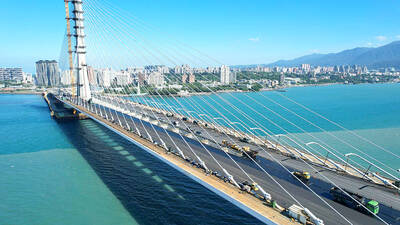
A: The Danjiang Bridge in New Taipei City is to open on May 12, and the MRT Sanying Line (Light Blue Line) will also open in June. Isn’t that great? B: Is that the bridge connecting the city’s Tamsui and Bali Districts? What’s so special about this new landmark spanning the Tamsui River? A: The Danjiang Bridge will become the world’s longest-span single-mast asymmetric cable-stayed bridge — with a total river-crossing section of 920 meters and main span of 450 meters. B: The news says there are sidewalks and bike lanes on both sides. Watching the sunset from the
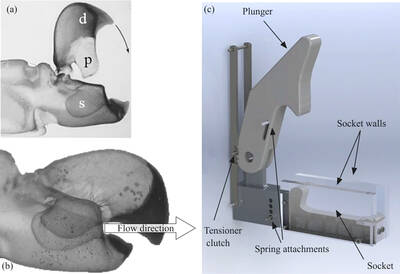
Few sea creatures of their size have as much destructive power as pistol shrimp. These small animals, usually measuring around four centimeters long, produce shock waves that can stun or even kill their prey. The attack begins when the shrimp opens its specialized claw, allowing water to fill a chamber inside. Then the claw closes rapidly. A bump on the claw strikes the chamber, forcing the trapped water out through a narrow opening at a high speed of about 25 meters per second. The rapid movement forms a bubble in the water that collapses almost instantly under the pressure of the

★ Bilingual Story is a fictionalized account. 雙語故事部分內容純屬虛構。 Rain hammered the roof in hard, uneven bursts. “Hold him still!” Baosheng pressed one hand against the stranger’s brow as the man twisted on the wooden bed. His left eye was swollen shut. The right one burned red like a coal. “It feels like fire,” the man gasped. “Like something is clawing inside.” Thunder rolled across the mountain. Baosheng leaned closer. The man’s skin was cold, but heat rose from his face. A strange smell hung in the air. He began the four methods of diagnosis: looking, listening/smelling,

In the dense forests of Tanzania, a young researcher sat quietly among the trees, her gaze fixed on a troop of chimpanzees. It was 1960, and Jane Goodall, armed with nothing but a notebook and endless curiosity, was about to change science forever. Inspired by childhood stories like the Dr. Dolittle series, she had dreamed of Africa — and now, thanks to the encouragement of anthropologist Louis Leakey, she was there, face-to-face with the wild. What Jane discovered shocked the world. Chimpanzees weren’t mere creatures of instinct; they were individuals with emotions, families, and even the capacity for tool


 RSS
RSS