


Home to the Andes mountains, the world-famous Lake Titicaca and splendid rain forests, Bolivia is a unique country with a fascinating history and vibrant culture. Come take a closer look at Bolivia.
坐擁安地斯山脈、舉世聞名的提提喀喀湖與豐沛雨林,玻利維亞擁有豐富的歷史與活躍文化。讓我們一同來探索玻利維亞。
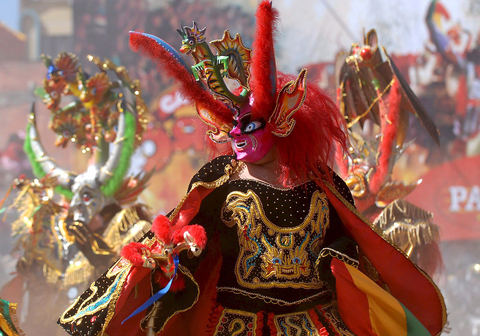
PHOTO: EPA
A closer look 說古論今
The west of Bolivia is mountainous while the eastern lowlands have stunning rain forests. The country has been settled for around 13,000 years. The area saw the rise and fall of the Tiwanakan and Incan empires.
Two American Indian groups, the Aymara and the Quechua, are still the two largest ethnic groups and make up more than half of the country's population.
The Spanish invaded the area that later became Bolivia in the 1520s as part of their conquest of the Incan empire. Spain began mining large amounts of silver from the country. The Aymara, Quechua and other Native Americans were used as labor in these efforts. Spain left important, lasting influences: most of Bolivia is Roman Catholic and Spanish is the first language of 80 percent of the population, though native
languages still thrive.
Bolivians declared independence in 1809, but the battle lasted until 1825, when the Republic of Bolivia was established. The early history of the country was rocky, seeing wars with several neighbors. Bolivia is landlocked because it lost its coastal access in a war with Chile in the 1879 War of the Pacific.
Bolivia is the second poorest country in the Western hemisphere, but it is rich in silver, iron, magnesium and natural gas. Two in three people are subsistence farmers.
The most famous festival in Bolivia is the Carnaval de Oruro, which sees dancing, costumes and musical performances. Football and foosball are common pastimes.
玻利維亞西部多山,東部低地多豐沛雨林,整個地區已開發約一萬三千年,目睹蒂瓦納庫帝國與印加帝國的興衰起落。
阿依馬拉族與克丘亞族兩支印第安部族仍是境內兩大族群,佔逾半數人口。
西班牙在一五二○年代打敗印加帝國,侵略這塊後來成為玻利維亞的土地,開採境內大批銀礦。阿依馬拉族、克丘亞族與美洲其他原住民多淪為開採勞工。西班牙留下深遠的影響︰玻利維亞多為羅馬天主教徒,有八成人口講主要語言西班牙語,但本土方言依舊盛行。
玻利維亞在一八○九年宣布獨立,但抗爭直到一八二五年才建立玻利維亞共和國,早期的歷史紛擾不斷,與鄰國戰事連連。一八七九年,玻利維亞在太平洋戰爭中對智利戰敗,喪失海岸地區,成為內陸國。
玻利維亞是西半球第二貧窮的國家,但銀、鐵、鎂礦與天然氣礦產豐富。三分之二的人口為僅能維生的農人。
玻利維亞最富盛名的節日為奧魯洛嘉年華會,舞蹈、服裝與音樂表演隨處可見。足球與手足球為常見消遣。(翻譯︰賴美君)
WHO KNEW? 你知道嗎?
A major Bolivian crop is the coca leaf. People there chew it, somewhat like betel nut is chewed in Taiwan. It is also used in rituals, medicine and other products. For example, the traditional way to ask someone to marry you is to take a coca leaf to him or her. The leaf is also used as a tea for altitude sickness.
However, since coca leaves are used to make the illegal drug cocaine, the United States (where much of that cocaine goes) pushes a "zero coca" policy.
Coca farmers do not wish to make farming the leaf illegal. They would like to see coca made a legal export so it can be used in creams and other products. The final status of coca will probably not be decided for a long time.
玻利維亞主要的農作物為古柯葉。當地人嚼食這種葉子,跟台灣人嚼的檳榔有點類似。古柯葉也應用於儀式、醫藥與其他產品。例如,傳統的求婚方式就是拿一片古柯葉給對方。古柯葉也可拿來泡茶治療懼高症。
然而,由於古柯葉能用來製造非法的古柯鹼,美國(古柯鹼主要輸入國)遂推動「零古柯」政策。
古柯葉農民不希望種植這種植物變成非法行為,而是希望可以合法出口古柯葉,將之應用於乳製品與其他產品。最後該如何定奪古柯葉的命運,可能要歷時良久。
A LOOK AT CONTEXT 思前想後猜字義
1. Mining coal is very dangerous work, because the underground shafts can collapse while digging because the air gets dirty.
To mine means ...
a. to create in a lab.
b. to dig into and take out of the ground.
c. to crush into the ground.
d. to fill a hole in the ground with something.
2. The most expensive thing for the school is labor. After all, how could we do anything without teachers, principals, cooks and janitorial staff?
Labor is ...
a. anything that is very expensive.
b. the group of people who work.
c. the number of people who cry.
d. something that's cheaper than dirt.
3. Nantou is a landlocked county in Taiwan. If you want to see a beach, you'll have to go somewhere else.
Landlocked means ...
a. surrounded by water.
b. surrounded by locks.
c. surrounded by land.
d. without access to land.
4. The money my grandpa saved for retirement only provides a bare subsistence. After he buys his food and pays his rent, he has nothing left.
Subsistence means ...
a. minimal resources for maintaining life.
b. excessive resources for enriching life.
c. expending resources to maximize fun.
d. destroying resources as punishment.
ANSWERS: 1.b 2. b 3. c 4. a
WHAT TIME IS IT THERE? 現在那裡幾點?
Bolivia is 12 hours behind Taiwan, so if it is 4:30pm in Taiwan, it is 4:30am in Bolivia.
玻利維亞較台灣晚十二小時。假如台灣現在是下午四點三十分,玻利維亞就是早上四點半。
ABOUT BOLIVIA 國家概況
Size: 1,098,581 km2, about 31 times the size of Taiwan
Location: South America
Border countries: Brazil, Paraguay, Argentina, Chile, Peru
Capital: La Paz
Population: about 8.9 million
Languages: Spanish, Quechua, Aymara
Government: Republic
Currency: 1 Boliviano = NT$4.1
面積︰一百零九萬八千五百八十一人,約為台灣三十一倍
位置︰南美洲
鄰國︰巴西、巴拉圭、阿根廷、智利、祕魯
首都︰拉巴斯
人口︰約八百九十萬人
語言︰西班牙語、克丘亞語及阿依馬拉語
政體︰共和政體
貨幣︰一玻利維亞諾等於新台幣四點一元
FLAG 國旗
The Bolivian flag of today has been in use since Bolivia's independence was declared in 1825, but it only became the official flag in 1888. Article one of the flag law says the red stripe stands for patriotic bloodshed, the green for nature and the yellow for hope.
今日的玻利維亞國旗自一八二五年宣布獨立起即採用,但在一八八八年才正式列為國旗。國旗法第一條寫著,紅色條紋象徵愛國烈士的鮮血,綠色象徵自然,黃色則象徵希望。
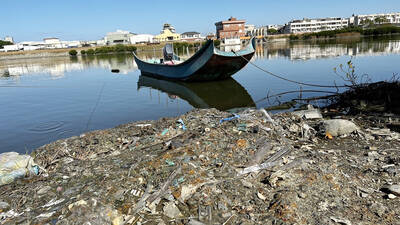
Many consumers are guilty of filling drawers or closets with old laptops, cellphones, fitness trackers and other electronic devices once they are no longer needed. It’s hard to know where to recycle such items, or it seems costly and inconvenient to do so. The world generates millions of tons of electronic waste — also called e-waste — each year. According to the UN’s most recent estimate, people worldwide produced 62 million metric tons of e-waste in 2022, and only about 22 percent of it was properly recycled. The US’ Environmental Protection Agency estimates that less than a quarter of e-waste is
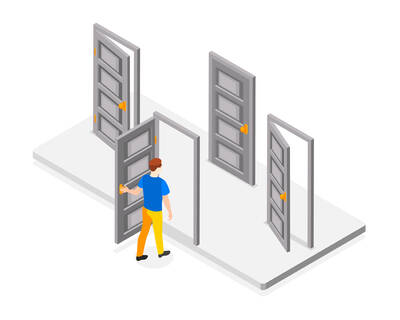
You’re sitting in class when a classmate asks to borrow a pencil. It seems like a small favor, so you agree without hesitation. The following week, the same classmate asks to share your notes. Later, they request help with a group project. You agree each time — after all, you helped out the first time — but before you know it, it has become automatic. This scenario demonstrates the “foot-in-the-door technique,” a psychological concept that shows how agreeing to small, acceptable demands makes it easier to accept larger ones later on. The name for this strategy comes from door-to-door

A: The four-day Tomb Sweeping Day long weekend begins Friday and will run until Monday. Are you going to sweep your ancestors’ tombs? B: I did in advance last weekend, so I can go to Kaohsiung to see the musical “The Phantom of the Opera.” A: Wow, is “Phantom” touring Taiwan again? It debuted in 1986, so this year marks the 40th anniversary of the show. B: And it’s not just touring Kaohsiung starting March 31, but also Taipei starting April 21 and Taichung starting May 26. A: “Phantom” is one of the world’s Four Major Musicals. I’ve seen all of them, except “Les

對話 Dialogue 清清:這禮拜又有連假了,這次一共放四天。 Qīngqing: Zhè lǐbài yòu yǒu liánjià le, zhè cì yígòng fàng sì tiān. 華華:你是要過兒童節還是清明節? Huáhua: Nǐ shì yào guò Értóng jié háishì Qīngmíng jié? 清清:都要過啊!不管幾歲,都要有童心,才能永遠都年輕,知道嗎? Qīngqing: Dōu yào guò a! Bùguǎn jǐ suì, dōu yào yǒu tóngxīn, cái néng yǒngyuǎn dōu niánqīng, zhīdào ma? 華華:好啦!能當個長不大的孩子也好,就不會有那麼多煩惱了。 Huáhua: Hǎo la! Néng dāng ge zhǎngbúdà de háizi yě hǎo, jiù bú huì yǒu nàme duō fánnǎo le. 清清:還好春天有這兩個節假日,常常可以變成連假休息一下。 Qīngqing: Háihǎo chūntiān yǒu zhè liǎng ge jiéjiàrì, chángcháng kěyǐ biànchéng liánjià xiūxi yíxià. 華華:對啊!上禮拜我已經先跟家人去掃墓了,就怕清明節當天人太多。 Huáhua: Duì a! Shàng lǐbài wǒ yǐjīng xiān gēn jiārén qù sǎomù le, jiù pà Qīngmíng jié dāngtiān rén tài duō. 清清:親人雖然過世了,但有清明節掃墓的習俗,讓我們在不同的世界還是能「聚」一下、說說話,真的很有意義。 Qīngqing: Qīnrén suīrán guòshì le, dàn yǒu Qīngmíng jié


 RSS
RSS