


It has soft lights, gleaming red and blue surfaces and a relaxing video of bubbles swirling underwater that plays on the wall.
This isn't a fancy hotel; it's Europe's most expensive public restroom.
The super-restroom, which opened earlier this month in Berlin, is the latest word in modern architecture. It has an elevator and a 24-hour reception, and it costs .50 euros (about NT$20) to use.
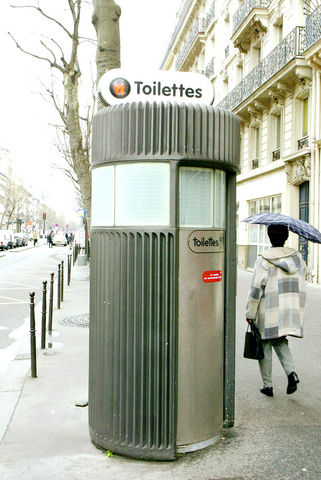
PHOTO: AFP
There are five bathrooms for men and five for women. Each has air-conditioning and relaxing music.
Hans Wall, the German businessman who built the bathroom, said it cost him 750,000 euros to build, but it was worth it. "I'm very pleased with it. It's been done with love, intelligence and the best of German design. ... It's an oasis from the outside world. Everything is clean and hygienic. You feel refreshed after using it. The mayor of London should pay us a visit and see how it can be done."
The area where the restroom is located used to be run down, but new stores are improving it. "This place used to be full of drug addicts. It was very dark. I didn't fancy using it much. I was worried about being robbed," said Wolfgang Gellesch, 62, who works near there. "Now the facilities are excellent. It's a symbol of the new Germany."
The underground restroom opened just weeks before Germany hosts the World Cup, with thousands of visitors expected to visit the capital.
Berlin's government has thanked Mr Wall for his work by offering him free advertising space. (Guardian)
燈光柔和;外觀閃爍著紅藍光點;牆上播放泡泡在水裡打轉的輕鬆影片。
這不是高級旅館,它是歐洲最昂貴的公共廁所。
這間「頂級公廁」本月稍早在柏林啟用,是現代建築的最新產物,有升降設備和二十四小時服務處,使用費零點五歐元(約新台幣二十元)。
內設男女廁各五間,有冷氣和輕鬆的音樂。
德國建商漢斯*華爾表示公廁造價七十五萬歐元,不過很值得。他說:「我感到非常開心,它融合了愛、智慧和德國最頂級的設計,是戶外的綠洲。所有設備乾淨衛生,如廁後神清氣爽,倫敦市長應該來拜訪觀摩。」
公廁所在區域曾經破敗髒亂,不過新商店進駐後情況有改善。今年六十二歲,在附近工作的沃夫甘*蓋勒奇說:「這裡以前很陰暗,到處都是毒蟲,因為怕被搶我根本不敢上公廁,現在的設備很棒,是新德國的象徵。」
今年世界盃足球賽由德國主辦,這間地下公廁於開賽前幾週啟用,預計將有成千上萬名觀光客遊訪首都柏林。
柏林市府提供華爾先生免費廣告空間以表感謝之意。
(衛報/翻譯:鄭湘儀)
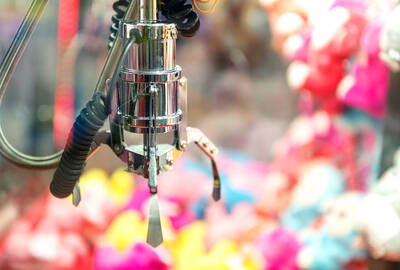
Have you ever found yourself desperately feeding coins into a claw machine just because you’ve already spent so much trying to win that stuffed animal? Or maybe you’ve continued watching a boring movie simply because you already paid for the ticket? If so, you’ve experienced the “sunk cost fallacy.” A sunk cost refers to time, money or effort that has already been spent and cannot be recovered. This psychological trap is surprisingly common. You might keep playing a video game you no longer enjoy because you’ve invested countless hours in building your character, or maintain a toxic friendship because you’ve known

A: Which TV drama series have been global hits so far this year? B: The US drama “Stranger Things 5,” South Korean drama “Can This Love Be Translated?” and Chinese megahit “Pursuit of Jade” are all popular lately. A: Isn’t “Pursuit of Jade” the costume idol drama about the romance between a charming marquis and a pig-slaughterer? Actor Zhang Linghe and actress Tian Xiwei are both so attractive. B: Plus, Netflix’s Korean-Japanese gay romance drama “Soul Mate” — starring Korea’s Ok Taec-yeon and Japan’s Hayato Isomura — is set to premiere in May. A: These hit international dramas
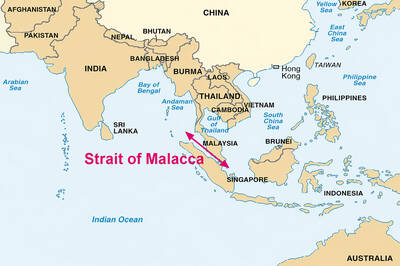
The closure of the Strait of Hormuz has forced policymakers in Asia to face questions over the security of other maritime chokepoints, including the Strait of Malacca, which is the world’s busiest waterway for international trade. WHAT IS THE MALACCA STRAIT? The 900km long Malacca Strait, bounded by Indonesia, Thailand, Malaysia and Singapore, provides the shortest sea route from East Asia to the Middle East and Europe. It carries nearly 22 percent of the world’s maritime trade, according to the Center for Strategic and International Studies (CSIS). This includes oil and gas shipments from the Middle East to the energy-hungry economies of China,
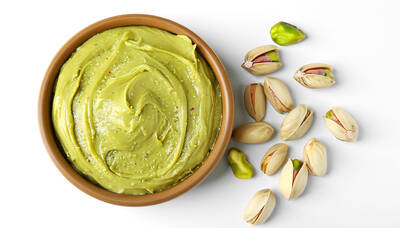
It seems like every year, new foods or drinks start trending and suddenly show up everywhere. A decade ago, avocado __1__ restaurant menus, while oat milk became the must-have addition to your coffee in cafes around five years back. The latest trend to hit this list is the pistachio. This flavorful green nut now features in everything from chocolate bars to Indian curries. While pistachios have long played a central role in certain regional cuisines, their recent global __2__ can be traced to Dubai. There, a specialty chocolate shop went __3__ on TikTok for one of its chocolate bars


 RSS
RSS