


Malaysia's highest court has decided that two young people accused of kissing and hugging in a public park can be taken to court for "indecent behavior."
The federal court in the mainly Muslim nation made the decision in a hard-fought case involving Ooi Kean Thong, 24, and Siow Ai Wei, 22.
According to city hall officials, the couple were caught hugging and kissing in August, 2003 in a park at the well-known Twin Towers in Kuala Lumpur.

PHOTO: AFP
The students have said they were accused of indecent behavior when they refused to bribe two city hall officials, who have denied asking for bribes.
Their lawyer argued that hugging and kissing were expressions of love that should be encouraged, and that city hall had no right under Malaysia's constitution to take the couple to court for indecency.
But federal court Chief Justice Ahmad Fairuz Sheikh Abdul Halim said such behavior was not the norm for Malaysians.
"So they should be given freedom to live as they like? The constitution allows all citizens to do that (hugging and kissing) even by the roadside, in (a) public park?" he said.
"In England, those acts are acceptable to the people in that country, but is kissing and hugging acceptable to Malaysian citizens? Is the act according to the morality of the Asian people?"
Ooi and Siow will now be taken to court for indecency at Kuala Lumpur's city hall's court. If they are found guilty, they could be fined up to 2000 ringgit (NT$17,600), jailed for up to a year or both. (AFP)
馬來西亞最高法院決議,將以「行為不端」的罪名起訴兩名在公園接吻擁抱的年輕人。
這個以回教為主的國家之聯邦法院就這件難纏的案子做出決議。案件當事人是二十四歲的黃建通與二十二歲的蕭愛薇(音譯)。
市政府官員指出,這對情侶二○○三年八月在吉隆坡著名的雙子星塔旁公園被逮到正在擁抱接吻。
這兩名學生曾表示,由於他們拒絕賄賂兩位市府官員,所以遭指控行為不端。這兩位官員已否認要求行賄。
這對情侶的律師表示,接吻擁抱是愛意的表達,應該受到鼓勵,依馬來西亞憲法市政府無權以行為不端的名義讓這對情侶接受審判。
不過聯邦法院的首席大法官阿默德.哈能表示,這樣的行為並非馬來西亞人的準則。
他說:「所以,他們應該被賦予為所欲為的自由?憲法允許人民在路邊、在公園做這種事(接吻擁抱)了嗎?」
「在英國,大眾可以接受這些行為,但是馬來西亞的國民可以接受親吻擁抱嗎?這樣的行為符合亞洲人的道德觀嗎?」
黃建通與蕭愛薇目前因行為不端在吉隆坡市政府法院接受審訊。假如他們獲判有罪,可能被處以兩千元馬幣(新台幣一萬七千六百元)罰金或一年以下有期徒刑,也可能兩者並行。
(法新社/翻譯:賴美君)
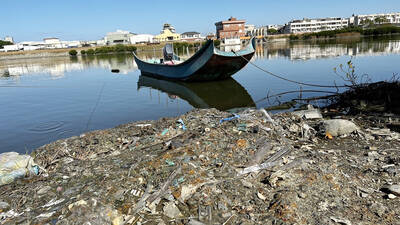
Many consumers are guilty of filling drawers or closets with old laptops, cellphones, fitness trackers and other electronic devices once they are no longer needed. It’s hard to know where to recycle such items, or it seems costly and inconvenient to do so. The world generates millions of tons of electronic waste — also called e-waste — each year. According to the UN’s most recent estimate, people worldwide produced 62 million metric tons of e-waste in 2022, and only about 22 percent of it was properly recycled. The US’ Environmental Protection Agency estimates that less than a quarter of e-waste is
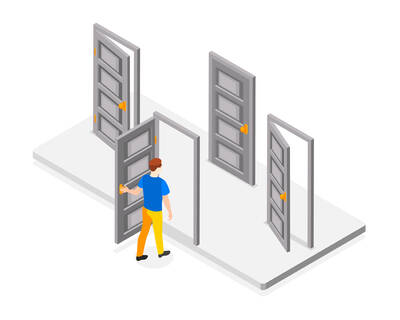
You’re sitting in class when a classmate asks to borrow a pencil. It seems like a small favor, so you agree without hesitation. The following week, the same classmate asks to share your notes. Later, they request help with a group project. You agree each time — after all, you helped out the first time — but before you know it, it has become automatic. This scenario demonstrates the “foot-in-the-door technique,” a psychological concept that shows how agreeing to small, acceptable demands makes it easier to accept larger ones later on. The name for this strategy comes from door-to-door

A: The four-day Tomb Sweeping Day long weekend begins Friday and will run until Monday. Are you going to sweep your ancestors’ tombs? B: I did in advance last weekend, so I can go to Kaohsiung to see the musical “The Phantom of the Opera.” A: Wow, is “Phantom” touring Taiwan again? It debuted in 1986, so this year marks the 40th anniversary of the show. B: And it’s not just touring Kaohsiung starting March 31, but also Taipei starting April 21 and Taichung starting May 26. A: “Phantom” is one of the world’s Four Major Musicals. I’ve seen all of them, except “Les

Dos & Don’ts — 想想看,這句話英語該怎麼說? 1. 我們很早到達電影院。 ˇ We arrived at the theater very early. χ We arrived the theater very early. 註︰arrive 為不及物動詞,後面如果有受詞要用 at 或 in。例如:They arrived in Taipei yesterday.。一般大地方,如國家、省、大城市等前面用 in,凡小地方城鎮、學校等則用 at。 2. 開車半小時以後,我們到達了海灘。 ˇ After half an hour’s drive, we got to the beach. χ After half an hour’s drive, we got the beach. 註︰come, go, get(來、去、到達)某地時,在表示地點的名詞前面應該用 to,如 go to school, go to Taipei, come to Shanghai 等。如果這些動詞後面所跟的是 here, there, home 等副詞,則不用 to。 3. 明天我會回辦公室。 ˇ I will be back in the office tomorrow. χ I will be back to office tomorrow. 註︰to be back 一語裡的 back 是副詞,不是介詞,所以後面要用 at (the market) 或 in (the office)。 假如假期結束,要回學校上課了則可說: ? Kids will be back


 RSS
RSS