


On the morning of April 5, Japan came under the rule of a new prime minister, Yoshiro Mori -- man of no special distinction. His election was granted, generally, by yawns.
Of course, his appointment came as a result of an extraordinary event -- the incapacitation of his predecessor, Keizo Obuchi, who lies in a coma in a Tokyo hospital after suffering a stroke. It is too early to tell whether he will ever be able to enter the political world again -- or indeed if he will be able to survive the coming weeks. According to official reports he has been on a respirator for several days, and according to experts, even if he does survive the ordeal, it is likely he will be left with severe disabilities.
The tragedy of Japanese politics lies not, of course, in the fact that the prime minister collapsed. It was a tragic event, certainly, but one that could -- and has -- taken place in other countries as well. The tragedy is that he was replaced by a man who stands out only in the fact that he -- like Obuchi, in fact -- lacks any luster as a leader. When Obuchi was elected prime minister in 1998, one American commentator likened him to a "cold pizza" -- a label that stuck.
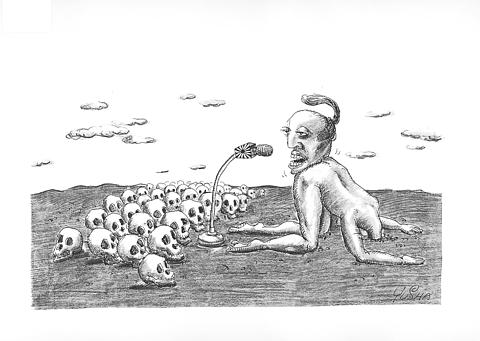
This stands in striking contrast to other countries in Asia and Europe as well where dramatic changes have taken place over the last several decades. In England, the long rule of the Conservative party ended with the victory of Tony Blair. In Germany, "King Kohl" gave way to the Social Democratic Party. In the Asian region, the Philippines have elected a series of non-establishment figures; from Corazon Aquino to Ramos to Estrada, Kim Dae Jung won the presidency of South Korea after a long struggle as an underdog, and in Taiwan the long-ruling KMT was beaten in the recent presidential election by a man who had once worked as a lawyer for political dissidents. Not to mention, of course, that Suharto was essentially overthrown in Indonesia, with power eventually drifting to a man who was once a political dissident. Things are not so different in Europe and Asia -- people demand change.
It is an embarrassment, by contrast, that in Japan, the only Asian country to be a member of the select countries of the G-8, the rule of the Liberal Democrats has continued, nearly uninterrupted, for almost half a century. There were a couple of years of coalition government without the LDP, for sure, and in recent years the LDP has been forced to rule by coalition, but the unfortunate reality is that politics are decided not by popular vote but rather by consensus building within a small group of leaders.
The Obuchi Crisis
The political crisis that followed Obuchi's hospitalization showed just how true this was. The government has been severely criticized for handling the crisis in the particular way it did, meaning hiding the true condition of the prime minister for some 22 hours.
It is no mystery why this happened. During that day, as the prime minister lay in a coma, perhaps near death, the core members of the LDP and its coalition partners were debating the issue of succession. And in particular, they were discussing the delicate issue of how to choose a candidate who would offend nobody. Hence the choice of Mori.
Why this tremendous care? Though the LDP is by far the most powerful party in the Japanese Diet, it has lost some of its once indomitable power over the last decade, and at present is unable to rule effectively without coalition partners. Under Prime Minister Obuchi, it managed to build a coalition, which included the Buddhist party called New Komei, a party which in reality is very much under the control of the religious group Soka Gakkai. And this is a key issue, for if the LDP selected a new prime minister who was not amenable to New Komei, it would risk losing that party's support and with it a majority in the Upper House of the Diet.
Future Predictions
So what is in store for the Japanese political world? Mori is really no more than a shadow of Obuchi. Both men are united more than anything else by their lack of conviction, and even lack of original ideas. Neither Obuchi nor Mori, though both have held important posts, is remembered for ever coming up with some important policy initiative. Rather, they are both "mediators" -- men who are good at gathering coalitions.
What this means, then, is that it is unlikely Japan will deviate from its current course of rule by consensus. The unpredictable factor, of course, is the fact that general elections will have to be held by October at the latest. There is a chance -- a likelihood, in fact -- that the LDP's position will weaken even further, and there is even some possibility of a split within the party. If this happens, the landscape of Japanese politics may radically change.
However, another scenario seems quite possible as well. The LDP may decide to call the general elections sometime in May, before the Okinawa G8 Summit, with the hope of cashing in on some sympathy votes for the ailing ex-prime minister. If the liberal democrats can pull together enough votes through this maneuver, then things may go on unchanged -- with Japan remaining, along with North Korea, China, Singapore and Malaysia -- one of the handful of Asian countries where political change does not occur, where the will of the voters is essentially untested.
But this is not an inevitability. Analysts have pointed to two conflicting factors in the upcoming general elections. One will be, inevitably, the sympathy vote for Obuchi. But on the other hand, many, many voters are leery of New Komei, and may vote against the LDP simply as punishment for having aligned themselves with the controversial Soka Gakkai. This could lead, potentially, to a split in the liberal democrats and a coalition between some of them and the Democratic Party, now under the leadership of Yukio Hatoyama. If this happens, it could be a sea change for Japan's political world -- similar to what has happened in South Korea, Indonesia, and Taiwan. But the timing of the elections is still vague, and it is too early to tell. One thing is clear, however; the Mori administration is just another slice of cold pizza.
Jens Wilkinson is managing editor of The New Observer(www.twics.com/~anzu/index.html), a Tokyo-based monthly of news and opinion.

PROVOCATIVE: Chinese Deputy Ambassador to the UN Sun Lei accused Japan of sending military vessels to deliberately provoke tensions in the Taiwan Strait China denounced remarks by Japan and the EU about the South China Sea at a UN Security Council meeting on Monday, and accused Tokyo of provocative behavior in the Taiwan Strait and planning military expansion. Ayano Kunimitsu, a Japanese vice foreign minister, told the Council meeting on maritime security that Tokyo was seriously concerned about the situation in the East China and South China seas, and reiterated Japan’s opposition to any attempt to change the “status quo” by force, and obstruction of freedom of navigation and overflight. Stavros Lambrinidis, head of the EU delegation to the UN, also highlighted South China Sea

SILENCING CRITICS: In addition to blocking Taiwan, China aimed to prevent rights activists from speaking out against authoritarian states, a Cabinet department said The Ministry of Foreign Affairs (MOFA) yesterday condemned transnational repression by Beijing after RightsCon, a major digital human rights conference scheduled to be held in Zambia this week, was abruptly canceled due to Chinese pressure over Taiwanese participation. This year’s RightsCon, the world’s largest conference discussing issues “at the intersection of human rights and technology,” was scheduled to take place from tomorrow to Friday in Lusaka, and expected to draw 2,600 in-person attendees from 150 countries, along with 1,100 online participants. However, organizers were forced to cancel the event due to behind-the-scenes pressure from China, the ministry said, expressing its “strongest condemnation”
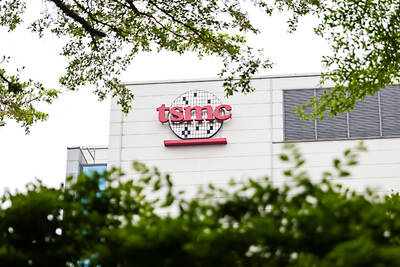
Taiwan Semiconductor Manufacturing Co (TSMC, 台積電), the world’s largest contract chipmaker, said it expects its 2-nanometer (2nm) chip capacity to grow at a compound annual rate of 70 percent from this year to 2028. The projection comes as five fabs begin volume production of 2-nanometer chips this year — two in Hsinchu and three in Kaohsiung — TSMC senior vice president and deputy cochief operating officer Cliff Hou (侯永清) said at the company’s annual technology symposium in Silicon Valley, California, last week. Output in the first year of 2-nanometer production, which began in the fourth quarter of last year, is expected to
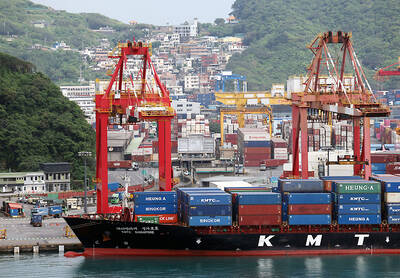
Taiwan’s economy grew far faster than expected in the first quarter, as booming demand for artificial intelligence (AI) applications drove a surge in exports, spilling over into investment and consumption, the Directorate-General of Budget, Accounting and Statistics (DGBAS) said yesterday. GDP growth was 13.69 percent year-on-year during the January-to-March period, beating the DGBAS’ February forecast by 2.23 percentage points and marking the most robust growth in nearly four decades, DGBAS senior official Chiang Hsin-yi (江心怡) told a news conference in Taipei. The result was powered by exports, which remain the backbone of Taiwan’s economy, Chiang said. Outbound shipments jumped 51.12 percent year-on-year to


 RSS
RSS