


It is the end of 1989: British Prime Minister Margaret Thatcher enjoying her last Christmas in power, George Bush snugly ensconced in the White House, the Berlin Wall lying in rubble, the Iron Curtain a tattered shroud for communism.
This, we were told, was the end of history. The Cold War was over and the good guys had won. If the 1980s had been a long slog for final victory, the 1990s would be the decade in which free marketeers would enjoy their triumph. Announcing his new world order, Bush said: "We know what works: free markets work."
Ten years on, the idea that free markets are the answer to everything has lost its luster. Far from ushering in a decade of universal peace and prosperity, the year of revolutions in 1989 has been followed by a series of ever-more potent financial crises, growing concern about the unfettered power of big business and a political backlash against the parties of the right. Fittingly, the decade ended with tear-gas billowing through the streets of Seattle as police and protesters clashed violently during talks aimed at launching a new round of trade liberalization negotiations. Not much sign of Bush's new world order there.

Illustration: Mountain People
Yet, in a sense, the laissez-faire warriors of the 1980s have had their victory. Electorates have turned to parties of the center-left to protect them from some of the consequences of free-market economics only to find that Bill Clinton's Democrats and Tony Blair's New Labor have accepted many of the reforms pushed through by Ronald Reagan and Margaret Thatcher. Neither would quibble with Lady Thatcher's famous dictum: "You can't buck the market."
In Britain and the US the course of the economy in the 1990s has been similar to that of the 1980s -- a grinding recession at the beginning of the decade followed by a long period of strong growth with low inflation. Unemployment in Britain is at its lowest for almost 20 years; the jobless total in the US is back to levels not seen since the 1960s. But on both sides of the Atlantic deep scars from the past quarter-century remain -- pockets of extreme poverty, high levels of inequality and signs everywhere of Galbraith's mixture of private affluence and public squalor.
Moreover, the two main Anglo-Saxon economies are likely to face downturns early in the next decade. Their economies are unbalanced, they suffer from excess consumption, and both are in the midst of asset-price booms. Japan, which at the end of the 1980s was touted as the next economic superpower, has spent the 1990s struggling to escape the recession caused by the pricking of its stock market bubble.
The vulnerability of economies -- even large economies -- to periods of instability and turbulence has been exacerbated by the capricious power of the financial markets. This has been displayed with savage regularity in the 1990s, starting with the day (Black Wednesday) in 1992 when Britain was blown out of the exchange rate mechanism by George Soros and his fellow speculators.
In retrospect, Black Wednesday was a political and economic turning point for the UK, ensuring the defeat of the Conservatives at the 1997 election and laying the foundations for recovery by allowing interest rates and the pound to fall.
The following year the markets took on the rest of the ERM. At the end of 1994 it was the turn of Mexico, and in 1997 the guns were turned on the tiger economies of Asia.
Up until the point in early July 1997 when the Thai government was forced to devalue the baht, the Pacific rim was seen as a textbook example of economic dynamism. As the dominoes toppled -- Malaysia, Indonesia, South Korea -- there was something of a reassessment.
Those on the right who had praised the tigers for their low government spending and their minimal welfare states now said they were guilty of crony capitalism. The idea that there might be something inherently unstable about trillions of dollars churning endlessly through the global market without let or hindrance was not contemplated.
By 1998, there were the first rumblings of discontent. Russia, a testing ground for a giant experiment in laissez-faire, was next to suffer. While it had taken several centuries in the West to develop the institutional framework for a market economy and 200 years for it to mature, the former Soviet Union was supposed to make the transition overnight. The result, predictably, was not instant economic nirvana but falling living standards, uncollected taxes, corruption and the law of the gun. In the summer of 1998, the Kremlin had had enough. It decided to stop playing by the one-sided rules of the international markets and defaulted on its debts.
Markets everywhere fell precipitously, and the search began for alternatives. In Malaysia, the Mahathir government introduced capital controls; the Hong Kong, administration effectively nationalized part of the stock market to ease pressure on the currency; in New York, that bastion of laissez-faire the Federal Reserve organized a bail-out for capitalism's biggest-ever lame duck, the hedge fund Long-Term Capital Management.
The rediscovery of Keynesian macro-economic policies by the Fed and other central banks prevented stock markets from going into freefall and, indeed, ensured a rapid recovery to new heights in London and on Wall Street.
Whether this will continue remains to be seen. The 1990s have been America's belle epoque, with economic and technological supremacy reasserted, but Japan has had a dismal decade and Europe has been struggling with the austerity packages imposed by the terms of entry into the single currency.
In the short term, the pressing questions will be whether monetary union can thrive after a difficult first year, whether Japan will respond to the latest fiscal package, and whether the US economy can continue to defy gravity.
In the longer term, however, the real issue is whether an economic system that is endemically unstable and causes chronic inequality can survive in its present form. The events of the past two years, culminating in Seattle, suggests that it can't.

PROVOCATIVE: Chinese Deputy Ambassador to the UN Sun Lei accused Japan of sending military vessels to deliberately provoke tensions in the Taiwan Strait China denounced remarks by Japan and the EU about the South China Sea at a UN Security Council meeting on Monday, and accused Tokyo of provocative behavior in the Taiwan Strait and planning military expansion. Ayano Kunimitsu, a Japanese vice foreign minister, told the Council meeting on maritime security that Tokyo was seriously concerned about the situation in the East China and South China seas, and reiterated Japan’s opposition to any attempt to change the “status quo” by force, and obstruction of freedom of navigation and overflight. Stavros Lambrinidis, head of the EU delegation to the UN, also highlighted South China Sea

SILENCING CRITICS: In addition to blocking Taiwan, China aimed to prevent rights activists from speaking out against authoritarian states, a Cabinet department said The Ministry of Foreign Affairs (MOFA) yesterday condemned transnational repression by Beijing after RightsCon, a major digital human rights conference scheduled to be held in Zambia this week, was abruptly canceled due to Chinese pressure over Taiwanese participation. This year’s RightsCon, the world’s largest conference discussing issues “at the intersection of human rights and technology,” was scheduled to take place from tomorrow to Friday in Lusaka, and expected to draw 2,600 in-person attendees from 150 countries, along with 1,100 online participants. However, organizers were forced to cancel the event due to behind-the-scenes pressure from China, the ministry said, expressing its “strongest condemnation”
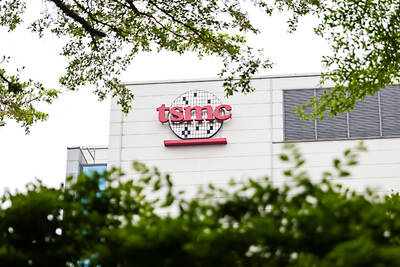
Taiwan Semiconductor Manufacturing Co (TSMC, 台積電), the world’s largest contract chipmaker, said it expects its 2-nanometer (2nm) chip capacity to grow at a compound annual rate of 70 percent from this year to 2028. The projection comes as five fabs begin volume production of 2-nanometer chips this year — two in Hsinchu and three in Kaohsiung — TSMC senior vice president and deputy cochief operating officer Cliff Hou (侯永清) said at the company’s annual technology symposium in Silicon Valley, California, last week. Output in the first year of 2-nanometer production, which began in the fourth quarter of last year, is expected to
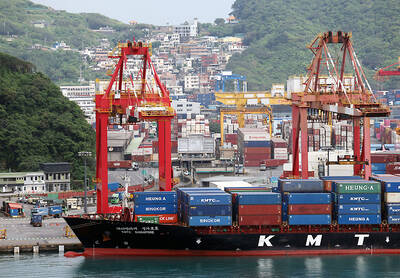
Taiwan’s economy grew far faster than expected in the first quarter, as booming demand for artificial intelligence (AI) applications drove a surge in exports, spilling over into investment and consumption, the Directorate-General of Budget, Accounting and Statistics (DGBAS) said yesterday. GDP growth was 13.69 percent year-on-year during the January-to-March period, beating the DGBAS’ February forecast by 2.23 percentage points and marking the most robust growth in nearly four decades, DGBAS senior official Chiang Hsin-yi (江心怡) told a news conference in Taipei. The result was powered by exports, which remain the backbone of Taiwan’s economy, Chiang said. Outbound shipments jumped 51.12 percent year-on-year to


 RSS
RSS