


A South Korean court yesterday handed former president Yoon Suk-yeol a 30-year prison sentence for sending drones into North Korea to “manufacture” a crisis ahead of his disastrous martial law bid.
The military drone flights two months before Yoon suspended civilian rule in 2024 had sparked anger in Pyongyang, which also accused the South of dropping propaganda leaflets.
Yoon is already in detention while he appeals a separate life sentence for leading an insurrection with his martial law declaration.
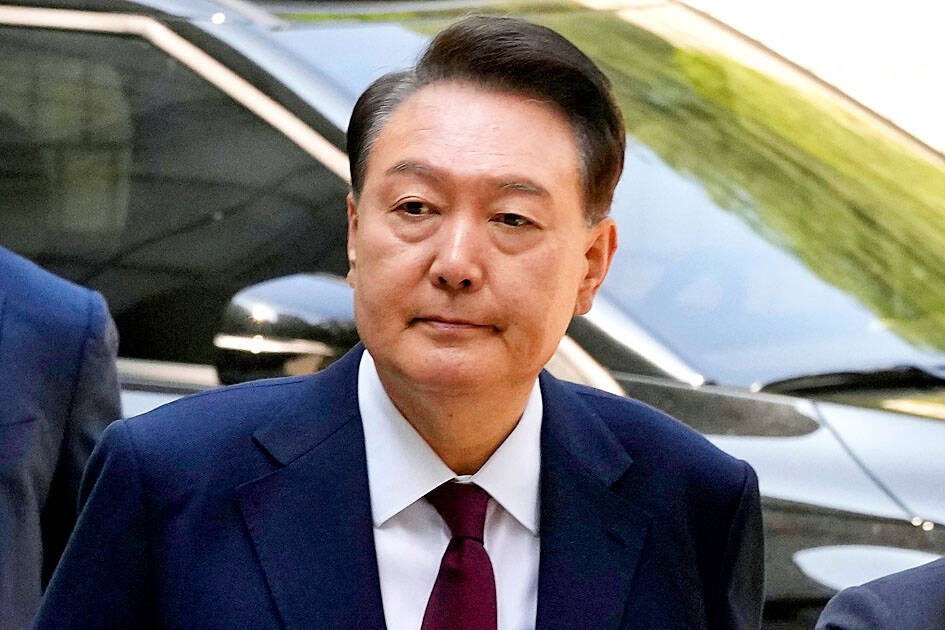
Photo: AP
The ex-president intended to provoke Pyongyang “into carrying out armed or equivalent acts against South Korea’s military or people,” the judges said in their ruling.
Yoon planned to “heighten inter-Korean military tensions and manufacture a national crisis” that could then justify martial law, the judges added, convicting him on charges of benefiting the enemy.
He was given 30 years in jail over the drone incursion, a spokesperson for the Seoul Central District Court said.
Yoon’s legal team said he appealed the sentence, saying that the drone operation was in response to North Korea sending balloons carrying trash across the border that year.
Regarding “our military’s operations in response to North Korea’s persistent provocations as acts aiding the enemy” amounts to “disregarding the state’s fundamental duty to safeguard its liberal democratic system,” Yoon’s lawyers said.
The former president has insisted his martial law declaration was “solely for the sake of the nation.”
The shock late-night national televised address in December 2024 that suspended civilian rule plunged South Korea into an unprecedented political crisis.
Martial law lasted only about six hours as lawmakers raced to the assembly building and voted it down in an emergency session, but it triggered protests, sent the stock market plunging and caught key allies off-guard.
The drone operation “entailed the use of South Korea’s military capabilities for private purposes,” the judges said, adding that powers vested in the president, including supreme command of the armed forces and the authority to declare martial law, must be exercised to protect the nation’s survival and security.
However, Yoon approved the military drone operation, “believing he could arbitrarily use such powers for his own political gain,” they said.
Yoon is facing multiple legal cases over the martial law declaration, and South Korean President Lee Jae-myung was elected president after months of political chaos in the country.
In an incident unrelated to Yoon’s drone case, South Korean investigators found that government officials had sent drones into the North in January.
Lee expressed regret earlier this year over the incident.
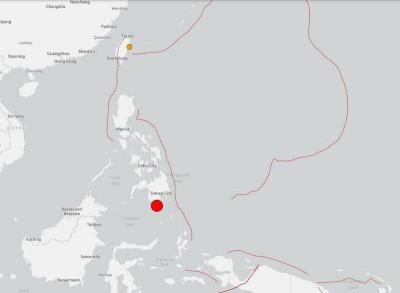
A magnitude 7.8 earthquake struck off the southern coast of Mindanao in the Philippines at 7:38am today, prompting the US Tsunami Warning System to issue an alert for neighboring countries, including Taiwan. The system issued a purple alert indicating a "tsunami threat." The potential threat zone includes Taiwan, the Philippines, Papua New Guinea, Yap and Palau. Philippine authorities were assessing the damage from the quake, with the office of civil defense seeking to verifying initial reports that 15 people had been killed and 129 injured in the region, mostly from falling debris. Arlene Hollero, disaster chief of Maasim town in the Philippines' Sarangani Province,

National Taiwan University (NTU) yesterday said it disqualified a person from an entrance examination for using AI smart glasses to cheat, along with two others for making untruthful statements in their curriculum vitae. The three applicants were given null scores, Taiwan’s highest-ranked university said, calling on prospective students to be honest in the admissions process. NTU registrar Lee Hung-sen (李宏森) said that the cheating applicant wore a hat and thick-rimmed glasses to the second written exam for medical school, claiming that they felt cold. Suspicions were aroused when the applicant stared oddly at the test for long stretches while steadily bringing the paper
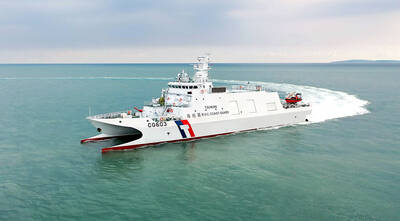
‘GRAY ZONE’ PRESSURE: Beijing’s activities are intended to create the deceitful impression that China has jurisdiction over the area around Taiwan, the CGA said Taiwan’s rights over its territorial waters and exclusive economic zone must not be violated by any country, the Mainland Affairs Council said yesterday, adding that it will not accept any unprovoked actions. The council issued the remarks in response to the China Coast Guard conducting maritime enforcement drills near eastern Taiwan and claiming to fully exercise China’s maritime administrative law enforcement authority. The Coast Guard Administration (CGA) has been closely monitoring the situation and is taking concrete steps to defend the nation’s sovereignty and secure its waters, the council said. China has no sovereign rights over the waters off eastern
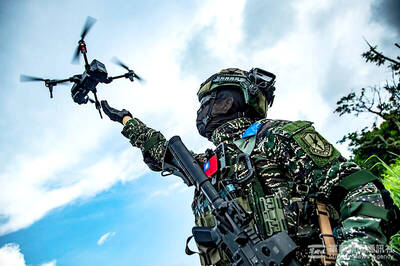
RESILIENCE: Taiwan plays a key role in semiconductors, energy, information infrastructure and advanced manufacturing, AIT Director Raymond Greene said Taiwan’s continued investment in deterrence and resilience remains vital, especially in uncrewed systems and other emerging technologies, American Institute in Taiwan (AIT) Director Raymond Greene said yesterday. Greene made the remarks at the annual National Strategic Summit on Supply Chain Resilience held by the Research Institute for Democracy, Society and Emerging Technology (DSET), a government-backed think tank. As Taiwan last year became the US’ fourth-largest trading partner and supply chain security is becoming more important, cooperation in emerging technologies continues to deepen between the two countries, he said. The US is committed to accelerating innovation, building key infrastructure, strengthening cooperation


 RSS
RSS