


The WHO yesterday opened a meeting of global health ministers amid concern over deadly hantavirus and Ebola outbreaks and uncertainty over announced US and Argentine withdrawals.
While the rare hantavirus outbreak on a cruise ship that has gripped global attention is not officially on the agenda, it is expected to feature prominently in discussions, alongside the latest Ebola outbreak in the Democratic Republic of the Congo.
The two outbreaks “are just the latest crises in our troubled world,” WHO Director-General Tedros Adhanom Ghebreyesus told the opening of the UN agency’s annual decisionmaking World Health Assembly.

Photo: Reuters
“From conflicts to economic crises to climate change and aid cuts, we live in difficult, dangerous and divisive times,” he said.
UN Secretary-General Antonio Guterres said the global health challenges “have rarely felt more daunting.”
“Over the past year, cuts to bilateral and multilateral aid have disrupted health systems and widened inequalities,” Guterres said in a video address.
The meeting, which runs through Saturday, comes after a difficult year for an organization weakened by the announced US withdrawal and funding cuts.
“The WHO’s budget has been reduced by around 21 percent, or nearly 1 billion [US] dollars. Hundreds of jobs have been eliminated, programs have been reduced,” Swiss Minister of Public Health Elisabeth Baume-Schneider said in her address.
“The WHO had to, and was able to, undergo profound reform in the midst of the emergency,” she said.
Surie Moon, codirector of the Global Health Centre at the Geneva Graduate Institute, also suggested the WHO had weathered the storm, saying that while “the situation is “still fragile ... they’ve been successful in mobilizing most of the funds” required for the next two years.
And the hantavirus crisis provided “a clear illustration of why the world needs an effective, trusted, impartial, reliably funded WHO,” she added.
However,, significant divisions persist. Disagreement between wealthy and developing nations has blocked closure on the WHO’s landmark 2025 pandemic treaty, with negotiations now expected to be extended for another year.
It also remains unclear what, if anything, would be decided on the withdrawal of the US and Argentina. US President Donald Trump handed in a one-year notice to withdraw from WHO on his first day back in office in January last year. Argentina soon followed suit.
The WHO, whose constitution does not include a withdrawal clause, has not confirmed either withdrawal. The US reserved the right to withdraw when it joined the WHO in 1948 — on condition of giving one year’s notice and meeting its financial obligations in full for that fiscal year.
While the notice period has expired, Washington has still not paid its dues for 2024 and last year, owing about US$260 million.
When WHO’s executive board met in January, Israel submitted a resolution to approve Argentina’s withdrawal — something countries are expected to discuss during the assembly — but not a word was said about the US.
Diplomats and observers indicated there was broad agreement that it would be better to maintain a gray zone around the US status.

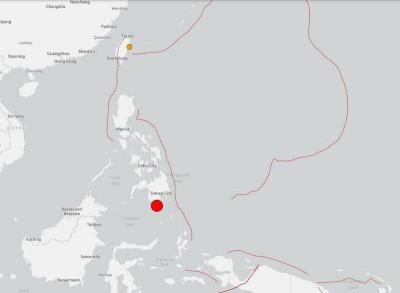
A magnitude 7.8 earthquake struck off the southern coast of Mindanao in the Philippines at 7:38am today, prompting the US Tsunami Warning System to issue an alert for neighboring countries, including Taiwan. The system issued a purple alert indicating a "tsunami threat." The potential threat zone includes Taiwan, the Philippines, Papua New Guinea, Yap and Palau. Philippine authorities were assessing the damage from the quake, with the office of civil defense seeking to verifying initial reports that 15 people had been killed and 129 injured in the region, mostly from falling debris. Arlene Hollero, disaster chief of Maasim town in the Philippines' Sarangani Province,

RESILIENCE: Taiwan plays a key role in semiconductors, energy, information infrastructure and advanced manufacturing, AIT Director Raymond Greene said Taiwan’s continued investment in deterrence and resilience remains vital, especially in uncrewed systems and other emerging technologies, American Institute in Taiwan (AIT) Director Raymond Greene said yesterday. Greene made the remarks at the annual National Strategic Summit on Supply Chain Resilience held by the Research Institute for Democracy, Society and Emerging Technology (DSET), a government-backed think tank. As Taiwan last year became the US’ fourth-largest trading partner and supply chain security is becoming more important, cooperation in emerging technologies continues to deepen between the two countries, he said. The US is committed to accelerating innovation, building key infrastructure, strengthening cooperation

The National Chungshan Institute of Science and Technology yesterday showcased its locally developed variants of the Vision 60 robotic patrol dog, which it plans to deploy on the nation’s outlying territories in the South China Sea. The variants were produced under the Joint Lab project — created by the institute and domestic companies — and assembled with domestically produced motors, lenses and artificial intelligence (AI) systems alongside licensed tech from the US, Missile and Rocket Systems Research Division deputy director Jen Kuo-kang (任國光) told the media event at a military base in Taipei’s Dazhi (大直) area. Taiwan has built up its strengths

RIGHT DIRECTION: Taiwan’s efforts to prevent forced labor include a proposal to ‘fully prohibit’ employers from withholding workers’ documents, an official said Taiwan is to establish a mechanism to restrict imports of goods linked to forced labor, the Executive Yuan said yesterday, after the US proposed imposing additional tariffs on Taiwanese goods over labor concerns. “The Ministry of Labor and the Ministry of Economic Affairs are to establish an interministerial review procedure,” Executive Yuan spokesperson Michelle Lee (李慧芝) said at a news briefing in Taipei. “The government is to use the Foreign Trade Act [貿易法] as the legal basis to restrict imports of goods produced with forced labor” and bring its supply chain governance more in line with international standards on human rights, resilience


 RSS
RSS