


Congratulations from across Europe poured in yesterday for Hungarian political newcomer Peter Magyar, who defeated nationalist Viktor Orban in elections seen as a blow to right-wing populism worldwide.
Orban, a self-described “thorn” in the EU’s side and defender of “illiberal democracy” endorsed by US President Donald Trump, lost Sunday’s elections after 16 years in power as Hungarians fed up with corruption gave Magyar a decisive victory.
Magyar’s party, Tisza, won a thumping majority in the parliamentary elections, which drew record turnout and sent tens of thousands of jubilant supporters into the streets to celebrate as car horns sounded in the capital, Budapest.

Photo: AFP
Leaders across the EU welcomed Magyar’s win, including French President Emmanuel Macron, who hailed a victory for the “values of the European Union,” and German Chancellor Friedrich Merz, who called it a “heavy defeat” for “right-wing populism.”
With Orban having been the EU’s most Russia-friendly leader, Kremlin spokesman Dmitry Peskov said Moscow hoped for “pragmatic” relations with Hungary’s new leadership.
Crowds of Magyar supporters celebrated into the early morning hours outside his party’s election headquarters on the banks of the River Danube and in Budapest’s streets, waving Hungarian flags and dancing.
“I feel fantastic,” said Zoltan Sziromi, a 20-year-old student celebrating in the crowd. “We’ve finally got rid of that system, and it was about time.”
Magyar told the cheering crowd that voters had “liberated Hungary,” calling his party’s win a “miracle” in the central European nation of 9.5 million people.
“Today, the Hungarian people have said ‘yes’ to Europe,” the 45-year-old conservative told supporters, promising to “restore the system of checks and balances ... guarantee the democratic functioning of our country” and put Hungary “back on track.”
An almost complete vote count showed Tisza secured a two-thirds majority, with 138 seats in the 199-seat parliament with 53 percent of the vote, according to official election results.
Orban’s Fidesz took 55 seats with 38 percent of the vote.
Turnout in the election reached a record 79.6 percent.
As first results came in earlier on Sunday, Orban, 62, conceded defeat, saying the results were “clear and understandable.”
“For us, they are painful, but unambiguous,” Orban told reporters.
Orban, who was seeking a fifth straight term, has transformed his nation into a model of “illiberal democracy,” clashing with the EU over rule-of-law issues, as well as over support for war-torn Ukraine.
Magyar, a former government insider, burst onto the scene just two years ago, promising to fight corruption and offering better public services. He drew support against a backdrop of economic stagnation, and despite an electoral system skewed in favor of Orban’s Fidesz party.
Ahead of the vote, both camps had alleged foreign interference in the campaign.
US Vice President J.D. Vance visited Hungary days ahead of the vote to rally with Orban, attacking the alleged interference in Hungary of EU “bureaucrats.”
Trump had promised to bring US “economic might” to Hungary if Orban’s party won.

PROVOCATIVE: Chinese Deputy Ambassador to the UN Sun Lei accused Japan of sending military vessels to deliberately provoke tensions in the Taiwan Strait China denounced remarks by Japan and the EU about the South China Sea at a UN Security Council meeting on Monday, and accused Tokyo of provocative behavior in the Taiwan Strait and planning military expansion. Ayano Kunimitsu, a Japanese vice foreign minister, told the Council meeting on maritime security that Tokyo was seriously concerned about the situation in the East China and South China seas, and reiterated Japan’s opposition to any attempt to change the “status quo” by force, and obstruction of freedom of navigation and overflight. Stavros Lambrinidis, head of the EU delegation to the UN, also highlighted South China Sea

SILENCING CRITICS: In addition to blocking Taiwan, China aimed to prevent rights activists from speaking out against authoritarian states, a Cabinet department said The Ministry of Foreign Affairs (MOFA) yesterday condemned transnational repression by Beijing after RightsCon, a major digital human rights conference scheduled to be held in Zambia this week, was abruptly canceled due to Chinese pressure over Taiwanese participation. This year’s RightsCon, the world’s largest conference discussing issues “at the intersection of human rights and technology,” was scheduled to take place from tomorrow to Friday in Lusaka, and expected to draw 2,600 in-person attendees from 150 countries, along with 1,100 online participants. However, organizers were forced to cancel the event due to behind-the-scenes pressure from China, the ministry said, expressing its “strongest condemnation”
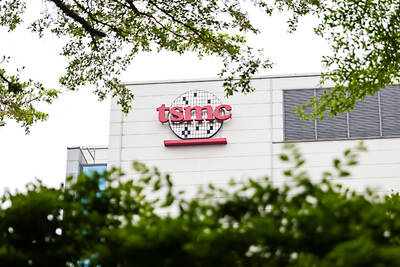
Taiwan Semiconductor Manufacturing Co (TSMC, 台積電), the world’s largest contract chipmaker, said it expects its 2-nanometer (2nm) chip capacity to grow at a compound annual rate of 70 percent from this year to 2028. The projection comes as five fabs begin volume production of 2-nanometer chips this year — two in Hsinchu and three in Kaohsiung — TSMC senior vice president and deputy cochief operating officer Cliff Hou (侯永清) said at the company’s annual technology symposium in Silicon Valley, California, last week. Output in the first year of 2-nanometer production, which began in the fourth quarter of last year, is expected to
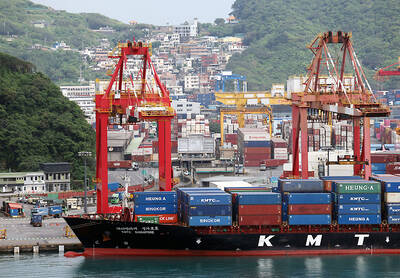
Taiwan’s economy grew far faster than expected in the first quarter, as booming demand for artificial intelligence (AI) applications drove a surge in exports, spilling over into investment and consumption, the Directorate-General of Budget, Accounting and Statistics (DGBAS) said yesterday. GDP growth was 13.69 percent year-on-year during the January-to-March period, beating the DGBAS’ February forecast by 2.23 percentage points and marking the most robust growth in nearly four decades, DGBAS senior official Chiang Hsin-yi (江心怡) told a news conference in Taipei. The result was powered by exports, which remain the backbone of Taiwan’s economy, Chiang said. Outbound shipments jumped 51.12 percent year-on-year to


 RSS
RSS