


The Cabinet yesterday approved a draft amendment that would ban employers or labor brokers from keeping migrant workers’ identity documents or expropriating their personal property under any circumstances.
Under current rules, employers and labor brokers are only prohibited from retaining jobseekers’ or employees’ identity documents “against their will.”
“In practice, some workers consented to having their identity documents retained, which gave rise to controversy and increased the risk of forced labor,” Deputy Minister of Labor Chen Ming-jen (陳明仁) told a weekly Cabinet news conference.
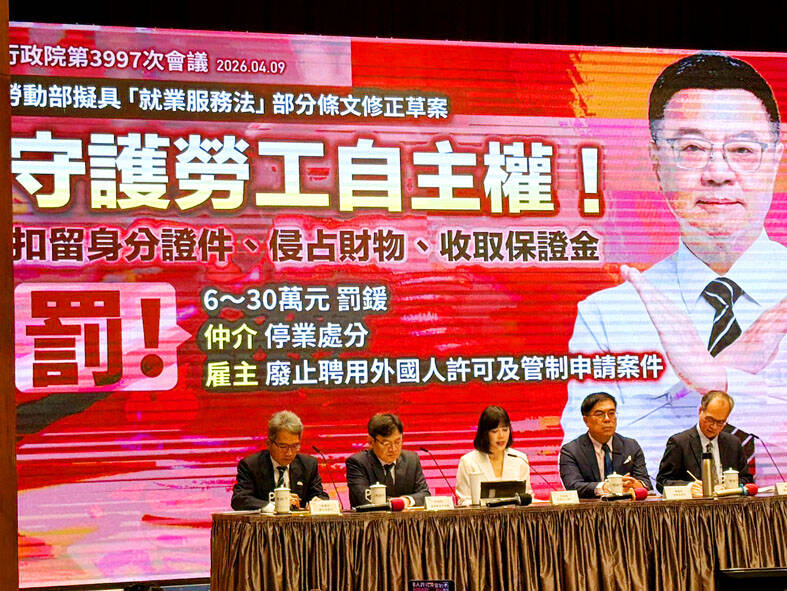
Photo: Chung Li-hua, Taipei Times
Asked whether the amendment was linked to the Taiwan-US Act on Reciprocal Trade (ART) signed in February — under which Taiwan pledged to outlaw the retention of workers’ identity documents as a forced labor indicator defined by the International Labour Organization — Chen said the move was driven not only by the ART, but also by evolving labor rights standards promoted by the UN and the EU.
However, the Cabinet did not introduce a bill to prohibit charging migrant workers recruitment fees in the manufacturing and fishing sectors, another ART pledge.
The proposal also stipulates that employers and labor brokers must not expropriate or confiscate workers’ personal property, while current rules only prohibit confiscation.
In addition, labor brokers must not require job applicants or employees to provide personal details unrelated to their employment, the draft states.
Contraveners would face fines of NT$60,000 to NT$300,000 and a full or partial revocation of their migrant worker recruitment permits, unchanged from the existing provision.
“We hope people understand that retaining workers’ identity documents does not prevent them from absconding,” Workforce Development Agency Deputy Director-General Chen Shih-chang (陳世昌) said.
“By guaranteeing identity document autonomy, we hope to improve workers’ human rights conditions,” he said, adding that the agency would clearly explain during the legislative process that safekeeping of identity documents is the workers’ responsibility.
The proposal would give migrant workers greater peace of mind, Premier Cho Jung-tai (卓榮泰) said, calling for cross-party support to pass the bill swiftly.
Meanwhile, Minister of Labor Hung Sun-han (洪申翰) said that the first group of migrant workers from India might arrive in Taiwan as early as this year as part of a new program.
Speaking at a meeting of the Legislative Yuan’s Social Welfare and Environmental Hygiene Committee, Hung said that a delegation led by Deputy Minister of Labor Chen Ming-jen (陳明仁) visited India in January to meet with Taiwanese businesspeople operating there and evaluate the local labor market.
The government is in the final stages of confirming details of the program with Indian authorities regarding administrative procedures, document verification and medical examination standards to ensure smooth integration, he added.
“It is possible that the first group will be introduced this year,” Hung said.
Taiwan and India signed a memorandum of understanding on labor cooperation in February 2024.
At the end of that year, the two sides agreed that the initial intake would consist of 1,000 Indian migrant workers, with 5 percent to be recruited through direct hiring.
Regarding the 5 percent target, Hung said that he hoped to see a higher proportion, but the final figure would ultimately depend on the needs of domestic industries.

PROVOCATIVE: Chinese Deputy Ambassador to the UN Sun Lei accused Japan of sending military vessels to deliberately provoke tensions in the Taiwan Strait China denounced remarks by Japan and the EU about the South China Sea at a UN Security Council meeting on Monday, and accused Tokyo of provocative behavior in the Taiwan Strait and planning military expansion. Ayano Kunimitsu, a Japanese vice foreign minister, told the Council meeting on maritime security that Tokyo was seriously concerned about the situation in the East China and South China seas, and reiterated Japan’s opposition to any attempt to change the “status quo” by force, and obstruction of freedom of navigation and overflight. Stavros Lambrinidis, head of the EU delegation to the UN, also highlighted South China Sea
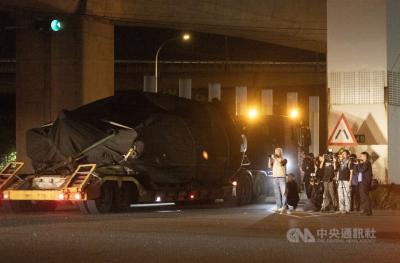
The final batch of 28 M1A2T Abrams tanks purchased from the US arrived at Taipei Port last night and were transported to the Armor Training Command in Hsinchu County’s Hukou Township (湖口), completing the military’s multi-year procurement of 108 of the tanks. Starting at 12:10am today, reporters observed more than a dozen civilian flatbed trailers departing from Taipei Port, each carrying an M1A2T tank covered with black waterproof tarps. Escorted by military vehicles, the convoy traveled via the West Coast Expressway to the Armor Training Command, with police implementing traffic control. The army operates about 1,000 tanks, including CM-11 Brave Tiger

China on Wednesday teased in a video an aircraft carrier that could be its fourth, and the first using nuclear power, while making an allusion to Taiwan and vowing to further build up its islands, as it looks to boost maritime power, secure resources and bolster territorial claims. The video, issued on the eve of the 77th founding anniversary of the Chinese People’s Liberation Army Navy, featured fictional officers with names that are homophones of three commissioned aircraft carriers, the Liaoning (遼寧), Shandong (山東) and Fujian (福建). Titled Into the Deep, it showed a 19-year-old named “Hejian” (何劍) joining the group, sparking
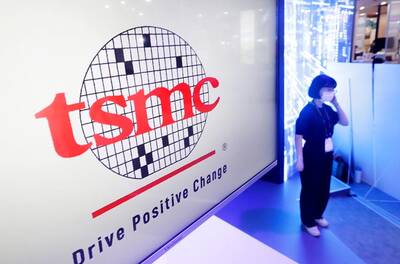
BIG YEAR: The company said it would also release its A12 chip the same year to keep a ‘reliable stream of new silicon technologies’ flowing to its customers Taiwan Semiconductor Manufacturing Co (TSMC, 台積電) yesterday said its newest A13 chip is to enter volume production in 2029 as the chipmaker seeks to hold onto its tech leadership and demand for next-generation chips used in artificial intelligence (AI), high-performance-computing (HPC) and mobile applications. TSMC, the world’s biggest contract chipmaker, also unveiled its A12 chip at its annual technology symposium in Santa Clara, California. The A12 chip, which features TSMC’s super-power-rail technology to provide backside power delivery for AI and HPC applications, is also to enter volume production in 2029, a year after the scheduled release of the A14 chip. The technology moves


 RSS
RSS