


The EU is to continue to oppose any attempt to change the “status quo” in the Taiwan Strait by force, European Parliament Committee on Security and Defence Chair Marie-Agnes Strack-Zimmermann said yesterday during a meeting with President William Lai (賴清德), reaffirming support for stable cross-strait relations and dialogue.
Strack-Zimmermann is leading an 11-member delegation on a visit to Taiwan from Monday to tomorrow.
It is the first visit to Taiwan by the group since the body’s transformation into a full committee last year, the Ministry of Foreign Affairs said.
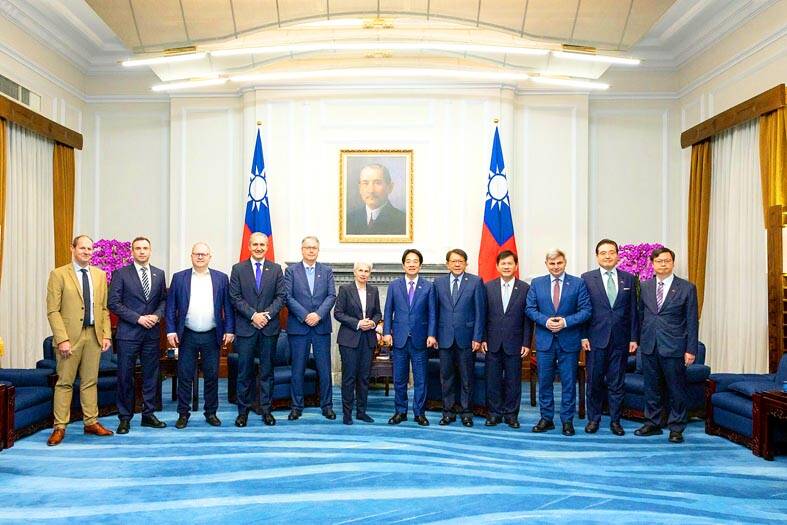
Photo courtesy of the Presidential Office
During the meeting at the Presidential Office in Taipei, Strack-Zimmermann said that the EU would continue to adopt responsive and pragmatic policies to uphold its position.
Although members come from different nations and political parties, they share the goal of deepening the committee’s understanding of EU-Taiwan relations, listening to Taiwan’s needs and strengthening bilateral cooperation, she said.
The EU is increasingly aware of the security threats posed by geopolitical risks, as demonstrated by Russia’s invasion of Ukraine, she said.
Ongoing conflicts continue to destabilize the global strategic environment and Europe seeks to better understand the region, which has long been viewed as a potential flashpoint, Strack-Zimmermann said.
As a democratic nation and a key partner in trade and technology, Taiwan’s stability is not only a regional issue, but also of particular importance to the EU, she said.
Strack-Zimmermann called on the EU to deepen cooperation with Taiwan in secure supply chains, semiconductors, information security, critical infrastructure and resilient defense industries.
Lai said cooperation among democratic nations is not about defending individuals, but about safeguarding democracy, freedom, human rights and other universal values.
Taiwan looks forward to working with the EU on drones, semiconductors, information security and aerospace development, as well as other strategic industries, to build a safe, reliable and resilient democratic supply chain, Lai said.
Lai thanked the European Parliament for adopting its Common Foreign and Security Policy and Common Security and Defence Policy in January, which reaffirmed its opposition to China’s distortion of UN Resolution 2758, and the use of force or coercion to unilaterally alter the “status quo” in the Taiwan Strait.
Lai said Taiwan is strengthening its domestic defense industry and investing in drone technologies to deepen cooperation with like-minded partners, and maintain the capacity to ensure regional peace and stability.
Taiwan stands at the forefront of resisting the expansion of authoritarianism and is willing to share its experience with the EU and other partners to jointly uphold regional peace and democratic values, Lai said.
The delegation also includes Spanish MEPs Nicolas Pascual de la Parte and Jose Cepeda, Estonian MEP Urmas Paet, Latvian MEP Martins Stakis and Greek MEP Nikolas Farantouris, the ministry said.
The visit comes as China welcomes its first delegation of European Parliament members in eight years.
The group overseeing market and consumer protection began their visit yesterday, Chinese Ministry of Foreign Affairs spokeswoman Mao Ning (毛寧) told reporters.
The European lawmakers are to address challenges in the digital and e-commerce sectors, as well as foster fair competition between China and the bloc as they travel to Beijing and Shanghai, according to a statement issued by the delegation last week.
They are to meet with Chinese legislators and market regulators, as well as Shein (希音), Alibaba Group Holding Ltd (阿里巴巴) and Temu.
Additional reporting by CNA and Reuters

PROVOCATIVE: Chinese Deputy Ambassador to the UN Sun Lei accused Japan of sending military vessels to deliberately provoke tensions in the Taiwan Strait China denounced remarks by Japan and the EU about the South China Sea at a UN Security Council meeting on Monday, and accused Tokyo of provocative behavior in the Taiwan Strait and planning military expansion. Ayano Kunimitsu, a Japanese vice foreign minister, told the Council meeting on maritime security that Tokyo was seriously concerned about the situation in the East China and South China seas, and reiterated Japan’s opposition to any attempt to change the “status quo” by force, and obstruction of freedom of navigation and overflight. Stavros Lambrinidis, head of the EU delegation to the UN, also highlighted South China Sea
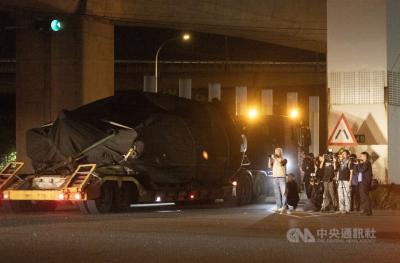
The final batch of 28 M1A2T Abrams tanks purchased from the US arrived at Taipei Port last night and were transported to the Armor Training Command in Hsinchu County’s Hukou Township (湖口), completing the military’s multi-year procurement of 108 of the tanks. Starting at 12:10am today, reporters observed more than a dozen civilian flatbed trailers departing from Taipei Port, each carrying an M1A2T tank covered with black waterproof tarps. Escorted by military vehicles, the convoy traveled via the West Coast Expressway to the Armor Training Command, with police implementing traffic control. The army operates about 1,000 tanks, including CM-11 Brave Tiger
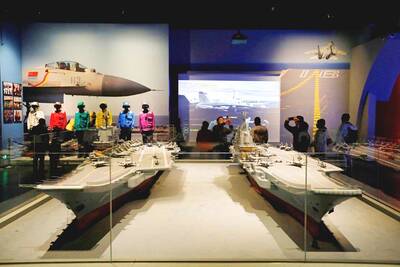
China on Wednesday teased in a video an aircraft carrier that could be its fourth, and the first using nuclear power, while making an allusion to Taiwan and vowing to further build up its islands, as it looks to boost maritime power, secure resources and bolster territorial claims. The video, issued on the eve of the 77th founding anniversary of the Chinese People’s Liberation Army Navy, featured fictional officers with names that are homophones of three commissioned aircraft carriers, the Liaoning (遼寧), Shandong (山東) and Fujian (福建). Titled Into the Deep, it showed a 19-year-old named “Hejian” (何劍) joining the group, sparking
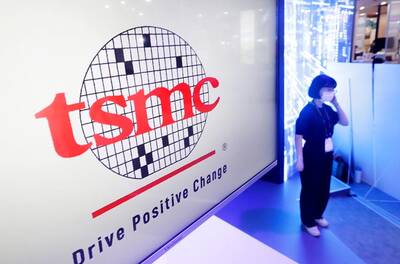
BIG YEAR: The company said it would also release its A12 chip the same year to keep a ‘reliable stream of new silicon technologies’ flowing to its customers Taiwan Semiconductor Manufacturing Co (TSMC, 台積電) yesterday said its newest A13 chip is to enter volume production in 2029 as the chipmaker seeks to hold onto its tech leadership and demand for next-generation chips used in artificial intelligence (AI), high-performance-computing (HPC) and mobile applications. TSMC, the world’s biggest contract chipmaker, also unveiled its A12 chip at its annual technology symposium in Santa Clara, California. The A12 chip, which features TSMC’s super-power-rail technology to provide backside power delivery for AI and HPC applications, is also to enter volume production in 2029, a year after the scheduled release of the A14 chip. The technology moves


 RSS
RSS