


Nepal’s youngest prime minister took the oath of office yesterday after his party won a landslide victory in elections earlier this month.
Balendra Shah was appointed prime minister by Nepalese President Ram Chandra Paudel after his Rastriya Swatantra Party won nearly two-thirds of the seats in the Nepalese House of Representatives, the lower chamber of parliament, in the March 5 polls.
Shah, the 35-year-old political outsider widely known as Balen, is to lead a government tasked with navigating deep public frustration with Nepal’s established parties, which were widely blamed by voters for corruption and chronic political instability.

Photo: AFP
Another 15 members of the new Cabinet were also sworn in at an elaborate ceremony that included Hindu rituals, such as the shankhnaad, or blowing of conches, and religious chanting by Hindu priests and Buddhist lamas.
Army bands played tunes and officials and diplomats lined up to greet the new leader, while hundreds of his supporters cheered outside the presidential residence and the prime minister’s office in the heart of Kathmandu.
The timing of Shah’s oath taking — at 12:34pm on the day when the Himalayan nation is celebrating Ram Navami — was seen as an auspicious time by Hindu priests based on astrological calculations.
It also fits the “1-2-3-4” numerological pattern.
Shah later yesterday entered his new office at 14:15pm, which also fits a “14-15” pattern.
Hindu priests consider such numerical patterns as auspicious.
Religion and astrology play a big role in Nepal, which is more than 80 percent Hindu and where people begin new work, get married and hold religious rituals according to auspicious times.
Shah was born in Kathmandu, but his family comes from the Hindu-dominated Terai region of Nepal, near the border with India.
He is a structural engineer who rose to fame as a rap artist before becoming Kathmandu’s mayor.
Shah emerged as a prominent voice during the bloody youth-led uprising in September last year that toppled the government, a wave of unrest that left dozens dead.
Although he did not directly participate in the protests, Shah publicly expressed support for the largely Gen Z demonstrators who led the movement.

CREDIT-GRABBER: China said its coast guard rescued the crew of a fishing vessel that caught fire, who were actually rescued by a nearby Taiwanese boat and the CGA Maritime search and rescue operations do not have borders, and China should not use a shipwreck to infringe upon Taiwanese sovereignty, the Coast Guard Administration (CGA) said yesterday. The coast guard made the statement in response to the China Coast Guard (CCG) saying it saved a Taiwanese fishing boat. The Chuan Yu No. 6 (全漁6號), a fishing vessel registered in Keelung, on Thursday caught fire and sank in waters northeast of Diaoyutai Islands (釣魚台). The vessel left Keelung’s Badouzih Fishing Harbor (八斗子漁港) at 3:35pm on Sunday last week, with seven people on board — a 62-year-old Taiwanese captain surnamed Chang (張) and six
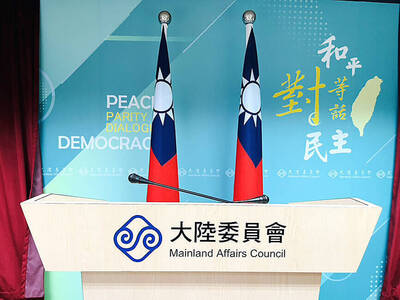
RISKY BUSINESS: The ‘incentives’ include initiatives that get suspended for no reason, creating uncertainty and resulting in considerable losses for Taiwanese, the MAC said China’s “incentives” failed to sway sentiment in Taiwan, as willingness to work in China hit a record low of 1.6 percent, a Ministry of Labor survey showed. The Directorate-General of Budget, Accounting and Statistics (DGBAS) also reported that the number of Taiwanese workers in China has nearly halved from a peak of 430,000 in 2012 to an estimated 231,000 in 2024. That marked a new low in the proportion of Taiwanese going abroad to work. The ministry’s annual survey on “Labor Life and Employment Status” includes questions respondents’ willingness to seek employment overseas. Willingness to work in China has steadily declined from

The Legislative Yuan’s Finance Committee yesterday approved proposed amendments to the Amusement Tax Act (娛樂稅法) that would abolish taxes on films, cultural activities and competitive sporting events, retaining the fee only for dance halls and golf courses. The proposed changes would set the maximum tax rate for dance halls and golf courses at 50 and 20 percent respectively, with local governments authorized to suspend the levies. Article 2 of the act says that “amusement tax shall be levied on tickets sold or fees charged by amusement places, facilities or activities” in six categories: “Cinema; professional singing, story-telling, dancing, circus, magic show, acrobatics
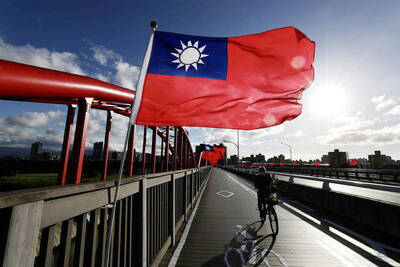
INFLATION UP? The IMF said CPI would increase to 1.5 percent this year, while the DGBAS projected it would rise to 1.68 percent, with GDP per capita of US$44,181 The IMF projected Taiwan’s real GDP would grow 5.2 percent this year, up from its 2.1 percent outlook in January, despite fears of global economic disruptions sparked by the US-Iran conflict. Taiwan’s consumer price index (CPI) is projected to increase to 1.5 percent, while unemployment would be 3.4 percent, roughly in line with estimates for Asia as a whole, the international body wrote in its Global Economic Outlook Report published in the US on Monday. The figures are comparatively better than the IMF outlook for the rest of the world, which pegged real GDP growth at 3.1 percent, down from 3.3 percent


 RSS
RSS