


The Taoyuan District Agricultural Research and Extension Station said it has developed three new rice cultivars that need less water and can help reduce greenhouse gas emissions thanks to their tolerance of pests, diseases and extreme weather.
Climate change over the years has led to extreme weather events such as droughts, high temperatures and uneven rainfall patterns, the station said on Tuesday last week.
High temperatures could cause more chalky rice grains in rice production, while water shortages often cause insufficient irrigation to fields and disrupted tillage in spring, it said.
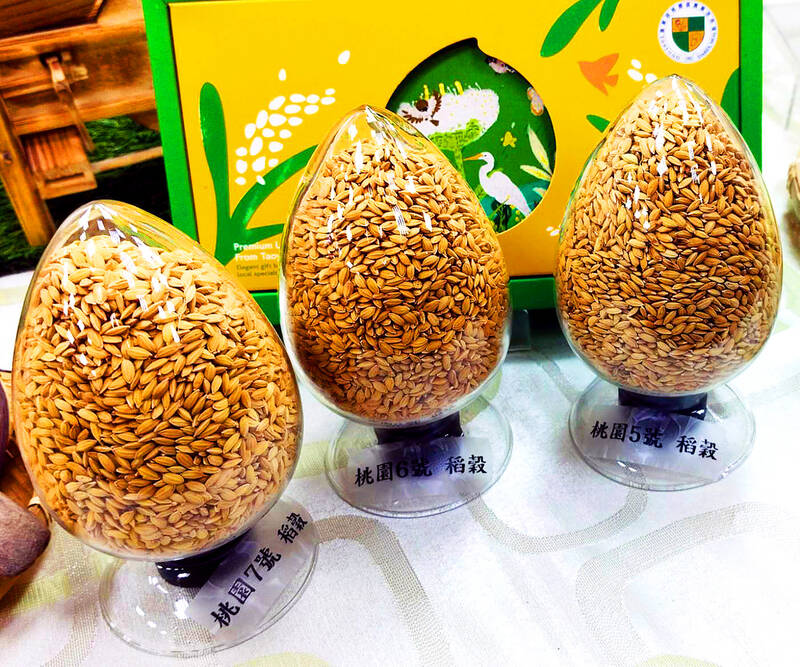
Photo: CNA
Chalky rice grains have cloudy patches in their heart or belly, making them look less translucent than regular grains and tend to taste more floury and less chewy.
Volatile weather in the past few years has also led to increased cases of rice blast — a disease that can infect almost all parts of rice plants above the ground and is often caused by excessive moisture, the station said.
To stabilize rice production and ensure the quality, the station has cultivated new rice varieties that are more tolerant of diseases and droughts, with three important cultivars developed over the past few years, including “Taoyuan No. 5” in 2019, “Taoyuan No. 6” in 2021, and “Taoyuan No. 7” in 2023.
Taoyuan No. 5 has high heat resistance and a chalky grain rate of less than 10 percent, the station said.
It can be harvested up to 10 days earlier than other late-maturing varieties, and its seedlings can be planted as late as April without its production and quality being affected, it said.
Taoyuan No. 5 helps ease the competition for irrigation water in February and March, the station said, adding that it helped save about 3,000m3 of irrigation water per hectare in spring.
Taoyuan No. 6 has good resistance to pests and diseases, and was developed to promote eco-friendly farming, it said.
It does not require any pesticides during its growing period and requires only 80 percent of the nitrogen fertilizer application rates recommended for rice grown in northern Taiwan, helping to reduce about 1 tonne of carbon dioxide per hectare, the station said.
Taoyuan No. 7 was developed based on “Taoyuan No. 3” — a variety that won many local rice competitions for its excellent quality, but became prone to rice blast diseases due to climate change, it said.
The station said that by inserting rice blast-resistant gene fragments into Taoyuan No. 3, it successfully developed Taoyuan No. 7, which is highly resistant to rice blast even without fungicides being applied against the disease.
Taoyuan No. 7 almost doubled the production of Taoyuan No. 3 on average and saved NT$5,000 to NT$15,000 in labor costs and pesticide use, it said.
Its reduced fungicide use not only reduced pollution, but also helped prevent development of pathogens’ antimicrobial resistance, it said.
As of last year, a total of more than 50 hectares of farmland in water-stressed areas were planted with Taoyuan No. 5, while more than 100 hectares of farmland in Hsinchu County’s Hukou Township (湖口) were planted with Taoyuan No. 6, the station said.
Taoyuan No. 7 has also been cultivated in many rice fields across northern Taiwan, with a total planting area of up to 100 hectares, it said.

‘NO SECURITY RISK’: The Railway Bureau reassured the public that the technicians’ activities were limited to technical guidance and did not involve sensitive systems The Railway Bureau yesterday said it had invited eight Chinese technicians to assist with an airport MRT construction project. The bureau issued the confirmation after an Internet user said Chinese nationals had entered the construction zone of Taiwan Taoyuan International Airport’s Terminal 3 project. They asked why “individuals from an enemy state” were allowed access to such a major national infrastructure project, which raised serious concerns over Taiwan’s industrial safety, sensitive systems and information security. The bureau’s Northern Region Engineering Branch Office said subcontractor Taiwan Handle Industrial Co (台灣手把工業) of the Taoyuan airport MRT’s “Contract No. CU05 Project A14 Station Civil, MEP &

The National Chungshan Institute of Science and Technology yesterday showcased its locally developed variants of the Vision 60 robotic patrol dog, which it plans to deploy on the nation’s outlying territories in the South China Sea. The variants were produced under the Joint Lab project — created by the institute and domestic companies — and assembled with domestically produced motors, lenses and artificial intelligence (AI) systems alongside licensed tech from the US, Missile and Rocket Systems Research Division deputy director Jen Kuo-kang (任國光) told the media event at a military base in Taipei’s Dazhi (大直) area. Taiwan has built up its strengths
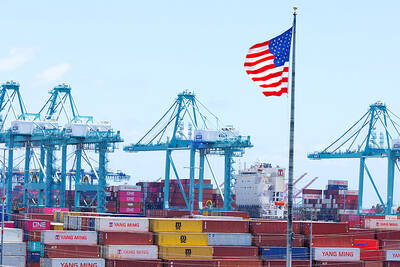
NOT IMMEDIATE: Taiwan has a chance to appeal the proposed 10 percent tariff before it starts, while other countries face a 12.5 percent tariff from the trade office Taiwan is among 60 economies determined by the US to have failed to impose or enforce a ban on the importation of goods produced with forced labor, according to a notice released on Tuesday by the Office of the US Trade Representative (USTR), which proposed imposing an additional 10 percent or more tariff on them. The USTR in a statement said that following an investigation, it had determined under Section 301 of the Trade Act of 1974 that the failure of the 60 economies to impose and effectively enforce a prohibition on the importation of goods produced with forced labor is
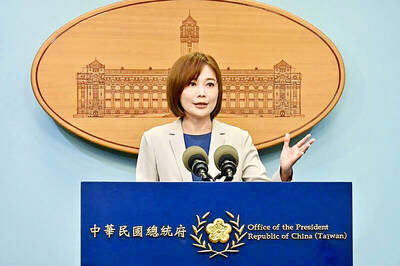
TIT-FOR-TAT: The US allegedly revoked the visa of a Chinese national working at Xinhua News Agency in the US in response to Beijing’s expulsion of Vivian Wang The Presidential Office yesterday condemned China for expelling a New York Times correspondent from Beijing following the newspaper’s interview with President William Lai (賴清德), saying the move highlighted Beijing’s suppression of press freedom and its threat to international news media. Taiwan has noted a series of recent incidents in which Beijing used similar tactics to “threaten and pressure international media outlets and journalists,” Presidential Office spokeswoman Karen Kuo (郭雅慧) said in a statement. “This concerns not only press freedom and freedom of expression, but also the safety of journalists, and Taiwan and relevant partners are paying close attention to the situation,” she


 RSS
RSS