


Taiwan’s first domestic measles case of the year has been confirmed and more than 500 contacts are being monitored until March 17, the Centers for Disease Control (CDC) said yesterday.
An eight-month-old infant fell ill after returning from Vietnam at the end of last month and was later diagnosed with measles, as announced on Feb. 12, the CDC said.
A man in his 40s from northern Taiwan developed symptoms 13 days after contact with the infant and was confirmed to have measles, it said.
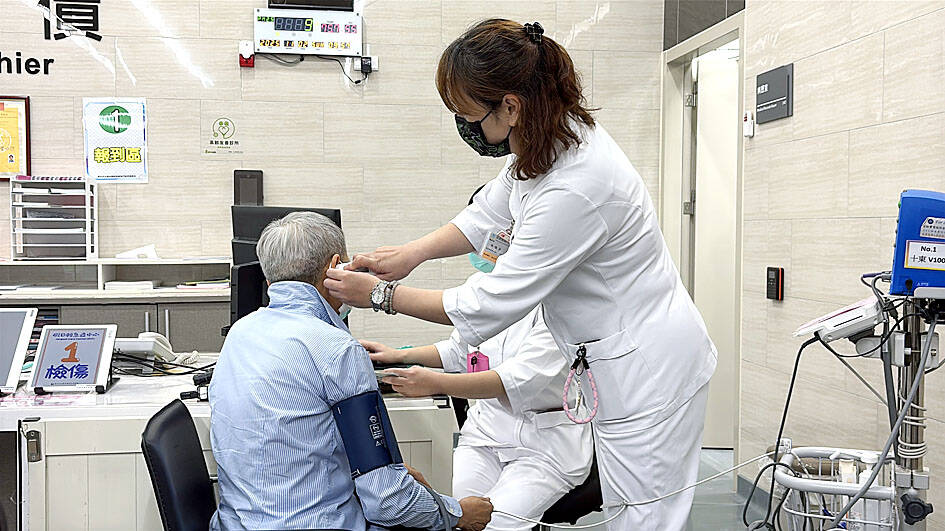
Photo: Lin Chih-yi, Taipei Times
Local health authorities traced 526 people the man was in contact with during his contagious period, including five family members who live with him, the CDC said.
Anyone who has had contact with a confirmed case should monitor their health and take protective measures, CDC Deputy Director-General Lin Min-cheng (林明誠) said.
Early symptoms of measles resemble a common cold, including a cough, runny nose and fever, followed by a red rash, which typically appears about two weeks after infection.
The virus could spread through the air, respiratory droplets or direct contact with respiratory secretions four days before and after the rash appears, the CDC said.
People who develop symptoms should wear a mask and contact local medical authorities to arrange for care, rather than ignoring their condition or seeking medical help independently, Lin said.
Those who do not follow proper self-monitoring regulations could face a fine of NT$60,000 to NT$300,000 under to the Communicable Disease Control Act (傳染病防治法), he said.
Doctors should remain vigilant and ask patients about their travel, work and contact history to accurately diagnose cases and trace contacts, he added.
As of Thursday, there had been three cases of measles in Taiwan this year, including the infant and the man in his 40s, the CDC said, adding that the third person contracted the disease in Malaysia.
Measles outbreaks continue globally, with India, Indonesia, Singapore and Vietnam reporting cases since last year, the CDC said.
Japan has reported 43 measles cases so far this year, the highest figure over same period in nearly seven years, with the most cases reported in Tokyo and Osaka, it said.
In related news, the CDC on Thursday reminded doctors to be aware of dengue fever risks, as a man in northern Taiwan was diagnosed with the disease after visiting hospitals three times.
The man, who is in his 50s, traveled to the Maldives at the end of last month and developed a fever, muscle aches, joint pain and a rash after returning to Taiwan, Lin said.
He visited two different hospitals on Monday, Thursday and Friday last week, and was diagnosed with dengue fever on the third visit, he said.
If doctors had properly checked the patient’s travel, contact and work histories, they would have normally performed a dengue NS1 rapid test, he said.
The CDC issued a notice to doctors reminding them that increased travel over the Lunar New Year holiday means higher risk of imported diseases such as dengue, he added.
There had been 19 cases of dengue fever as of Wednesday, lower than the same period in 2024 and last year, the CDC said.
Among the imported cases, Indonesia accounts for the most with six cases, followed by the Philippines, Vietnam, Thailand, Malaysia, Sri Lanka, India and the Maldives, it said.
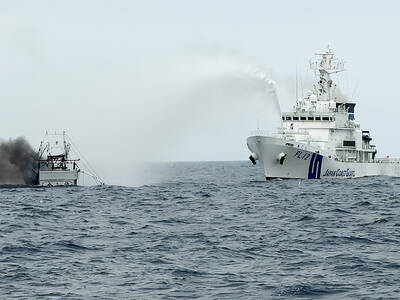
CREDIT-GRABBER: China said its coast guard rescued the crew of a fishing vessel that caught fire, who were actually rescued by a nearby Taiwanese boat and the CGA Maritime search and rescue operations do not have borders, and China should not use a shipwreck to infringe upon Taiwanese sovereignty, the Coast Guard Administration (CGA) said yesterday. The coast guard made the statement in response to the China Coast Guard (CCG) saying it saved a Taiwanese fishing boat. The Chuan Yu No. 6 (全漁6號), a fishing vessel registered in Keelung, on Thursday caught fire and sank in waters northeast of Diaoyutai Islands (釣魚台). The vessel left Keelung’s Badouzih Fishing Harbor (八斗子漁港) at 3:35pm on Sunday last week, with seven people on board — a 62-year-old Taiwanese captain surnamed Chang (張) and six
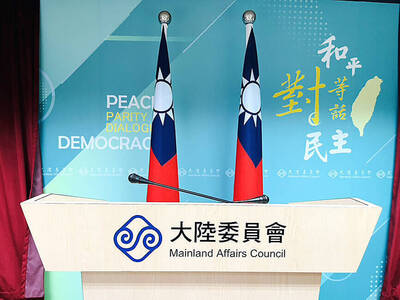
RISKY BUSINESS: The ‘incentives’ include initiatives that get suspended for no reason, creating uncertainty and resulting in considerable losses for Taiwanese, the MAC said China’s “incentives” failed to sway sentiment in Taiwan, as willingness to work in China hit a record low of 1.6 percent, a Ministry of Labor survey showed. The Directorate-General of Budget, Accounting and Statistics (DGBAS) also reported that the number of Taiwanese workers in China has nearly halved from a peak of 430,000 in 2012 to an estimated 231,000 in 2024. That marked a new low in the proportion of Taiwanese going abroad to work. The ministry’s annual survey on “Labor Life and Employment Status” includes questions respondents’ willingness to seek employment overseas. Willingness to work in China has steadily declined from

The Legislative Yuan’s Finance Committee yesterday approved proposed amendments to the Amusement Tax Act (娛樂稅法) that would abolish taxes on films, cultural activities and competitive sporting events, retaining the fee only for dance halls and golf courses. The proposed changes would set the maximum tax rate for dance halls and golf courses at 50 and 20 percent respectively, with local governments authorized to suspend the levies. Article 2 of the act says that “amusement tax shall be levied on tickets sold or fees charged by amusement places, facilities or activities” in six categories: “Cinema; professional singing, story-telling, dancing, circus, magic show, acrobatics

INFLATION UP? The IMF said CPI would increase to 1.5 percent this year, while the DGBAS projected it would rise to 1.68 percent, with GDP per capita of US$44,181 The IMF projected Taiwan’s real GDP would grow 5.2 percent this year, up from its 2.1 percent outlook in January, despite fears of global economic disruptions sparked by the US-Iran conflict. Taiwan’s consumer price index (CPI) is projected to increase to 1.5 percent, while unemployment would be 3.4 percent, roughly in line with estimates for Asia as a whole, the international body wrote in its Global Economic Outlook Report published in the US on Monday. The figures are comparatively better than the IMF outlook for the rest of the world, which pegged real GDP growth at 3.1 percent, down from 3.3 percent


 RSS
RSS