


Taiwan Semiconductor Manufacturing Co’s (TSMC, 台積電) market capitalization swelled to US$2 trillion for the first time following a 4.25 percent rally in its American depositary receipts (ADR) overnight, putting the world’s biggest contract chipmaker sixth on the list of the world’s biggest companies by market capitalization, just behind Amazon.com Inc.
The site CompaniesMarketcap.com ranked TSMC ahead of Saudi Aramco and Meta Platforms Inc.
The Taiwanese company’s ADRs on Tuesday surged to US$385.75 on the New York Stock Exchange, as strong demand for artificial intelligence (AI) applications led to chip supply constraints and boost revenue growth to record-breaking levels. Each TSMC ADR represents 5 common shares.
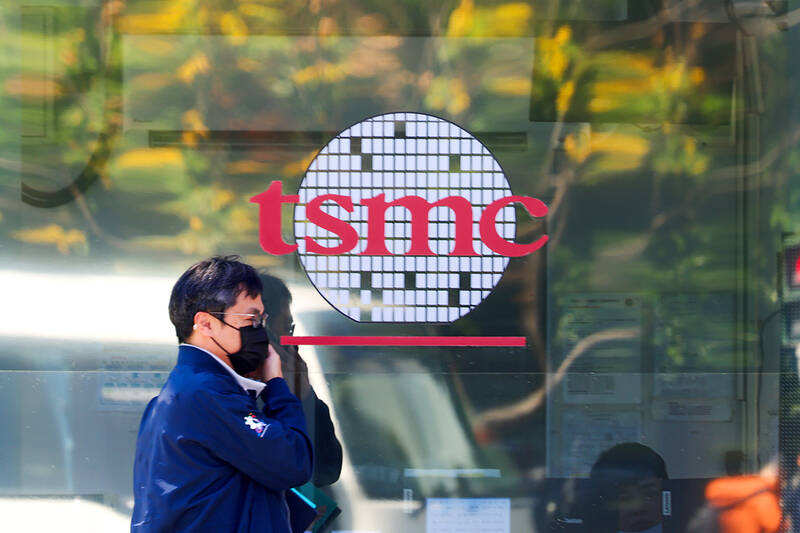
Photo: Ritchie B. Tongo, EPA
TSMC yesterday climbed 2.54 percent on the Taiwan Stock Exchange to close at a new high of NT$2,015.
Global funds on Tuesday snapped up Taiwanese stocks in their biggest one-day buying spree in two decades, signaling confidence that chipmakers would remain AI-boom beneficiaries, even as broader markets face growing fears of disruption.
Overseas investors bought a net US$2.77 billion of Taiwan equities, the most since December 2005, data compiled by Bloomberg showed.
The investment marked a sixth consecutive day of buying by foreign funds.
The surge comes as global equities wobbled following a report from little-known Citrini Research that warned of a dystopian-like wave of AI-driven disruption. While investors have been steering clear of sectors seen as vulnerable, they are doubling down on chipmakers viewed as the backbone of the AI buildout.
Taiwan’s logic-heavy market dominated by advanced semiconductor producers is seen as a relative safe haven in the AI “scare trade.”
“Taiwan is the home of the global AI supply chain,” Union Bancaire Privee managing director Vey-Sern Ling said. “Its companies and stock market will continue to benefit as long as investors believe that AI is disruptive and hence indispensable to our future.”
At the current pace, Taiwan is on track for about US$7 billion in foreign inflows this month, a contrast to the roughly similar amount that has been pulled from memorychip-focused South Korea over the same period.
The growing dominance of TSMC has underpinned the broader market, with the company accounting for about 45 percent of the TAIEX, about triple its weighting a decade earlier. The stock has surged about 30 percent this year, repeatedly notching fresh record highs.
The surge in equity inflows has also lent support to the New Taiwan dollar, although gains have been tempered by steady US dollar buying from local life insurers. The currency’s relative stability might also reduce the need for foreign investors to hedge their exposure.
Khoon Goh, head of Asia research at Australia & New Zealand Banking Group, said he does not expect a significant pickup in currency hedging alongside the stock inflows.
“Equity investors typically do not hedge, unlike fixed-income investors,” Goh said, adding that limited hedging activity should allow the inflows to continue supporting the NT dollar.
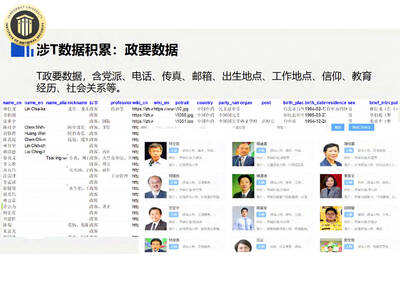
NETWORK-MAPPING PROJECT: The database contains 170 detailed files of Taiwanese politicians and about 23 million records of household registration data in Taiwan China has developed a network-mapping project targeting political figures and parties in Taiwan to monitor public opinion during elections and to craft tailored influence campaigns aimed at dividing Taiwanese society, according to documents leaked by Chinese technology firm GoLaxy (中科天璣). The documents, collected by Taipei-based Doublethink Lab, showed a database was specifically created to gather detailed information on Taiwanese political figures, including their political affiliations, job histories, birthplaces, residences, education, religion and a brief biography about them. Several notable Taiwanese politicians are in the database, including President William Lai (賴清德), former president Tsai Ing-wen (蔡英文), Minister of Foreign Affairs Lin Chia-lung (林佳龍),
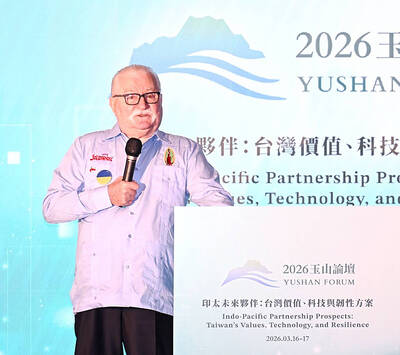
RECOGNITION: Former Fijian prime minister Mahendra Chaudhry said that Taiwan’s New Southbound Policy serves as a stabilizing force in the Indo-Pacific region Taiwan can lead the unification of the Chinese people, Nobel Peace Prize laureate and former Polish president Lech Walesa said in Taipei yesterday, adding that as the world order is changing, peaceful discussion would find good solutions, and that the use of force and coercion would always fail. Walesa made the remarks during his keynote address at a luncheon of the Yushan Forum in Taipei, titled “Indo-Pacific Partnership Prospects: Taiwan’s Values, Technology and Resilience,” organized by the Taiwan-Asia Exchange Foundation with the Ministry of Foreign Affairs. Walesa said that he had been at the forefront of a big peaceful revolution and “if
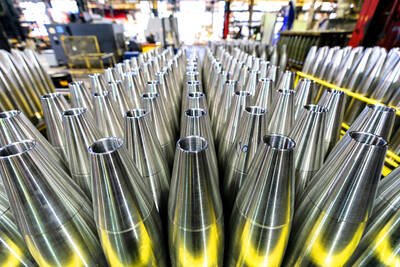
UPGRADED MISSILE: The Chungshan Institute of Science and Technology is reportedly to conduct a live-fire test of the Hsiung Feng III anti-ship missile on Thursday next week The US Army is planning to build new facilities to boost explosives production and strengthen its supply chain, a move aimed at addressing munitions shortages and supporting obligations to partners including Taiwan, Ukraine and Israel, Defense News reported. The army has issued a sources sought notice for a proposed Center of Excellence at the Blue Grass Army Depot in Kentucky, the report said. The facility would serve as a hub within the US industrial base for the production of key military explosives, including research department explosives (RDX) and high melting explosives (HMX), while also supporting research and development of next-generation materials. The proposed
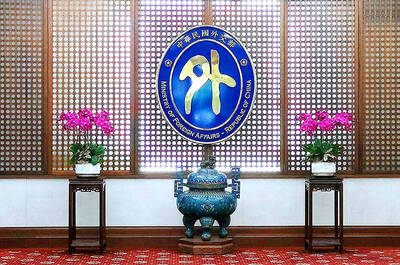
SOUTH KOREA DISPUTE: If Seoul continues to ignore its request, Taiwan would change South Korea’s designation on its arrival cards, the foreign ministry said If South Korea does not reply appropriately to a request to correct Taiwan’s name on its e-Arrival card system before March 31, the government would take corresponding measures to change how South Korea is labeled on the online Taiwan Arrival Card system, the Ministry of Foreign Affairs said yesterday. South Korea’s e-Arrival card system lists Taiwan as “China (Taiwan)” in the “point of departure” and “next destination” fields. Taipei has asked Seoul to change the wording. Since March 1, South Koreans who hold government-issued Alien Resident Certificates (ARC) have been identified as from “South Korea” rather than the “Republic of Korea,” the


 RSS
RSS