


A major US arms sales package for Taiwan is in limbo following pressure from Chinese President Xi Jinping (習近平) and concerns among some US officials that greenlighting the deal would derail US President Donald Trump’s upcoming visit to Bejing, the Wall Street Journal (WSJ) reported on Wednesday.
Trump on Monday said that he would decide soon on whether to send more weapons to Taiwan, after Xi warned him not to do so.
“I’m talking to him about it. We had a good conversation, and we’ll make a determination pretty soon,” Trump told reporters aboard Air Force One when asked about warnings raised by Beijing during a phone call with Xi on Feb. 4 over potential additional US arms sales to Taiwan.
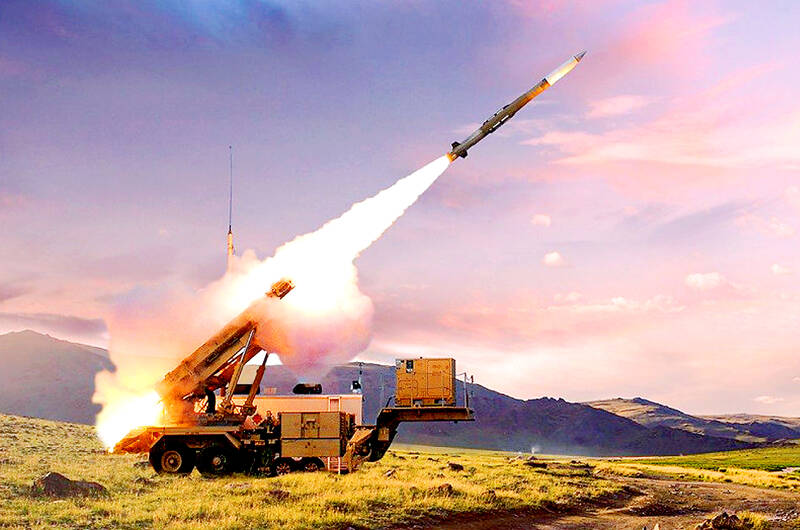
Photo: Screen grab from Lockheed Martin’s Web site
Trump wants to avoid “antagonizing” China ahead of his visit, set for the first week of April, the WSJ said, citing anonymous US officials.
Beijing was already “angered” over the US$11.1 billion potential arms sales for Taiwan announced in December, the report said, adding that US officials had been discussing approving additional sales when Xi pressed Trump about the issue during their phone call.
The new arms sale package had been expected to include Patriot anti-missile interceptors and other weapons, the report said, citing a US congressional aide.
Trump’s advisers are “vacillating” on the decision, the report said, citing a US official familiar with the arms package, who insisted that “Trump would not be pushed around by China,” despite Xi being “adamant.”
Trump wants to preserve a trade truce with Xi, so the timing of an arms sale decision is being “carefully considered behind the scenes,” the report said, citing a second US official.
The US Congress has not officially been notified of new arms sales, it said.
In response, a US official told the newspaper that “the arms sales are working their way through the administration’s internal process.”
The White House “for now” is giving priority to stability, moving to sideline policy decisions that could incite retaliation from China or derail the upcoming summit, the report said.
Ahead of Trump’s anticipated visit to Beijing, both sides are looking to start formal negotiations over “deliverables,” it said.
The core friction point remains Taiwan, the report said.
Some Chinese policy advisers have discussed internally that a much larger economic package — potentially including significant US Treasury purchases — could be on the table in exchange for a more proactive US stance against Taiwanese independence, it said.
It is unclear whether such proposals are being seriously considered by Chinese negotiators led by Chinese Vice Premier He Lifeng (何立峰), it added.
With the summit around the corner, the Pentagon’s new National Defense Strategy struck a conciliatory tone toward Beijing, it said.
The document, released last month, stressed the need to establish “a decent peace, on terms favorable to Americans, but that China can also accept and live under,” it said.
That strategy did not specifically mention Taiwan, but included a more general statement that the US military would “erect a strong denial defense along the first island chain,” a string of islands that includes Japan, Taiwan and the Philippines, it said.
“The clear signal coming from the Trump administration is that it simply wants to maintain the current status quo ahead of April’s summit and avoid an escalatory cycle,” Washington-based research firm Beacon Policy Advisors said in a report released on Monday.
In Taipei, a national security official said that Washington has made its position clear that the security of the first island chain is directly tied to US interests, and Taiwan sits at the heart of it as a “critical node.”
Rather than slipping into “US skepticism” or “Trump skepticism” in response to the president’s actions, the official said, on condition of anonymity, that the focus should return to strategic fundamentals.
That means steadily bolstering Taiwan’s geopolitical security and defense preparedness — and positioning itself as an indispensable pillar of regional stability, the official said.
Additional reporting by Chen Yun and AFP
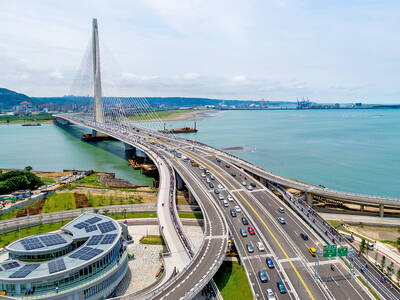
The Ministry of Transportation and Communications yesterday inaugurated the Danjiang Bridge across the Tamsui River in New Taipei City, saying that the structure would be an architectural icon and traffic artery for Taiwan. Feted as a major engineering achievement, the Danjiang Bridge is 920m long, 211m tall at the top of its pylon, and is the longest single-pylon asymmetric cable-stayed bridge in the world, the government’s Web site for the structure said. It was designed by late Iraqi-British architect Zaha Hadid. The structure, with a maximum deck of 70m, accommodates road and light rail traffic, and affords a 200m navigation channel for boats,
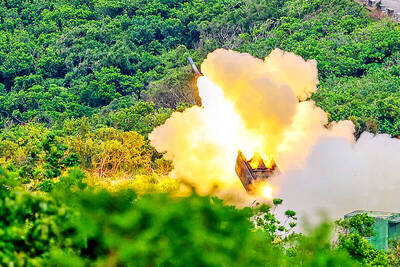
PRECISION STRIKES: The most significant reason to deploy HIMARS to outlying islands is to establish a ‘dead zone’ that the PLA would not dare enter, a source said A High Mobility Artillery Rocket System (HIMARS) would be deployed to Penghu County and Dongyin Island (東引) in Lienchiang County (Matsu) to force the Chinese military to retreat at least 100km from the coastline, a military source said yesterday. Taiwan has been procuring HIMARS and Army Tactical Missile Systems (ATACMS) from the US in batches. Once all batches have been delivered, Taiwan would possess 111 HIMARS units and 504 ATACMS, which have a range of 300km. Considering that “offense is the best defense,” the military plans to forward-deploy the systems to outlying islands such as Penghu and Dongyin so that

Taiwan Semiconductor Manufacturing Co (TSMC, 台積電), the world’s largest foundry service provider, yesterday said that global semiconductor revenue is projected to hit US$1.5 trillion in 2030, after the figure exceeds US$1 trillion this year, as artificial intelligence (AI) demand boosts consumption of token and compute power. “We are still at the beginning of the AI revolution, but we already see a significant impact across the whole semiconductor ecosystem,” TSMC deputy cochief operating officer Kevin Zhang (張曉強) said at the company’s annual technology symposium in Hsinchu City. “It is fair to say that in the past decade, smartphones and other mobile devices were
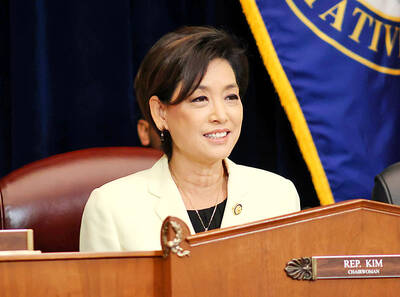
‘CLEAR MESSAGE’: The bill would set up an interagency ‘tiger team’ to review sanctions tools and other economic options to help deter any Chinese aggression toward Taiwan US Representative Young Kim has introduced a bill to deter Chinese aggression against Taiwan, calling for an interagency “tiger team” to preplan coordinated sanctions and economic measures in response to possible Chinese military or political action against Taiwan. “[Chinese President] Xi Jinping [習近平] has directed the People’s Liberation Army to be ready to invade Taiwan by 2027. China has a plan. America should have one too,” Kim said in a news release on Thursday last week. She introduced the “Deter PRC [People’s Republic of China] aggression against Taiwan act” to “ensure the US has a coordinated sanctions strategy ready should


 RSS
RSS