


China yesterday released a policy white paper on Hong Kong’s practice of safeguarding national security to ensure stability in a volatile world, emphasizing that Beijing has “fundamental responsibility” for national security affairs in the territory.
The white paper was released by China’s State Council a day after a Hong Kong court sentenced leading China critic and former media mogul Jimmy Lai (黎智英) to 20 years imprisonment in a landmark foreign collusion case under the territory’s National Security Law.
Lai’s sentence, the heaviest so far under the China-imposed law, drew international criticism from Taiwan, the US, the UK, the EU, Japan and rights groups.
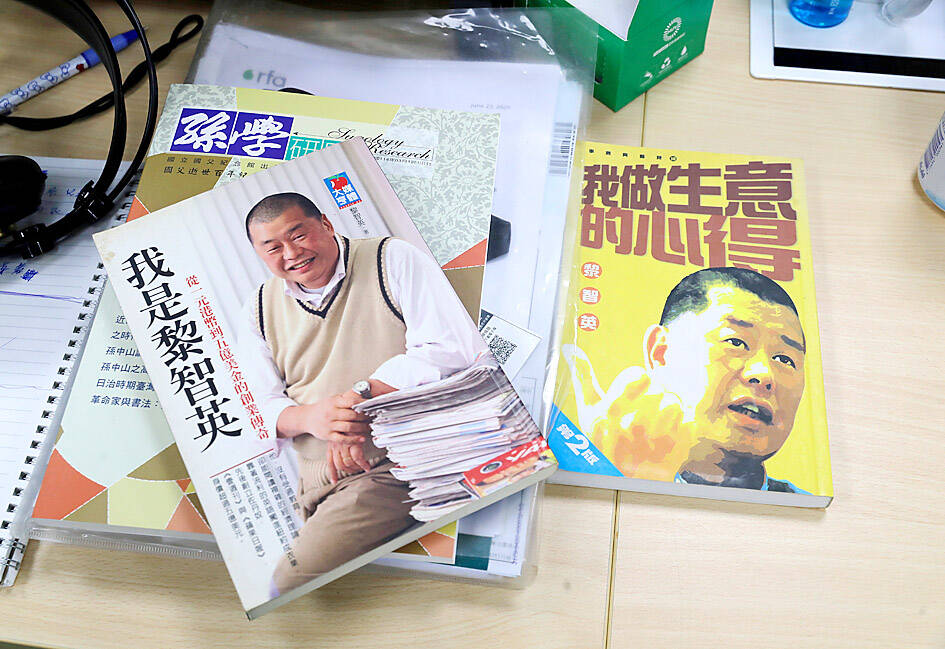
Photo: Chiang Ying-ying, AP
The white paper said Hong Kong would continue to improve its legal system to safeguard national security.
“Hong Kong, enjoying high-standard security, is bound to overcome all risks and challenges on the journey forward, and remain as steady as a rock in a turbulent world,” it read.
Hong Kong Chief Executive John Lee (李家超) welcomed the white paper, saying authorities needed to remain vigilant against national security risks.
He said Lai’s sentence sent a “solemn warning against malicious plots of collusion with external elements and endangering national security.”
Critics say the sweeping national security law has been used to clamp down on dissent and the opposition pro-democracy movement after mass protests in 2019.
However, the white paper described the law as a “legal shield” that had “neutralized this major threat” and restored order.
Hong Kong’s practice of safeguarding national security had “consolidated the security foundation” of the territory’s “one country, two systems” governance model and “further enriched China’s national security system,” the paper said.
Such white papers on Hong Kong are released periodically by China, outlining Beijing’s latest policy stance toward the territory.
The previous white paper in 2021 outlined Hong Kong’s democratic development after a revamp of the electoral system to ensure only “patriots” could run for public office — a move criticized by some countries as an erosion of democratic freedoms by marginalizing opposition democrats.

SILENCING CRITICS: In addition to blocking Taiwan, China aimed to prevent rights activists from speaking out against authoritarian states, a Cabinet department said The Ministry of Foreign Affairs (MOFA) yesterday condemned transnational repression by Beijing after RightsCon, a major digital human rights conference scheduled to be held in Zambia this week, was abruptly canceled due to Chinese pressure over Taiwanese participation. This year’s RightsCon, the world’s largest conference discussing issues “at the intersection of human rights and technology,” was scheduled to take place from tomorrow to Friday in Lusaka, and expected to draw 2,600 in-person attendees from 150 countries, along with 1,100 online participants. However, organizers were forced to cancel the event due to behind-the-scenes pressure from China, the ministry said, expressing its “strongest condemnation”
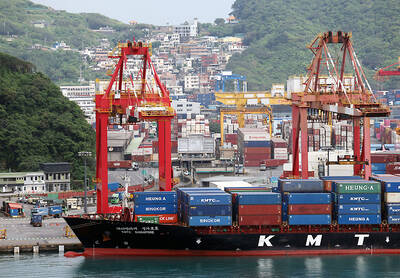
Taiwan’s economy grew far faster than expected in the first quarter, as booming demand for artificial intelligence (AI) applications drove a surge in exports, spilling over into investment and consumption, the Directorate-General of Budget, Accounting and Statistics (DGBAS) said yesterday. GDP growth was 13.69 percent year-on-year during the January-to-March period, beating the DGBAS’ February forecast by 2.23 percentage points and marking the most robust growth in nearly four decades, DGBAS senior official Chiang Hsin-yi (江心怡) told a news conference in Taipei. The result was powered by exports, which remain the backbone of Taiwan’s economy, Chiang said. Outbound shipments jumped 51.12 percent year-on-year to
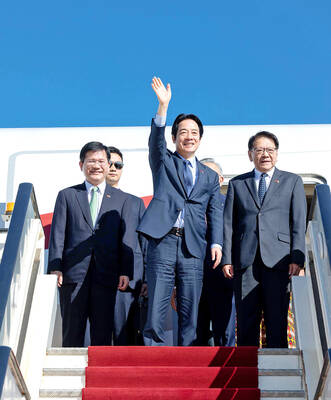
DELAYED BUT DETERMINED: The president’s visit highlights Taiwan’s right to international engagement amid regional pressure from China President Willaim Lai (賴清德) yesterday arrived in Eswatini, more than a week after his planned visit to Taiwan’s sole African ally was suspended because of revoked overflight permits. “The visit, originally scheduled for April 22, was postponed due to unforeseen external factors,” Lai wrote on social media. “After several days of careful arrangements by our diplomatic and national security teams, we successfully arrived today.” Lai said he looked forward to further deepening Taiwan-Eswatini relations through closer cooperation in the economy, agriculture, culture and education, as well as advancing the nation’s international partnerships. The president was initially scheduled to arrive in time to celebrate
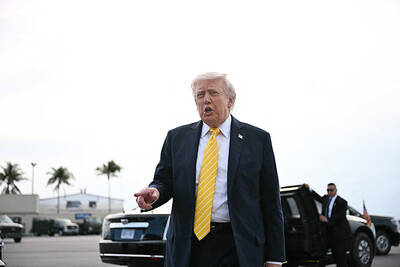
Iran’s Islamic Revolutionary Guard Corp (IRGC) yesterday said the US faced a choice between an “impossible” military operation or a “bad deal” with Tehran, after US President Donald Trump disparaged Iran’s latest peace proposal. Negotiations between the two countries have been deadlocked since a ceasefire came into effect on April 8, with only one round of direct peace talks held so far. Iran’s Tasnim and Fars news agencies reported that Tehran had submitted a 14-point proposal to mediator Pakistan, but Trump was quick to cast doubt on it. “I will soon be reviewing the plan that Iran has just sent to us, but


 RSS
RSS