


Japanese Prime Minister Sanae Takaichi’s ruling coalition won a super-majority of at least two-thirds of the seats in yesterday’s snap lower house elections, national broadcaster NHK projected.
Takaichi’s ruling bloc capitalized on her honeymoon start as Japan’s first female prime minister.
If confirmed, it would be the best result for the Liberal Democratic Party (LDP) since elections in 2017 under Takaichi’s mentor, assassinated former Japanese prime minister Shinzo Abe.
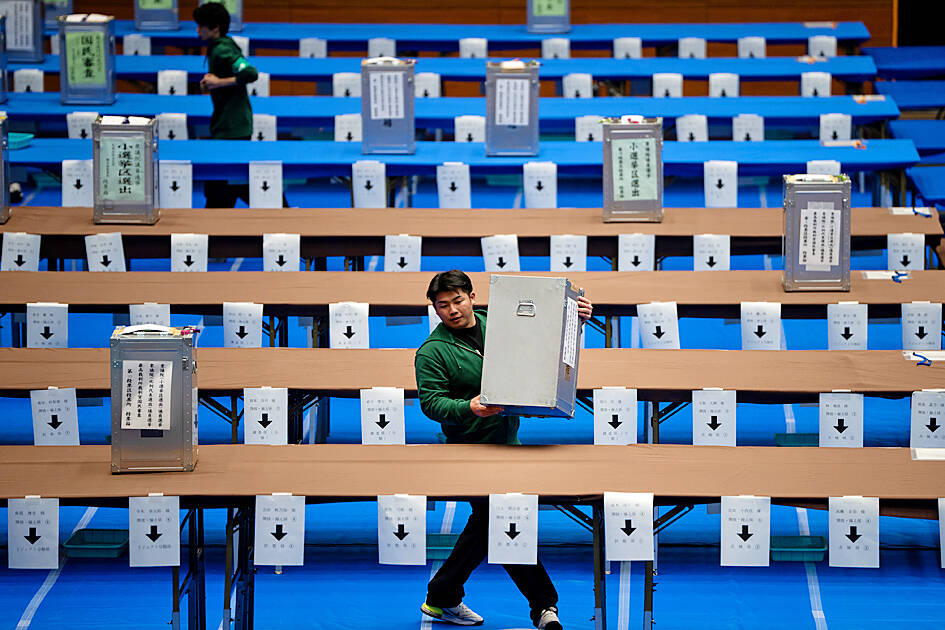
Photo: AP
The LDP alone was seen winning about 300 of the 465 seats up for grabs, up from 198, and regaining a majority lost in 2024 — and potentially a super-majority on its own.
“We received backing for Prime Minister Sanae Takaichi’s responsible, proactive fiscal policies and a strengthening of national defense capabilities,” LDP Secretary-General Shunichi Suzuki told Japanese media.
The new Centrist Reform Alliance of the main opposition Constitutional Democratic Party and the LDP’s previous partner Komeito looked to have lost more than two-thirds of its 167 seats.
The anti-immigration Sanseito party was projected to have increased its seats from two to between five and 14, NHK said.
Takaichi has injected new life into the LDP, which has governed Japan almost non-stop for decades, but which has shed support in the past few elections because of unhappiness about rising prices and corruption.
Takaichi, 64, was a heavy metal drummer in her youth, an admirer of Britain’s “Iron Lady,” former prime minister Margaret Thatcher, and on the ultra-conservative fringe of the LDP when she became party chief and prime minister in October last year.
She has defied pessimists to be a hit with voters, especially young ones, with fans lapping up everything from her handbag to her jamming to a K-pop song with the South Korean president.
However, she will have to deliver on the economy.
“With prices rising like this, what matters most to me is what policies they’ll adopt to deal with inflation,” Chika Sakamoto, 50, said yesterday at a voting station in a snowy Tokyo.
Takaichi’s election triumph might also cause consternation in Beijing.
Barely two weeks in office, Takaichi — seen before assuming the premiership as a China hawk — suggested that Japan could intervene militarily if Beijing sought to take Taiwan by force.
With Takaichi having days earlier pulled out all the stops to welcome US President Donald Trump, Beijing was furious with her unscripted remarks.
It summoned Tokyo’s ambassador, warned its citizens against visiting Japan and conducted joint air drills with Russia.
Japan’s last two pandas were even returned to China last month.

SILENCING CRITICS: In addition to blocking Taiwan, China aimed to prevent rights activists from speaking out against authoritarian states, a Cabinet department said The Ministry of Foreign Affairs (MOFA) yesterday condemned transnational repression by Beijing after RightsCon, a major digital human rights conference scheduled to be held in Zambia this week, was abruptly canceled due to Chinese pressure over Taiwanese participation. This year’s RightsCon, the world’s largest conference discussing issues “at the intersection of human rights and technology,” was scheduled to take place from tomorrow to Friday in Lusaka, and expected to draw 2,600 in-person attendees from 150 countries, along with 1,100 online participants. However, organizers were forced to cancel the event due to behind-the-scenes pressure from China, the ministry said, expressing its “strongest condemnation”
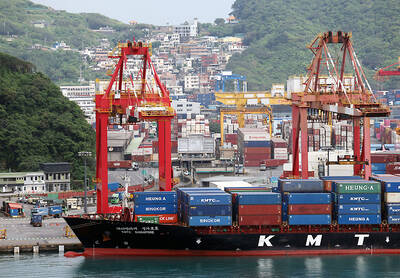
Taiwan’s economy grew far faster than expected in the first quarter, as booming demand for artificial intelligence (AI) applications drove a surge in exports, spilling over into investment and consumption, the Directorate-General of Budget, Accounting and Statistics (DGBAS) said yesterday. GDP growth was 13.69 percent year-on-year during the January-to-March period, beating the DGBAS’ February forecast by 2.23 percentage points and marking the most robust growth in nearly four decades, DGBAS senior official Chiang Hsin-yi (江心怡) told a news conference in Taipei. The result was powered by exports, which remain the backbone of Taiwan’s economy, Chiang said. Outbound shipments jumped 51.12 percent year-on-year to
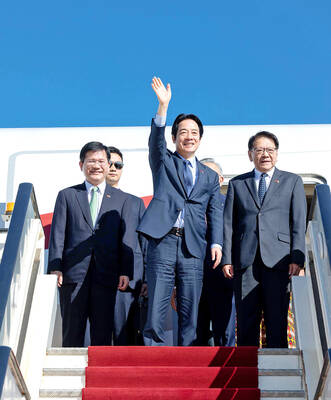
DELAYED BUT DETERMINED: The president’s visit highlights Taiwan’s right to international engagement amid regional pressure from China President Willaim Lai (賴清德) yesterday arrived in Eswatini, more than a week after his planned visit to Taiwan’s sole African ally was suspended because of revoked overflight permits. “The visit, originally scheduled for April 22, was postponed due to unforeseen external factors,” Lai wrote on social media. “After several days of careful arrangements by our diplomatic and national security teams, we successfully arrived today.” Lai said he looked forward to further deepening Taiwan-Eswatini relations through closer cooperation in the economy, agriculture, culture and education, as well as advancing the nation’s international partnerships. The president was initially scheduled to arrive in time to celebrate
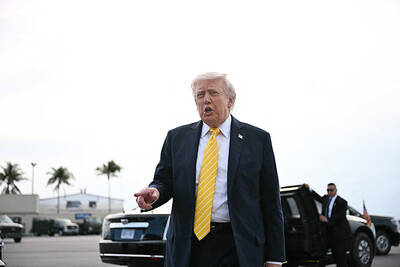
Iran’s Islamic Revolutionary Guard Corp (IRGC) yesterday said the US faced a choice between an “impossible” military operation or a “bad deal” with Tehran, after US President Donald Trump disparaged Iran’s latest peace proposal. Negotiations between the two countries have been deadlocked since a ceasefire came into effect on April 8, with only one round of direct peace talks held so far. Iran’s Tasnim and Fars news agencies reported that Tehran had submitted a 14-point proposal to mediator Pakistan, but Trump was quick to cast doubt on it. “I will soon be reviewing the plan that Iran has just sent to us, but


 RSS
RSS