


The WHO ignored early COVID-19 warnings from Taiwan, US Deputy Secretary of Health and Human Services Jim O’Neill said on Friday, as part of justification for Washington withdrawing from the global health body.
US Secretary of State Marco Rubio on Thursday said that the US was pulling out of the UN agency, as it failed to fulfill its responsibilities during the COVID-19 pandemic.
The WHO “ignored early COVID warnings from Taiwan in 2019 by pretending Taiwan did not exist, O’Neill wrote on X on Friday, Taiwan time. “It ignored rigorous science and promoted lockdowns.”
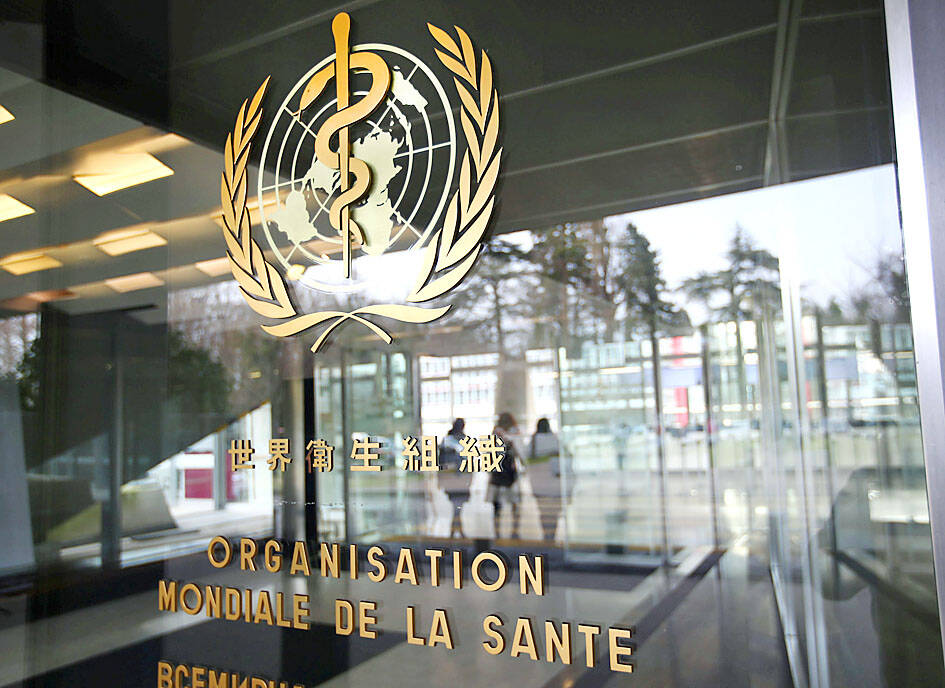
Photo: Reuters
The US will “continue international coordination on infectious disease without the Eurocrats in Geneva,” he added.
WHO COVID-19 technical lead Maria Van Kerkhove on Saturday called it “all untrue.”
The WHO detected the Wuhan outbreak signal on Dec. 31, 2019, she said.
“Taiwan didn’t warn us: They asked for information the same day,” she wrote. “We have not ignored Taiwan, we don’t ignore science and WHO never recommended lockdowns.”
Taiwan’s Centers for Disease Control (CDC) on Dec. 31, 2019, learned that at least seven cases of atypical pneumonia had occurred in Wuhan, China, then-Central Epidemic Command Center (CECC) spokesman Chuang Jen-hsiang (莊人祥) said in April 2020.
Drawing on its experience from the SARS outbreak, the CDC reached out to the WHO via e-mail that day requesting more details, Chuang said.
The WHO on April 11, 2020, said it had not ignored Taiwan’s warnings about COVID-19, adding that Taiwan’s e-mail at the time did not mention the risk of human-to-human transmission.
Then-CECC head Chen Shih-chung (陳時中) said that although Taiwan did not explicitly state the risk of human-to-human transmission, it implied this by emphasizing that all cases were isolated for treatment.
Chen released his Dec. 31, 2019, e-mail to the WHO in April 2020. It reads as follows: “News resources today indicate that at least seven atypical pneumonia cases were reported in Wuhan, CHINA. Their health authorities replied to the media that the cases were believed not SARS; however the samples are still under examination, and cases have been isolated for treatment.”
“I would greatly appreciate it if you have relevant information to share with us,” it said.
“Thank you very much in advance for your attention to this matter,” it said.
HELPING JAPAN
In related news, former Japan Self-Defense Forces chief of staff Shigeru Iwasaki on Sunday said that Taiwan proactively provided Japan with information about the COVID-19 outbreak at the end of 2019, playing an important role in Japan’s decisionmaking.
Japan knew next to nothing about the COVID-19 outbreak at the end of 2019, while Taiwan detected early warning signs and proactively provided Tokyo with information, the Executive Yuan consultant said at a meeting of the All Japan Taiwanese Union.
Iwasaki said that when he traveled to Taiwan in January 2020, he was immediately briefed on the situation by Ministry of National Defense and health officials.
Taiwan had already detected an unknown virus emerging in China and asked whether Japan had any relevant information, he said.
Iwasaki was then serving as an adviser to the Japanese government and contacted then-chief Cabinet secretary Yoshihide Suga, only to hear: “We know nothing,” he said.
In contrast, Taiwan held an emergency meeting on Jan. 2, 2020, and implemented border and disease-control measures before the outbreak gained international attention, he added.
Many of Japan’s COVID-19 response measures relied on key information provided by Taiwan, which played an important role in Japan’s assessments and decisionmaking, Iwasaki said.
Taiwan has helped Japan tremendously, but Japan has never properly reciprocated, he said, adding that he hoped to promote more tangible cooperation between the two nations.

SILENCING CRITICS: In addition to blocking Taiwan, China aimed to prevent rights activists from speaking out against authoritarian states, a Cabinet department said The Ministry of Foreign Affairs (MOFA) yesterday condemned transnational repression by Beijing after RightsCon, a major digital human rights conference scheduled to be held in Zambia this week, was abruptly canceled due to Chinese pressure over Taiwanese participation. This year’s RightsCon, the world’s largest conference discussing issues “at the intersection of human rights and technology,” was scheduled to take place from tomorrow to Friday in Lusaka, and expected to draw 2,600 in-person attendees from 150 countries, along with 1,100 online participants. However, organizers were forced to cancel the event due to behind-the-scenes pressure from China, the ministry said, expressing its “strongest condemnation”
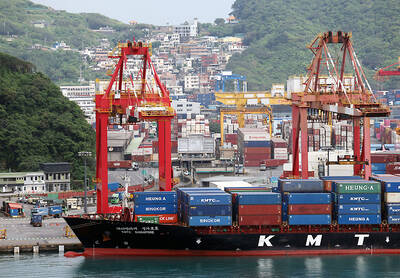
Taiwan’s economy grew far faster than expected in the first quarter, as booming demand for artificial intelligence (AI) applications drove a surge in exports, spilling over into investment and consumption, the Directorate-General of Budget, Accounting and Statistics (DGBAS) said yesterday. GDP growth was 13.69 percent year-on-year during the January-to-March period, beating the DGBAS’ February forecast by 2.23 percentage points and marking the most robust growth in nearly four decades, DGBAS senior official Chiang Hsin-yi (江心怡) told a news conference in Taipei. The result was powered by exports, which remain the backbone of Taiwan’s economy, Chiang said. Outbound shipments jumped 51.12 percent year-on-year to
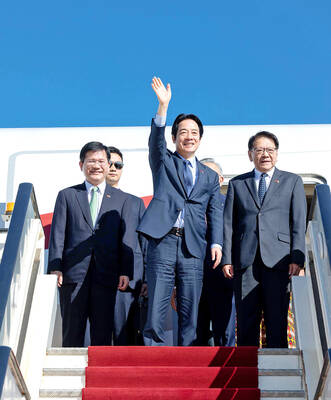
DELAYED BUT DETERMINED: The president’s visit highlights Taiwan’s right to international engagement amid regional pressure from China President Willaim Lai (賴清德) yesterday arrived in Eswatini, more than a week after his planned visit to Taiwan’s sole African ally was suspended because of revoked overflight permits. “The visit, originally scheduled for April 22, was postponed due to unforeseen external factors,” Lai wrote on social media. “After several days of careful arrangements by our diplomatic and national security teams, we successfully arrived today.” Lai said he looked forward to further deepening Taiwan-Eswatini relations through closer cooperation in the economy, agriculture, culture and education, as well as advancing the nation’s international partnerships. The president was initially scheduled to arrive in time to celebrate
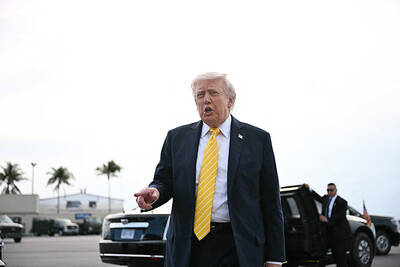
Iran’s Islamic Revolutionary Guard Corp (IRGC) yesterday said the US faced a choice between an “impossible” military operation or a “bad deal” with Tehran, after US President Donald Trump disparaged Iran’s latest peace proposal. Negotiations between the two countries have been deadlocked since a ceasefire came into effect on April 8, with only one round of direct peace talks held so far. Iran’s Tasnim and Fars news agencies reported that Tehran had submitted a 14-point proposal to mediator Pakistan, but Trump was quick to cast doubt on it. “I will soon be reviewing the plan that Iran has just sent to us, but


 RSS
RSS