


The US House of Representatives on Monday released its version of the Consolidated Appropriations Act, which includes US$1.15 billion to support security cooperation with Taiwan.
The omnibus act, covering US$1.2 trillion of spending, allocates US$1 billion for the Taiwan Security Cooperation Initiative, as well as US$150 million for the replacement of defense articles and reimbursement of defense services provided to Taiwan.
The fund allocations were based on the US National Defense Authorization Act for fiscal 2026 that was passed by the US Congress last month and authorized up to US$1 billion to the US Defense Security Cooperation Agency in support of the initiative, which is designed to bolster Taiwan’s self-defense capabilities by providing funding for areas such as medical support, training and joint development of uncrewed systems with the US, consistent with the Taiwan Relations Act.
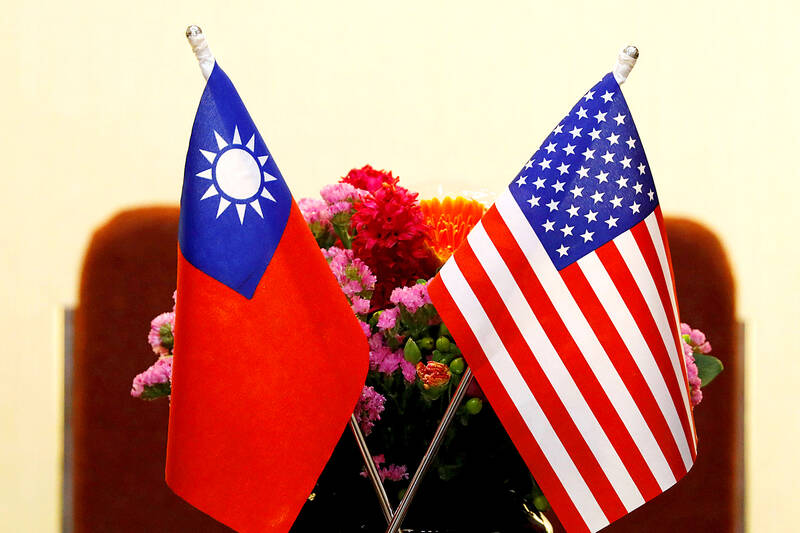
Photo: Tyrone Siu, Reuters
Whether the funding gets released would depend on how the Consolidated Appropriations Act proceeds through Congress.
After partisan wrangling over budgets forced the longest US government shutdown last year, lawmakers seem interested in getting funding bills passed by Friday next week to avoid another shutdown.
The bills still need to get through the Senate, which, according to USA Today, is scheduled to be out of town for the rest of the week, and the full House, expected be out all of next week, by the deadline.
In related news, the House introduced its version of the PORCUPINE Act to designate Taiwan as a “NATO-plus” partner to facilitate transfers of military equipment to the nation.
The US Senate last month unanimously passed its version of the proposed legislation, formally known as the Providing Our Regional Companions Upgraded Protection in Nefarious Environments (PORCUPINE) Act.
US Representative Rob Wittman said in a statement that he cosponsored the bipartisan bill with US representatives Ryan Mackenzie, Don Davis and Ami Bera.
Defining Taiwan as a NATO-plus partner means shorter approval timelines and higher cost thresholds requiring approval for arms sales, authorizing the US president to reduce or waive some arms sales, Wittman said.
It would also require the US Department of State to conduct feasibility assessments to allow allies to transfer some technology, he said.
“Taiwan is at the tip of the spear in our effort to ensure a free and open Indo-Pacific region and serves as a key regional partner to the United States,” Wittman said.
“Our strategic partners in the Indo-Pacific are facing increasing aggression by the Chinese Communist Party,” he said.
“Now more than ever we must ensure Taiwan has the military capabilities to defend itself,” he added.
The legislation would “cut burdensome regulations and enable a quicker arms procurement process for our Taiwanese partners,” Wittman added.
“Taiwan stands on the front lines of the struggle between democracy and authoritarianism,” Davis said in the statement.
“A stronger Taiwan deters aggression, protects democracy and makes the US safer,” he said.
“Taiwan is a vibrant democracy and a vital partner in the Indo-Pacific” region, Wittman’s office quoted Bera as saying. “This bill strengthens our commitment to Taiwan’s self-defense and reaffirms that the US stands with our democratic partners.”
“The PORCUPINE Act is a commonsense, bipartisan way to cut through red tape, strengthen deterrence and support Taiwan’s ability to defend itself,” Mackenzie said in the statement. “By streamlining certification and licensing for trusted allies, this bill promotes stability in the region and helps prevent conflict.”

Taiwan Semiconductor Manufacturing Co (TSMC, 台積電), the world’s largest foundry service provider, yesterday said that global semiconductor revenue is projected to hit US$1.5 trillion in 2030, after the figure exceeds US$1 trillion this year, as artificial intelligence (AI) demand boosts consumption of token and compute power. “We are still at the beginning of the AI revolution, but we already see a significant impact across the whole semiconductor ecosystem,” TSMC deputy cochief operating officer Kevin Zhang (張曉強) said at the company’s annual technology symposium in Hsinchu City. “It is fair to say that in the past decade, smartphones and other mobile devices were
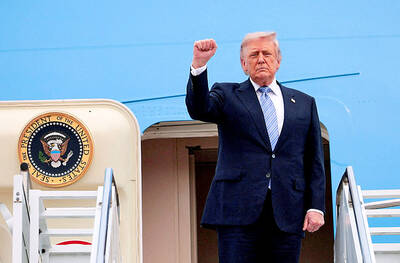
US-CHINA SUMMIT: MOFA welcomed US reassurance of no change in its Taiwan policy; Trump said he did not comment when Xi talked of opposing independence US President Donald Trump yesterday said he has not made a decision on whether to move forward with a major arms package for Taiwan after hearing concerns about it from Chinese President Xi Jinping (習近平). Trump’s comments on Taiwan came as he flew back to Washington after wrapping up critical talks in which both leaders said important progress was made in stabilizing US-China relations even as deep differences persist between the world’s two biggest powers on Iran and Taiwan. “I will make a determination,” Trump said, adding: “I’ll be making decisions. But, you know, I think the last thing we need right

TAIWAN ISSUE: US treasury secretary Scott Bessent said on the first day of meetings that ‘it wouldn’t be a US-China summit without the Taiwan issue coming up’ There were no surprises on the first day of the summit between US President Donald Trump and Chinese President Xi Jinping (習近平), the Mainland Affairs Council (MAC) said yesterday, as the government reiterated that cross-strait stability is crucial to the Asia-Pacific region, as well as the world. As the two presidents met for a highly anticipated summit yesterday, Chinese state media reported that Xi warned Trump that missteps regarding Taiwan could push their two countries into “conflict.” Trump arrived in China with accolades for his host, calling Xi a “great leader” and “friend,” and extending an invitation to visit the White House
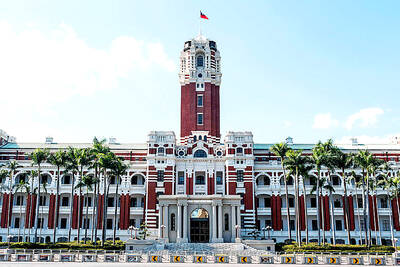
SECURITY: Taipei presses the US for arms supplies, saying the arms sales are not only a reflection of the US security commitment to Taiwan but also serve as a mutual deterrent against regional threats Taiwan is committed to preserving the cross-strait “status quo” and contributing to regional peace and stability, the Presidential Office said yesterday. “It is an undeniable fact that the Republic of China is a sovereign and independent democratic nation,” Presidential Office spokeswoman Karen Kuo (郭雅慧) reiterated, adding that Beijing has no right to claim sovereignty over Taiwan. The statements came after US President Donald Trump warned against Taiwanese independence. Trump wrapped up a state visit to Beijing on Friday, during which Chinese President Xi Jinping (習近平) had pressed him not to support Taiwan. Taiwan depends heavily on US security backing to deter China from carrying


 RSS
RSS