


Failure to complete the signing of an offer on US arms procurement included in the Executive Yuan’s proposed NT$1.25 trillion (US$39.7 billion) special defense budget could raise serious doubts among democratic allies about Taiwan’s commitment to self-defense, Minister of National Defense Wellington Koo (顧立雄) said yesterday.
Speaking at a meeting of the legislature’s Foreign Affairs and National Defense Committee, Koo added that it would mean that the procurement process would have to be restarted and cause delays in upgrading the military’s combat capabilities.
The Executive Yuan on Nov. 27 approved the NT$1.25 trillion special defense budget plan and forwarded it to the Legislative Yuan for review. However, the opposition-controlled legislature has blocked the proposal from advancing to committee review. On Friday, it blocked the special defense budget for the eighth time.
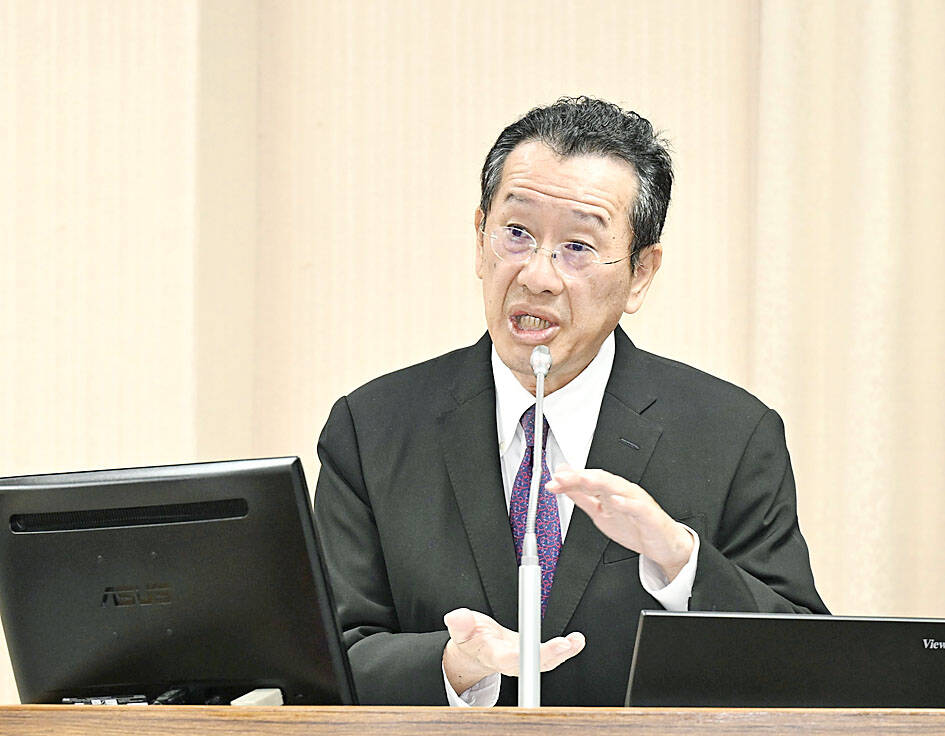
Photo: Lo Pei-de, Taipei Times
Koo said that if the special budget remains stalled, it would cause the nation’s allies, including the US, “to seriously question Taiwan’s determination to defend itself.”
Whether it is the ministry’s annual budget or the eight-year NT$1.25 trillion special military procurement act, they both aim to address enemy threats and the need for joint defense operational capabilities, he said.
The budgets are crucial for national security, he said, expressing the hope that both the ruling and opposition parties could work together to strengthen Taiwan’s self-defense capabilities.
Democratic Progressive Party Legislator Chen Chun-yu (陳俊宇) asked which weapons would be affected and what the effect on the procurement schedule would be, given that the ministry had previously warned that delays in the budget review could lead to other countries cutting in line for equipment deliveries.”
Department of Strategic Planning Director Lieutenant General Huang Wen-chi (黃文啟) said that countries globally are increasing their defense budgets and would be buying large amounts of military equipment in the coming years, many of which overlap with Taiwan’s needs.
As there is growing competition for the same resources, Taiwan needs to secure the asymmetric defense equipment it needs as soon as possible, he added.
As more than 30 days have passed since Washington notified the US Congress, Taiwan should receive the military procurement pricing offer soon, Huang said.
Taiwan would then have 45 days to process and sign the letter, which could theoretically be extended once, he said.
If Taiwan does not process the pricing letter in time and the US does not agree to extend its offer, Taiwan would have to go through the entire process again, which could take another eight months or more, he said.
It took over eight months from the time Taiwan submitted its arms procurement request in March last year to the time the US Congress was notified last month, he said.
In related news, Koo rebutted a report by the Chinese-language United Daily News that the ministry has established a “joint firepower coordination center” with the US for US personnel to oversee the Taiwanese military.
Calling the report false, he said that Taiwan and the US have already institutionalized an exchange mechanism to deepen cooperation in various fields to strengthen the military’s defensive capabilities.

SILENCING CRITICS: In addition to blocking Taiwan, China aimed to prevent rights activists from speaking out against authoritarian states, a Cabinet department said The Ministry of Foreign Affairs (MOFA) yesterday condemned transnational repression by Beijing after RightsCon, a major digital human rights conference scheduled to be held in Zambia this week, was abruptly canceled due to Chinese pressure over Taiwanese participation. This year’s RightsCon, the world’s largest conference discussing issues “at the intersection of human rights and technology,” was scheduled to take place from tomorrow to Friday in Lusaka, and expected to draw 2,600 in-person attendees from 150 countries, along with 1,100 online participants. However, organizers were forced to cancel the event due to behind-the-scenes pressure from China, the ministry said, expressing its “strongest condemnation”
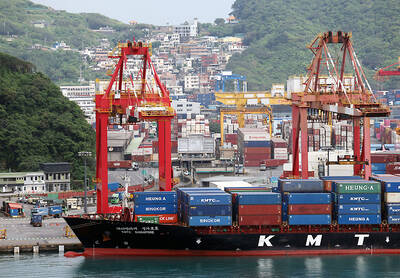
Taiwan’s economy grew far faster than expected in the first quarter, as booming demand for artificial intelligence (AI) applications drove a surge in exports, spilling over into investment and consumption, the Directorate-General of Budget, Accounting and Statistics (DGBAS) said yesterday. GDP growth was 13.69 percent year-on-year during the January-to-March period, beating the DGBAS’ February forecast by 2.23 percentage points and marking the most robust growth in nearly four decades, DGBAS senior official Chiang Hsin-yi (江心怡) told a news conference in Taipei. The result was powered by exports, which remain the backbone of Taiwan’s economy, Chiang said. Outbound shipments jumped 51.12 percent year-on-year to
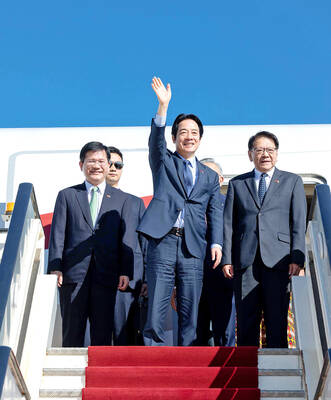
DELAYED BUT DETERMINED: The president’s visit highlights Taiwan’s right to international engagement amid regional pressure from China President Willaim Lai (賴清德) yesterday arrived in Eswatini, more than a week after his planned visit to Taiwan’s sole African ally was suspended because of revoked overflight permits. “The visit, originally scheduled for April 22, was postponed due to unforeseen external factors,” Lai wrote on social media. “After several days of careful arrangements by our diplomatic and national security teams, we successfully arrived today.” Lai said he looked forward to further deepening Taiwan-Eswatini relations through closer cooperation in the economy, agriculture, culture and education, as well as advancing the nation’s international partnerships. The president was initially scheduled to arrive in time to celebrate
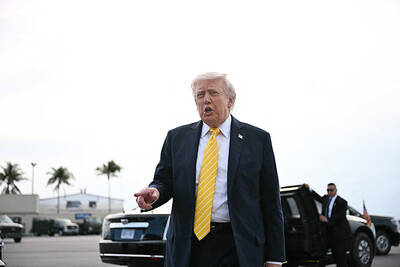
Iran’s Islamic Revolutionary Guard Corp (IRGC) yesterday said the US faced a choice between an “impossible” military operation or a “bad deal” with Tehran, after US President Donald Trump disparaged Iran’s latest peace proposal. Negotiations between the two countries have been deadlocked since a ceasefire came into effect on April 8, with only one round of direct peace talks held so far. Iran’s Tasnim and Fars news agencies reported that Tehran had submitted a 14-point proposal to mediator Pakistan, but Trump was quick to cast doubt on it. “I will soon be reviewing the plan that Iran has just sent to us, but


 RSS
RSS