


The US and Taiwan have reached a broad consensus on their trade deal and further details would be announced after a final wrap-up meeting, the Executive Yuan’s Office of Trade Negotiations said today.
The New York Times yesterday reported that the two nations are nearing a trade deal to reduce Taiwan’s tariff rate to 15 percent and commit Taiwan Semiconductor Manufacturing Co (TSMC, 台積電) to building at least five more facilities in the US.
“The agreement, which has been under negotiation for months, is being legally scrubbed and could be announced this month,” the article said, citing three people familiar with the matter.
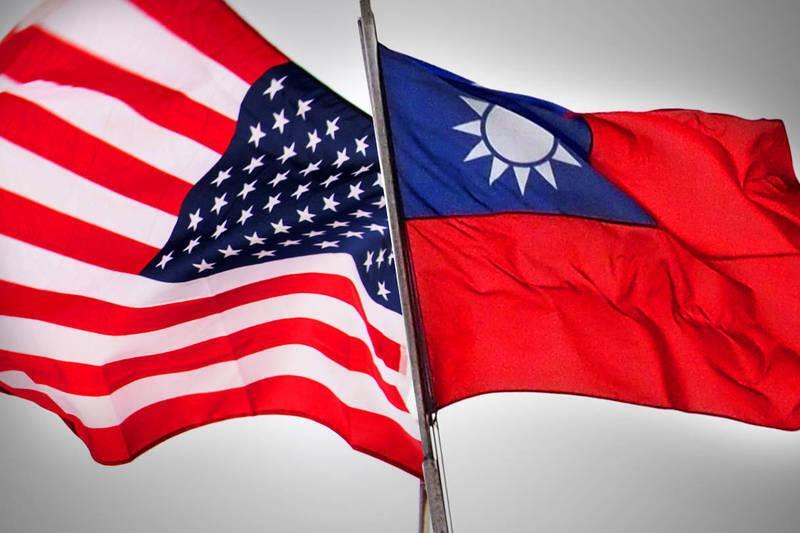
Photo: AFP
The reduced tariff rate is in line with those applied to Japan and South Korea, which struck trade deals last year, it said.
The timeline for TSMC’s further investment in the US remains unclear, it added.
The objective of trade negotiations with the US has always been to reduce reciprocal tariffs without stacking them and secure preferential treatment for semiconductors under a legal provision known as Section 232, the Office of Trade Negotiations said in a statement today.
After the fifth round of in-person Taiwan-US talks, Taiwan continued to discuss supply chain cooperation with the US Department of Commerce through video meetings and written exchanges, the office said.
Taiwan asked the US to create a more favorable investment environment for Taiwanese companies by offering support such as access to land, water, electricity, visas and simpler administrative procedures, it said.
Taiwan also continued to exchange documents with the Office of the US Trade Representative to confirm the details of a Taiwan-US trade agreement, and the two sides have reached a certain degree of consensus, it added.
Taiwan and the US are scheduling a final wrap-up meeting, after which they would publicly announce the details of the deal, the office said.
The government would brief the Legislative Yuan and the public on the agreement and submit it in full, along with an impact assessment, to the legislature for review, it said.
In the first phase of Taiwan-US trade talks from April to the end of July last year, both sides negotiated tariffs, trade barriers, economic security, procurement and supply chain issues, the office said in previous statements.
Talks then shifted to a second phase focused on supply chain cooperation under the “Taiwan model,” while Taiwan continued to seek reduced, non-stacked reciprocal tariffs and preferential treatment under Section 232 for semiconductors and related products, it said.
Taiwan earlier concluded trade discussions with the Office of the US Trade Representative, then continued to discuss Section 232 tariffs and TSMC’s investment plans with the US Department of Commerce, the New York Times said.
Officials in US President Donald Trump’s administration have said companies that invest in the US would not be subject to Section 232 tariffs, but it is unclear exactly how the arrangement would work, it said.
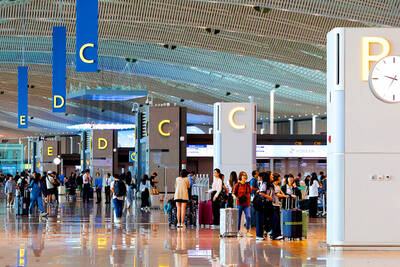
South Korea has adjusted its electronic arrival card system to no longer list Taiwan as a part of China, a move that the Ministry of Foreign Affairs said would help facilitate exchanges between the two sides. South Korea previously listed “Taiwan” as “Taiwan (China)” in the drop-down menus of its online arrival card system, where people had to fill out where they came from and their next destination. The ministry had requested South Korea make a revision and said it would change South Korea’s name on Taiwan’s online immigration system from “Republic of Korea” to “Korea (South),” should the issue not be

Tainan, Taipei and New Taipei City recorded the highest fines nationwide for illegal accommodations in the first quarter of this year, with fines issued in the three cities each exceeding NT$7 million (US$220,639), Tourism Administration data showed. Among them, Taipei had the highest number of illegal short-term rental units, with 410. There were 3,280 legally registered hotels nationwide in the first quarter, down by 14 properties, or 0.43 percent, from a year earlier, likely indicating operators exiting the market, the agency said. However, the number of unregistered properties rose to 1,174, including 314 illegal hotels and 860 illegal short-term rental
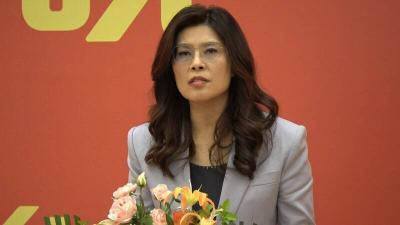
Both sides of the Taiwan Strait share a political foundation based on the “1992 consensus” and opposition to Taiwanese independence, Chinese Nationalist Party (KMT) Chairwoman Cheng Li-wun (鄭麗文) today said during her meeting with Chinese President Xi Jinping (習近平). Both sides of the Strait should plan and build institutionalized and sustainable mechanisms for dialogue and cooperation based on that foundation to make peaceful development across the Strait irreversible, she said. Peace is a shared moral value across the Strait, and both sides should move beyond political confrontation to seek institutionalized solutions to prevent war, she said. Mutually beneficial cross-strait relations are what the
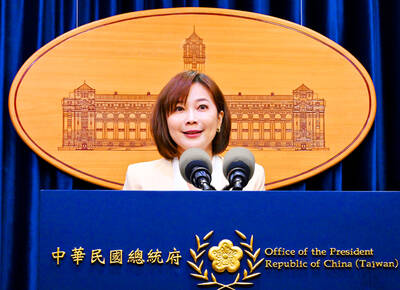
ECONOMIC COERCION: Such actions are often inconsistently applied, sometimes resumed, and sometimes just halted, the Presidential Office spokeswoman said The government backs healthy and orderly cross-strait exchanges, but such arrangements should not be made with political conditions attached and never be used as leverage for political maneuvering or partisan agendas, Presidential Office spokeswoman Karen Kuo (郭雅慧) said yesterday. Kuo made the remarks after China earlier in the day announced 10 new “incentive measures” for Taiwan, following a landmark meeting between Chinese President Xi Jinping (習近平) and Chinese Nationalist Party (KMT) Chairwoman Cheng Li-wun (鄭麗文) in Beijing on Friday. The measures, unveiled by China’s Xinhua news agency, include plans to resume individual travel by residents of Shanghai and China’s Fujian


 RSS
RSS