


Chinese President Xi Jinping (習近平) is to host South Korean President Lee Jae-myung on a state visit starting tomorrow, signaling Beijing’s intent to deepen ties with Seoul amidst strained relations with Tokyo over Taiwan.
The visit marks the second meeting between Xi and Lee in just two months, an unusually short interval that signals China’s keen interest in reinforcing ties with Seoul and boosting economic collaboration and tourism, analysts said.
Relations between China and Japan hit the lowest point in years after Japanese Prime Minister Sanae Takaichi suggested in November last year that Tokyo could take military action if Beijing attacked Taiwan.

Photo: Reuters
Xi’s invitation to Lee for a state visit is a calculated move aimed at deepening bilateral relations, especially before the South Korean leader visits Japan, analysts said.
“China wants to emphasize South Korea’s importance slightly more than before,” Hankuk University of Foreign Studies political economics professor Kang Jun-young said. “China appears to have strategically decided that it would be better to have [Lee] visit China before South Korea holds a summit with Japan again.”
Lee’s top security adviser, Wi Sung-lac, yesterday said he expected the Lee-Xi summit to open a “new chapter” in bilateral ties, adding that the two countries were preparing more than 10 deals on the economy, businesses and climate, although they were not working on a joint statement.
The Lee administration has said it aims to “restore” ties with Beijing, acknowledging China is South Korea’s largest trading partner. The pivot followed strained relations between the two countries under former South Korean president Yoon Suk-yeol, due to his closer alignment with Washington and Tokyo, as well as criticism of Beijing’s handling of Taipei.
Now, South Korea is trying to maintain a balance, but is leaning toward cooperation with China to avoid being forced into any troubles that would threaten the Asian industrial powerhouse.
Lee last month said he would not take sides in the diplomatic dispute between China and Japan.
Former South Korean vice minister of defense Shin Beom-chul said Xi and Lee might discuss contentious issues such as efforts to modernize the South Korea-US alliance.
About 28,500 US troops are based in South Korea to counter any threat from North Korea.
US officials have signaled a plan to make those forces more flexible to respond to other threats, such as defending Taiwan and checking China’s growing military reach.
Wi said South Korea would also try to reassure China that its plans to build nuclear-powered submarines were aimed only at deterring North Korea.
Lee’s agenda with Xi includes persuading China to facilitate dialogue with North Korea, experts said.
South Korea earlier said it expects to address cooperation in areas including critical minerals, supply chain and green industries.
The visit may also foster partnerships on artificial intelligence and advanced technologies, experts said.
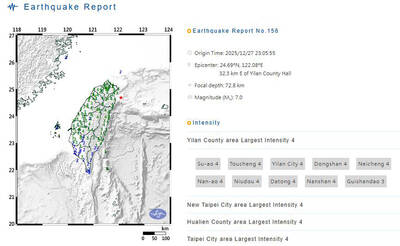
A magnitude 7.0 earthquake struck off Yilan at 11:05pm yesterday, the Central Weather Administration (CWA) said. The epicenter was located at sea, about 32.3km east of Yilan County Hall, at a depth of 72.8km, CWA data showed There were no immediate reports of damage. The intensity of the quake, which gauges the actual effect of a seismic event, measured 4 in Yilan County area on Taiwan’s seven-tier intensity scale, the data showed. It measured 4 in other parts of eastern, northern and central Taiwan as well as Tainan, and 3 in Kaohsiung and Pingtung County, and 2 in Lienchiang and Penghu counties and 1
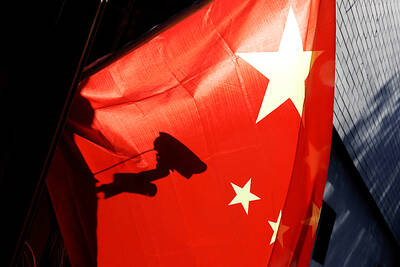
FOREIGN INTERFERENCE: Beijing would likely intensify public opinion warfare in next year’s local elections to prevent Lai from getting re-elected, the ‘Yomiuri Shimbun’ said Internal documents from a Chinese artificial intelligence (AI) company indicated that China has been using the technology to intervene in foreign elections, including propaganda targeting Taiwan’s local elections next year and presidential elections in 2028, a Japanese newspaper reported yesterday. The Institute of National Security of Vanderbilt University obtained nearly 400 pages of documents from GoLaxy, a company with ties to the Chinese government, and found evidence that it had apparently deployed sophisticated, AI-driven propaganda campaigns in Hong Kong and Taiwan to shape public opinion, the Yomiuri Shimbun reported. GoLaxy provides insights, situation analysis and public opinion-shaping technology by conducting network surveillance

Taiwan is gearing up to celebrate the New Year at events across the country, headlined by the annual countdown and Taipei 101 fireworks display at midnight. Many of the events are to be livesteamed online. See below for lineups and links: Taipei Taipei’s New Year’s Party 2026 is to begin at 7pm and run until 1am, with the theme “Sailing to the Future.” South Korean girl group KARA is headlining the concert at Taipei City Hall Plaza, with additional performances by Amber An (安心亞), Nick Chou (周湯豪), hip-hop trio Nine One One (玖壹壹), Bii (畢書盡), girl group Genblue (幻藍小熊) and more. The festivities are to
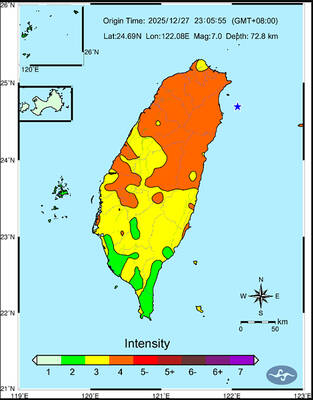
AFTERMATH: The Taipei City Government said it received 39 minor incident reports including gas leaks, water leaks and outages, and a damaged traffic signal A magnitude 7.0 earthquake struck off Taiwan’s northeastern coast late on Saturday, producing only two major aftershocks as of yesterday noon, the Central Weather Administration (CWA) said. The limited aftershocks contrast with last year’s major earthquake in Hualien County, as Saturday’s earthquake occurred at a greater depth in a subduction zone. Saturday’s earthquake struck at 11:05pm, with its hypocenter about 32.3km east of Yilan County Hall, at a depth of 72.8km. Shaking was felt in 17 administrative regions north of Tainan and in eastern Taiwan, reaching intensity level 4 on Taiwan’s seven-tier seismic scale, the CWA said. In Hualien, the


 RSS
RSS