


The Ministry of Health and Welfare is to launch the second stage of its Long-term Care 3.0 on Thursday next week, expanding dementia services and upgrading community-based care as Taiwan transitions to a “super-aged” society.
The first stage of the new policy’s rollout began on Sept. 1 when the ministry eased rules on hiring foreign caregivers, allowing families to apply for community-based care services within the originally approved quota.
It also expanded the scope and payment limits of community-based transportation services, increased the reimbursement for nutritional care services and adjusted the content of home respite services.
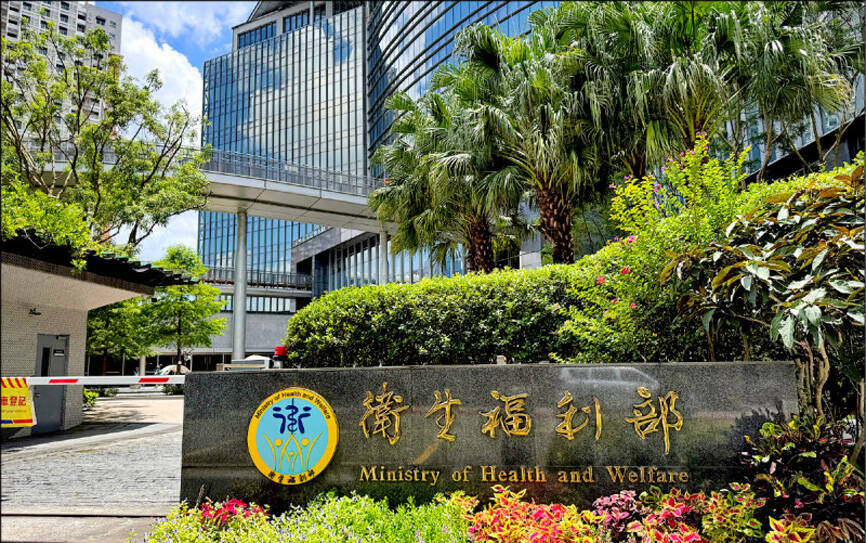
Photo: Taipei Times
In the second stage, the initiative would be expanded to include younger people with dementia and those enrolled in the Post-acute Integrated Care Program, providing more appropriate care and support.
About 350,000 people aged 65 and older have dementia, a number expected to exceed 470,000 by 2031 and approach 680,000 by 2041, based on health ministry data and National Development Council projections.
The prevalence of dementia among people aged 65 and older is 7.99 percent, a ministry survey showed.
Alzheimer’s disease, vascular dementia and Parkinson’s disease-related dementia are the most common forms of dementia, with the prevalence at 9.36 percent among women, and 6.35 percent among men.
In addition to cognitive impairment, dementia is often accompanied by behavioral and psychological symptoms of dementia (BPSD), such as agitation, depression, anxiety, delusions, wandering and sleep disturbances, which significantly complicate care.
Under Long-term Care 3.0, eligibility for long-term care services would be expanded to include people with early-onset dementia — defined as those younger than 50 with functional impairments — to enable earlier intervention, the ministry said.
Measures include expanding care resources, training specialists and diversifying care options.
Starting next year, services would be provided according to disease stage, Deputy Minister of Health and Welfare Lue Jen-der (呂建德) said.
People with very mild or mild dementia who retain mobility could attend community-based dementia centers, while those with BPSD could use designated centers, he said.
Those with long-term care needs could access home-based or community care services, while people requiring 24-hour intensive care could move to group homes or designated sections of residential institutions.
The Ministry of Labor is also planning a program to help people with dementia return to the workplace, he said.
Nationwide, 15,539 integrated community care service sites, 1,184 day care centers, 36 group homes and 2,658 beds in dementia-designated residential sections have been established, along with 554 dementia community service sites and 132 dementia co-care centers, serving about 47,000 people over the past year, Lue said.
Funding for the predecessor program rose from NT$4.95 billion (US$157.03 million) in 2016 to NT$92.6 billion this year, an 18.7-fold increase, he said.
Under Long-term Care 3.0, the government plans to expand functional assessment coverage for older adults from 8.2 percent to 50 percent and promote community-based prevention of oral frailty, which affects up to 34 percent of people aged 60 and older.
Early dementia symptoms are often overlooked, with families sensing only that “something has changed,” Taipei City Hospital doctor Chiang Kuan-yu (姜冠宇) said.
Emotional instability, increased family conflict, difficulty navigating familiar routes or sudden financial confusion can all be warning signs, he said.
As the disease progresses, patients might lose the ability to perform familiar tasks — behavior sometimes mistaken as apathy — when executive function has deteriorated, Chiang said.
In the terminal stage, incontinence, swallowing difficulties and choking are common, with life expectancy sometimes limited to about six months, he said.
Chiang urged people concerned about dementia risk to monitor changes in memory, judgement and behavior and seek screening if needed, calling for earlier awareness and better care coordination to support both patients and caregivers.
Additional reporting by Liu Li-jen

A signaling system malfunction disrupted high-speed rail (HSR) services beginning at 8am today, with trains temporarily reduced to three northbound and three southbound trains per hour as authorities conduct inspections. The malfunction occurred on a section of track in Miaoli County during pre-operation checks early this morning, forcing northbound and southbound trains to use a single track, the HSR operator said. The regular schedule has been replaced with three hourly trains offering only nonreserved seating in each direction, stopping at every station, it said, adding that business class cars would still have reserved seating. Departures from terminal stations are scheduled at the top

Taiwan is still in the process of assessing the possibility of recruiting workers from Eswatini, the Ministry of Foreign Affairs said yesterday, adding that its goal is to help Eswatini upgrade its vocational training centers. If there are plans to recruit workers from Eswatini, safeguarding national security, protecting public health and ensuring the employment rights of Taiwanese would be prerequisites, Department of West Asian and African Affairs Director-General Yen Chia-liang (顏嘉良) told a news conference. Key considerations would also include filling labor shortages in specific industries, and fostering bilateral professional and technical exchanges, he said. Yen was asked about the progress of labor

A US uncrewed surface vessel (USV) encountered multiple Chinese warships during an autonomous transit of the Taiwan Strait, US defense company Seasats said in a statement on Wednesday. Seasats announced that a Lightfish USV had completed the first autonomous transit of the Taiwan Strait. Over five days, the USV traversed the entire length of the Strait while constantly monitoring surface vessel traffic, the company said. The Lightfish encountered multiple Chinese warships, one of which was a Chinese People’s Liberation Army Navy (PLAN) Type 056 corvette, it said. The Chinese vessels were operating “well within Taiwan’s exclusive economic zone without transmitting their identity via the

VERBOSE VESSELS: A CGA cutter and a China Coast Guard exchanged verbal barbs for more than a day in Taiwanese-controlled waters before the Chinese vessel left The Taiwanese and Chinese coast guards had a standoff near the strategically located Pratas Islands (Dongsha Islands, 東沙群島) in the north of the South China Sea, the Coast Guard Administration (CGA) said yesterday. The two sides engaged in intense radio exchanges over sovereignty claims during the 33-hour standoff. China Coast Guard vessel 3501 eventually left the restricted waters, 26.6 nautical miles (49.2km) west of the Pratas Islands, at 5pm yesterday, the CGA said. Lying approximately between southern Taiwan and Hong Kong, the Taiwan-controlled Pratas are seen by some security experts as vulnerable to Chinese attack due to their distance — more than


 RSS
RSS