


Turkmenistan’s president hinted at possible political reforms yesterday, ahead of a rare international meeting he is hosting with the attendance of counterparts from Russia, Turkey, Iran and elsewhere.
Turkmen President Serdar Berdymukhamedov, whom critics said presides over an autocratic and opaque system, made the comments in state newspaper Turkmenistan Today in honor of the 30th anniversary of the former Soviet nation’s declaration of neutrality.
“We are carrying out extensive work aimed at transforming our neutral country into a powerful, democratic and rule-of-law state where citizens live happy lives,” Berdymukhamedov said, without giving further details.
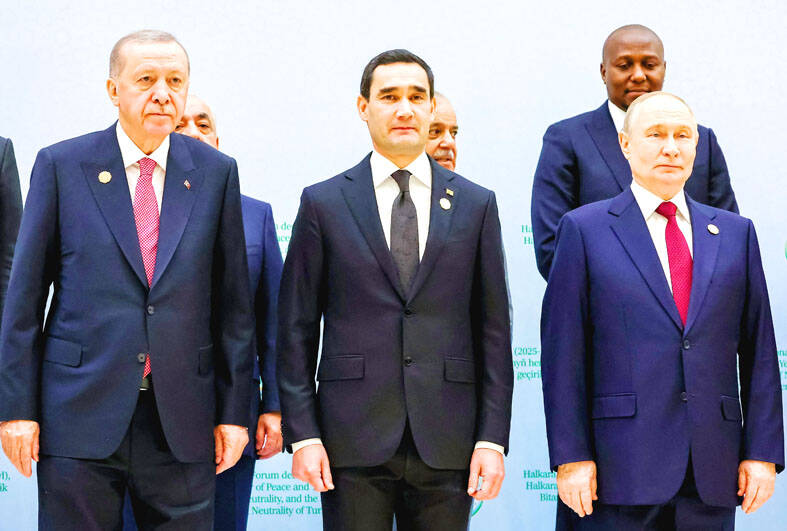
Photo: AFP
The article was published on the eve of a forum in Ashgabat dedicated to the gas-rich Central Asian state’s international neutrality. Among attendees were Russian President Vladimir Putin, Turkish President Recep Tayyip Erdogan and Iranian President Masoud Pezeshkian.
A mostly desert country of 7 million people with the world’s fourth-largest natural gas reserves, Turkmenistan declared itself officially neutral in 1995 under its first president, Saparmurat Niyazov, who spurned Western and Russian influence.
Until his death in 2006, Niyazov maintained tight control over politics, a policy of isolationism from the outside world and an economy heavily based on natural gas exports.
Since succeeding his father as president in 2022, Berdymukhamedov has signaled some opening.
Curbs on social media have been eased, and the government has vowed to open new air transport links and liberalize its visa regime by introducing e-visas for some foreign visitors.
Turkmenistan also said it wants to join the WTO and diversify the economy away from gas exports, most of which are to China.
It last month passed a law introducing a regulatory framework for cryptocurrency mining and trading.

LEVERAGE: China did not ‘need to fire a shot’ to deny Taiwan airspace over Africa when it owns ‘half the continent’s debt,’ a US official said, calling it economic warfare The EU has raised concerns about overflight rights following the delay of President William Lai’s (賴清德) planned state visit to the Kingdom of Eswatini after three African nations denied overflight clearance for his charter at the last minute. Taiwanese allies Paraguay and Saint Kitts and Nevis, as well as several US lawmakers and the Inter-Parliamentary Alliance on China (IPAC) condemned China for allegedly pressuring the countries. Lai was scheduled to fly directly to Taiwan’s only African ally from yesterday to Sunday to celebrate the 40th anniversary of King Mswati III’s accession and his 58th birthday, but Seychelles, Mauritius and Madagascar suddenly revoked
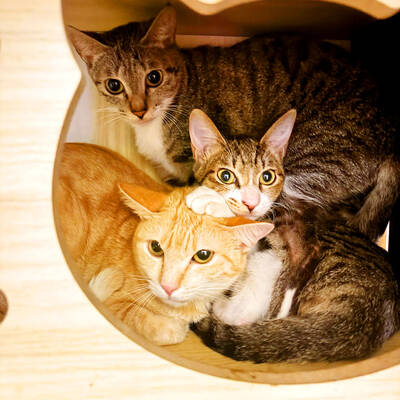
The number of pet cats in Taiwan surpassed that of pet dogs for the first time last year, reaching 1,742,033, a 32.8 percent increase from 2023, the Ministry of Agriculture said yesterday, citing a survey. By contrast, the number of pet dogs declined slightly by 1.2 percent over the same period to 1,462,528, the ministry said. Despite the shift, households with dogs still slightly outnumber those with cats by 1.2 percent. However, while the number of households with multiple dogs has remained relatively stable, households keeping more than two cats have increased, contributing to the overall rise in the feline population. The trend
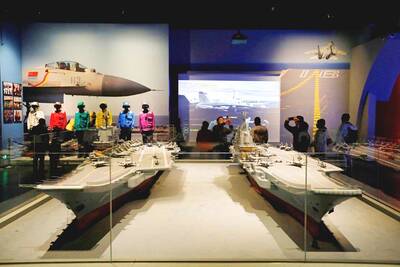
China on Wednesday teased in a video an aircraft carrier that could be its fourth, and the first using nuclear power, while making an allusion to Taiwan and vowing to further build up its islands, as it looks to boost maritime power, secure resources and bolster territorial claims. The video, issued on the eve of the 77th founding anniversary of the Chinese People’s Liberation Army Navy, featured fictional officers with names that are homophones of three commissioned aircraft carriers, the Liaoning (遼寧), Shandong (山東) and Fujian (福建). Titled Into the Deep, it showed a 19-year-old named “Hejian” (何劍) joining the group, sparking
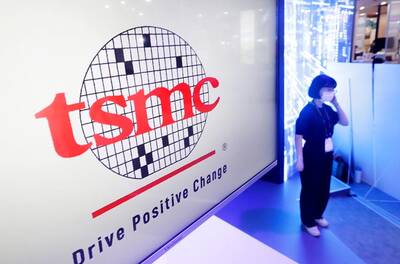
BIG YEAR: The company said it would also release its A12 chip the same year to keep a ‘reliable stream of new silicon technologies’ flowing to its customers Taiwan Semiconductor Manufacturing Co (TSMC, 台積電) yesterday said its newest A13 chip is to enter volume production in 2029 as the chipmaker seeks to hold onto its tech leadership and demand for next-generation chips used in artificial intelligence (AI), high-performance-computing (HPC) and mobile applications. TSMC, the world’s biggest contract chipmaker, also unveiled its A12 chip at its annual technology symposium in Santa Clara, California. The A12 chip, which features TSMC’s super-power-rail technology to provide backside power delivery for AI and HPC applications, is also to enter volume production in 2029, a year after the scheduled release of the A14 chip. The technology moves


 RSS
RSS