


The Legislative Yuan yesterday approved amendments raising the tax deductions for long-term care, as well as penalties for vehicle noise violations.
The revisions to the Noise Control Act (噪音管制法) would increase fines for vehicles exceeding noise limits to NT$3,600 to NT$36,000 (US$115 to US$1,153), up from NT$1,800 to NT$3,600.
Fines for vehicles that failed to undergo testing at designated locations by the deadline would also increase to NT$3,600 to NT$36,000 from NT$1,800 to NT$3,600 previously.
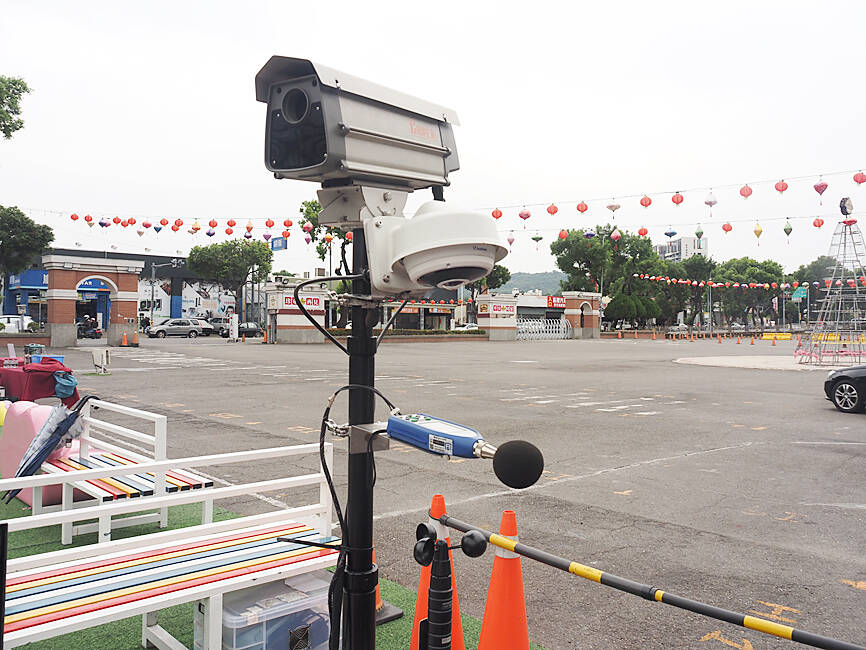
Photo: Chen Feng-li, Taipei Times
Failure to comply with a notification to make improvements within the given timeframe would result in successive violations and fines.
Under the amended law, major offenses would also lead to the suspension of the vehicle’s license plate until the required improvements are completed.
Repeated violations within one year would result in a six-month suspension of the license plate.
The amendments aim to deter exhaust pipe modifications emitting noises late at night or early in the morning that disturb the public, the proposal said.
In line with the Environmental Protection Administration’s reorganization in August 2023, the amendments updated the competent authority to the Ministry of Environment.
The legislature also approved an amendment raising annual long-term care deduction from NT$120,000 to NT$180,000 to ease the financial burden on households.
The change would apply retroactively from Jan. 1 this year for tax filings in May next year.
Under Article 17 of the Income Tax Act (所得稅法), taxpayers may claim the deduction to taxable income for themselves, their spouses or dependents officially recognized by the Ministry of Health and Welfare as requiring long-term care due to physical or cognitive impairment.
Lawmakers across party lines had submitted proposals to increase the deduction to between NT$180,000 and NT$360,000, citing the nation’s rapidly aging population and rising caregiving costs. They later reached a consensus to set the deductions at NT$180,000.
During a Finance Committee review of the measure in August, Minister of Finance Chuang Tsui-yun (莊翠雲) said the NT$120,000 deduction was introduced in 2018 and had not been changed since.
Most legislators backed raising it to NT$180,000 as a step to address the financial realities of caregiving needs, she said.
Taxation Administration Director-General Sung Hsiu-ling (宋秀玲) said the increase would reduce annual tax revenue by about NT$1 billion under current eligibility rules.
However, the actual figure is expected to be higher once looser eligibility criteria stipulated in the amendment take effect, Sung said.
The Ministry of Finance estimates the new measure would benefit about 350,000 taxpayers.
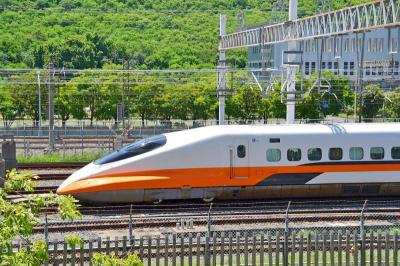
A signaling system malfunction disrupted high-speed rail (HSR) services beginning at 8am today, with trains temporarily reduced to three northbound and three southbound trains per hour as authorities conduct inspections. The malfunction occurred on a section of track in Miaoli County during pre-operation checks early this morning, forcing northbound and southbound trains to use a single track, the HSR operator said. The regular schedule has been replaced with three hourly trains offering only nonreserved seating in each direction, stopping at every station, it said, adding that business class cars would still have reserved seating. Departures from terminal stations are scheduled at the top
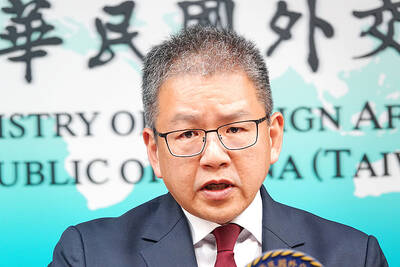
Taiwan is still in the process of assessing the possibility of recruiting workers from Eswatini, the Ministry of Foreign Affairs said yesterday, adding that its goal is to help Eswatini upgrade its vocational training centers. If there are plans to recruit workers from Eswatini, safeguarding national security, protecting public health and ensuring the employment rights of Taiwanese would be prerequisites, Department of West Asian and African Affairs Director-General Yen Chia-liang (顏嘉良) told a news conference. Key considerations would also include filling labor shortages in specific industries, and fostering bilateral professional and technical exchanges, he said. Yen was asked about the progress of labor

A US uncrewed surface vessel (USV) encountered multiple Chinese warships during an autonomous transit of the Taiwan Strait, US defense company Seasats said in a statement on Wednesday. Seasats announced that a Lightfish USV had completed the first autonomous transit of the Taiwan Strait. Over five days, the USV traversed the entire length of the Strait while constantly monitoring surface vessel traffic, the company said. The Lightfish encountered multiple Chinese warships, one of which was a Chinese People’s Liberation Army Navy (PLAN) Type 056 corvette, it said. The Chinese vessels were operating “well within Taiwan’s exclusive economic zone without transmitting their identity via the
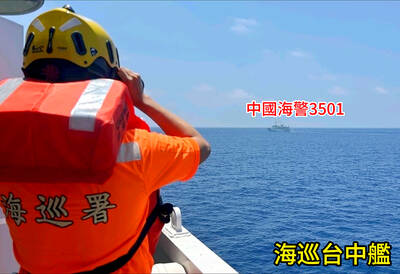
VERBOSE VESSELS: A CGA cutter and a China Coast Guard exchanged verbal barbs for more than a day in Taiwanese-controlled waters before the Chinese vessel left The Taiwanese and Chinese coast guards had a standoff near the strategically located Pratas Islands (Dongsha Islands, 東沙群島) in the north of the South China Sea, the Coast Guard Administration (CGA) said yesterday. The two sides engaged in intense radio exchanges over sovereignty claims during the 33-hour standoff. China Coast Guard vessel 3501 eventually left the restricted waters, 26.6 nautical miles (49.2km) west of the Pratas Islands, at 5pm yesterday, the CGA said. Lying approximately between southern Taiwan and Hong Kong, the Taiwan-controlled Pratas are seen by some security experts as vulnerable to Chinese attack due to their distance — more than


 RSS
RSS