


Optimism grew yesterday that US President Donald Trump and Chinese President Xi Jinping (習近平) would end their bruising trade war in talks this week, as the US president touched down in Tokyo on the latest leg of an Asian tour.
Trump said en route to close US ally Japan that he was hopeful of a deal when he sees Xi on Thursday, while also indicating he was willing to extend his trip to meet North Korean leader Kim Jong-un.
“I have a lot of respect for President Xi and we are going to I think ... come away with a deal,” Trump told reporters on Air Force One, adding that he aimed to go to China “in the earlier part” of next year.
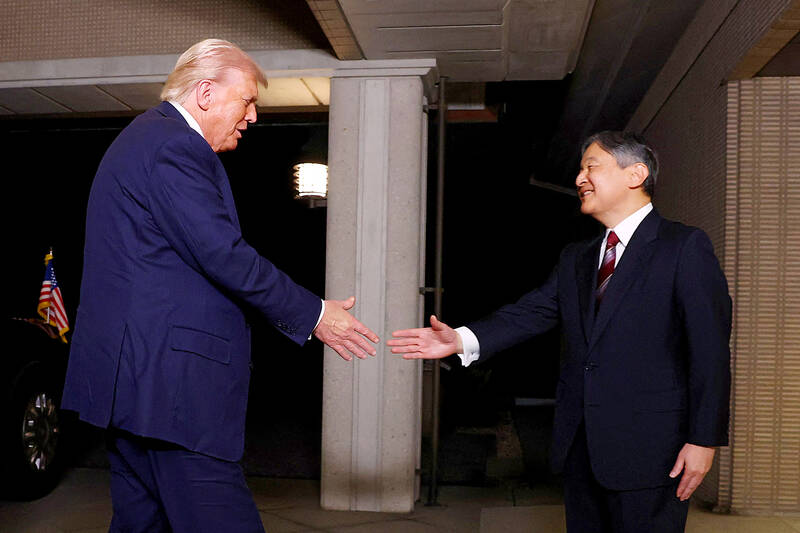
Photo: AFP
As dozens of people gathered at Haneda airport to take photographs, the presidential plane — also bearing US Secretary of State Marco Rubio and US Secretary of the Treasury Scott Bessent — landed at sunset.
Sporting a golden tie, Trump boarded a helicopter to take him into the bright lights of the Japanese metropolis in time for an evening audience with the emperor.
“A great man,” Trump said afterward.
Trump today is expected to meet new Japanese Prime Minister Sanae Takaichi and make a speech on the USS George Washington aircraft carrier, docked at the US naval base Yokosuka.
“I hear phenomenal things. [Takaichi] was a great ally and friend of [former Japanese prime minister] Shinzo Abe, who was my friend,” Trump said.
Trump’s Asia trip, his first tour of the region since returning to office, began in Malaysia on Sunday with a flurry of agreements on the sidelines of an ASEAN summit.
He also moved to mend fences with Brazilian President Luiz Inacio Lula da Silva, but not with Canadian Prime Minister Mark Carney, ruling out a meeting any time soon.
“Canada has been ripping us off for a long time and they’re not going to rip us off any more,” Trump said.
Trump is due to meet Xi on Thursday in South Korea for their first face-to-face talks since the 79-year-old Republican’s return to the White House.
Takaichi on Friday last week announced that Japan would be spending 2 percent of GDP on defense this fiscal year, but Washington, which has about 60,000 military personnel in Japan, wants Tokyo to spend more, potentially matching the 5 percent of GDP pledged by NATO members in June.
Most Japanese imports into the US are subject to tariffs of 15 percent, less painful than the 25 percent first threatened.
However, Trump also wants Japan to import more US products such as rice, soybeans and cars, including “hot” Ford F-150 pickup trucks.
Questions also surround Japan’s commitment to invest US$550 billion in the US, as specified in their July trade deal.
“What I expect is that, since he [Trump] is someone who acts decisively, things might move in a positive direction for Japan,” Tokyo resident Sayaka Kamimoto, 45, said.
Trump is due in South Korea tomorrow for an APEC summit and is due to meet South Korean President Lee Jae-myung.
Trump has also fueled speculation that he could hold face-to-face talks with North Korea’s Kim while on the Korean Peninsula.
“I would love to meet with him if he’d like to meet. I got along great with Kim Jong-un. I liked him. He liked me,” Trump said.
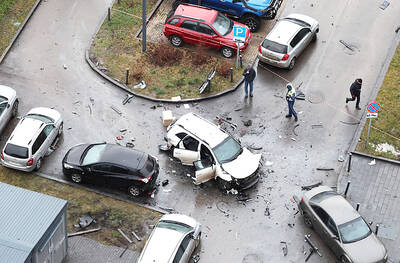
A car bomb killed a senior Russian general in southern Moscow yesterday morning, the latest high-profile army figure to be blown up in a blast that came just hours after Russian and Ukrainian delegates held separate talks in Miami on a plan to end the war. Kyiv has not commented on the incident, but Russian investigators said they were probing whether the blast was “linked” to “Ukrainian special forces.” The attack was similar to other assassinations of generals and pro-war figures that have either been claimed, or are widely believed to have been orchestrated, by Ukraine. Russian Lieutenant General Fanil Sarvarov, 56, head
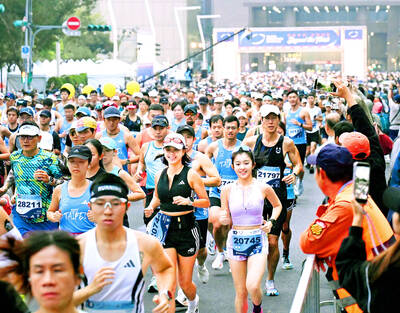
SAFETY FIRST: Double the number of police were deployed at the Taipei Marathon, while other cities released plans to bolster public event safety Authorities across Taiwan have stepped up security measures ahead of Christmas and New Year events, following a knife and smoke bomb attack in Taipei on Friday that left four people dead and 11 injured. In a bid to prevent potential copycat incidents, police deployments have been expanded for large gatherings, transport hubs, and other crowded public spaces, according to official statements from police and city authorities. Taipei Mayor Chiang Wan-an (蔣萬安) said the city has “comprehensively raised security readiness” in crowded areas, increased police deployments with armed officers, and intensified patrols during weekends and nighttime hours. For large-scale events, security checkpoints and explosives
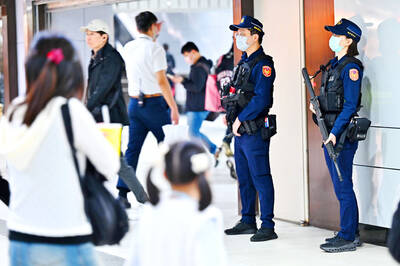
PUBLIC SAFETY: The premier said that security would be tightened in transport hubs, while President Lai commended the public for their bravery The government is to deploy more police, including rapid response units, in crowded public areas to ensure a swift response to any threats, President William Lai (賴清德) said yesterday after a knife attack killed three people and injured 11 in Taipei the previous day. Lai made the remarks following a briefing by the National Police Agency on the progress of the investigation, saying that the attack underscored the importance of cooperation in public security between the central and local governments. The attack unfolded in the early evening on Friday around Taipei Main Station’s M7 exit and later near the Taipei MRT’s Zhongshan
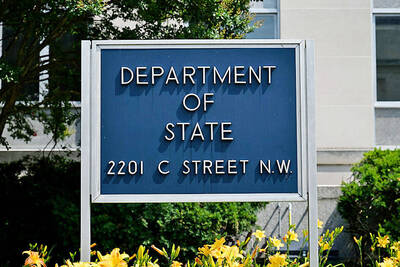
REBUFFED: In response to Chinese criticism over recent arms sales, Washington urged Beijing to engage in meaningful dialogue instead of threats and intimidation Washington’s long-term commitment to Taiwan would not change, the US Department of State said yesterday, urging Beijing to stop pressuring Taiwan and engage in meaningful bilateral dialogues. The remarks came in response to a backlash from Beijing about Washington’s latest approval of arms sales to Taiwan. The US Defense Security Cooperation Agency said in a statement on Wednesday that the Taipei Economic and Cultural Representative Office in the US has asked to purchase an arms package, including Tactical Mission Network Software; AH-1W helicopter spare and repair parts; M109A7 self-propelled howitzers; HIMARS long range precision strike systems; tube-launched, optically tracked, wire-guided missiles; Javelin


 RSS
RSS