


Thousands of Palestinians streamed north along the coast of Gaza yesterday, trekking by foot, car and cart back to their abandoned homes as a ceasefire between Israel and Palestinian militant group Hamas appeared to be holding.
Israeli troops pulled back under the first phase of a US-brokered agreement reached this week to end the war, which has killed tens of thousands of people and left much of the enclave in ruins.
US President Donald Trump’s Middle East envoy Steve Witkoff was in Gaza early yesterday to observe the Israeli military redeployment, Israeli Army Radio reported, citing a security source.
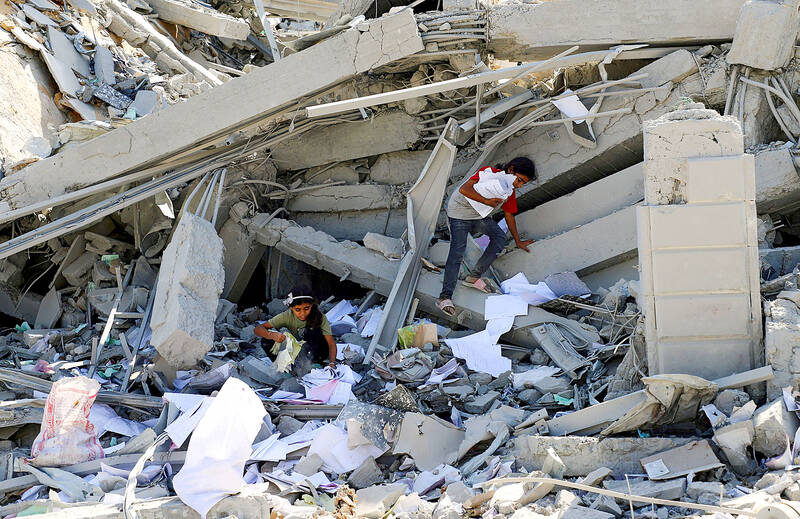
Photo: Reuters
He was joined by US Central Command Commander Admiral Brad Cooper, who said in a statement that his visit was part of the establishment of a task force that would support stabilization efforts in Gaza, although US troops would not be deployed inside the enclave.
Once the Israeli forces had completed their redeployment on Friday, which kept them out of major urban areas, but still in control of about half the enclave, the clock began ticking for Hamas to release its hostages within 72 hours.
“We are very excited, waiting for our son and for all the 48 hostages,” said Hagai Angrest, whose son Matan is among the 20 Israeli hostages believed to still be alive. “We are waiting for the phone call.”
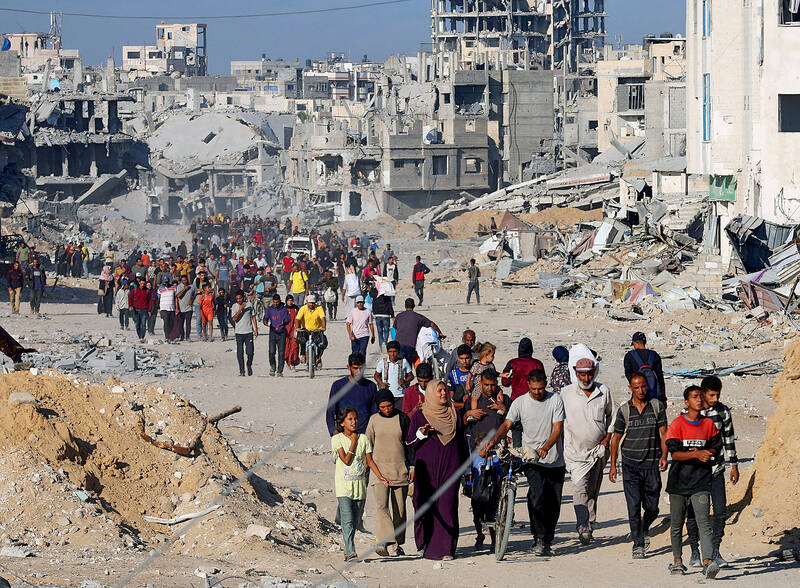
Photo: Reuters
Twenty-six hostages have been declared dead in absentia, and the fate of two more is unknown.
After the hostages are handed over, Israel would free 250 Palestinians serving long sentences in its prisons and 1,700 detainees captured during the war, the agreement said.
Hundreds of trucks per day are expected to surge into Gaza carrying food and medical aid, it said.
However, questions remain about whether the ceasefire and hostage-prisoner exchange deal, the biggest step yet toward ending two years of war, would lead to a lasting peace under Trump’s 20-point plan.
Much could still go wrong. Further steps in Trump’s plan have yet to be agreed upon. These include how the demolished Gaza Strip is to be ruled, and the ultimate fate of Hamas, which has rejected Israel’s demands that it disarm.
Speaking to reporters at the White House, Trump expressed confidence that the ceasefire would hold.
“They’re all tired of the fighting,” Trump said, adding that he believed there was a “consensus” on the next steps, but some details still have to be worked out.

NETWORK-MAPPING PROJECT: The database contains 170 detailed files of Taiwanese politicians and about 23 million records of household registration data in Taiwan China has developed a network-mapping project targeting political figures and parties in Taiwan to monitor public opinion during elections and to craft tailored influence campaigns aimed at dividing Taiwanese society, according to documents leaked by Chinese technology firm GoLaxy (中科天璣). The documents, collected by Taipei-based Doublethink Lab, showed a database was specifically created to gather detailed information on Taiwanese political figures, including their political affiliations, job histories, birthplaces, residences, education, religion and a brief biography about them. Several notable Taiwanese politicians are in the database, including President William Lai (賴清德), former president Tsai Ing-wen (蔡英文), Minister of Foreign Affairs Lin Chia-lung (林佳龍),

RECOGNITION: Former Fijian prime minister Mahendra Chaudhry said that Taiwan’s New Southbound Policy serves as a stabilizing force in the Indo-Pacific region Taiwan can lead the unification of the Chinese people, Nobel Peace Prize laureate and former Polish president Lech Walesa said in Taipei yesterday, adding that as the world order is changing, peaceful discussion would find good solutions, and that the use of force and coercion would always fail. Walesa made the remarks during his keynote address at a luncheon of the Yushan Forum in Taipei, titled “Indo-Pacific Partnership Prospects: Taiwan’s Values, Technology and Resilience,” organized by the Taiwan-Asia Exchange Foundation with the Ministry of Foreign Affairs. Walesa said that he had been at the forefront of a big peaceful revolution and “if
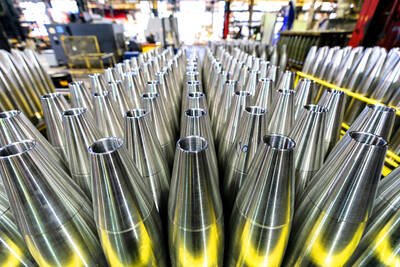
UPGRADED MISSILE: The Chungshan Institute of Science and Technology is reportedly to conduct a live-fire test of the Hsiung Feng III anti-ship missile on Thursday next week The US Army is planning to build new facilities to boost explosives production and strengthen its supply chain, a move aimed at addressing munitions shortages and supporting obligations to partners including Taiwan, Ukraine and Israel, Defense News reported. The army has issued a sources sought notice for a proposed Center of Excellence at the Blue Grass Army Depot in Kentucky, the report said. The facility would serve as a hub within the US industrial base for the production of key military explosives, including research department explosives (RDX) and high melting explosives (HMX), while also supporting research and development of next-generation materials. The proposed

SOUTH KOREA DISPUTE: If Seoul continues to ignore its request, Taiwan would change South Korea’s designation on its arrival cards, the foreign ministry said If South Korea does not reply appropriately to a request to correct Taiwan’s name on its e-Arrival card system before March 31, the government would take corresponding measures to change how South Korea is labeled on the online Taiwan Arrival Card system, the Ministry of Foreign Affairs said yesterday. South Korea’s e-Arrival card system lists Taiwan as “China (Taiwan)” in the “point of departure” and “next destination” fields. Taipei has asked Seoul to change the wording. Since March 1, South Koreans who hold government-issued Alien Resident Certificates (ARC) have been identified as from “South Korea” rather than the “Republic of Korea,” the


 RSS
RSS