


The government would not increase National Health Insurance (NHI) premiums next year, as the system is expected to have sufficient reserves, Minister of Health and Welfare Shih Chung-liang (石崇良) said yesterday.
Under the National Health Insurance Act (全民健康保險法), the minimum reserve level is set at the equivalent of one month of expenditures to ensure system stability.
The Ministry of Health and Welfare expects the NHI’s reserves to reach about 2.8 months of expenditures by the end of the year, Shih told reporters at a news conference in Taipei.

Photo: Taipei Times
Even if next year’s budget is calculated using the higher projected growth rate of 5.5 percent, the reserves are still expected to remain close to two months, he said.
Earlier this year, the ministry projected budget growth of between 2.9 and 5.5 percent for next year.
At the high end, spending could approach NT$1 trillion (US$32.9 billion), potentially putting upward pressure on premiums.
The NHI budget for next year is projected to increase by nearly NT$60 billion compared with this year, providing more resources for healthcare services, Shih said.
In addition to subsidies for rare disease treatments and new cancer drugs, the budget would focus on nurse retention and pediatric care, he said.
An additional NT$5.5 billion would be allocated for nursing wages and related expenses, with the aim to invest NT$10 billion over four years to improve nurses’ pay and working conditions.
The ministry hopes to encourage staff to return to hospitals, and boost capacity for acute and inpatient care, Shih said.
Meanwhile, NT$24.9 billion would be allocated for pediatric care, including compensation for pediatricians caring for children aged six or younger, and raising NHI payments for acute and critical pediatric care, he said.
Representatives of hospitals, small clinics, traditional Chinese medicine clinics, dentists and dialysis clinics on Wednesday agreed to set the NHI’s global budget at NT$928.6 billion.
In a rare show of consensus, the representatives also agreed on the distribution of NHI funding with little argument, a first for the ministry-hosted conference since the system started in 2002.
Deadlocks that plagued previous conferences usually stemmed from disagreements over resource distribution among care providers, a healthcare professional said, speaking on condition of anonymity.
The support of the healthcare consumers’ representatives for the budget “marked a milestone” for the NHI, they said.
Shih and NHI Administration Director-General Chen Lian-yu (陳亮妤) should be credited with helping the panel navigate 12 hours of difficult discussions, they added.
“Understanding that medical expenditures are an investment and not a cost created the condition for a successful outcome at the conference,” Taiwan College of Healthcare Executives director Hung Tzu-jen (洪子仁) said.
Boosting the government’s healthcare spending improves a nation’s health indicators and average life expectancy, he said, adding that Taiwan’s health budget should match that of Japan, South Korea and Singapore.
Taiwan should spend the increased NHI budget on improving nurse-to-patient ratios and healthcare worker incomes to boost retention, he said.
The increased allocation should also be used to facilitate the integration of new drugs and technology in hospitals and clinics to reduce the medical-related economic burden on Taiwanese, Hung said.
Strengthening preventive medicine and the capabilities of smaller clinics would lead to long-term savings for the NHI fund, he said.
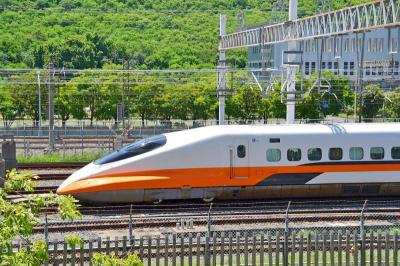
A signaling system malfunction disrupted high-speed rail (HSR) services beginning at 8am today, with trains temporarily reduced to three northbound and three southbound trains per hour as authorities conduct inspections. The malfunction occurred on a section of track in Miaoli County during pre-operation checks early this morning, forcing northbound and southbound trains to use a single track, the HSR operator said. The regular schedule has been replaced with three hourly trains offering only nonreserved seating in each direction, stopping at every station, it said, adding that business class cars would still have reserved seating. Departures from terminal stations are scheduled at the top
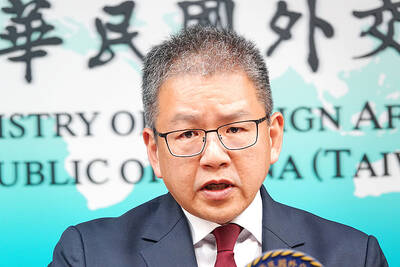
Taiwan is still in the process of assessing the possibility of recruiting workers from Eswatini, the Ministry of Foreign Affairs said yesterday, adding that its goal is to help Eswatini upgrade its vocational training centers. If there are plans to recruit workers from Eswatini, safeguarding national security, protecting public health and ensuring the employment rights of Taiwanese would be prerequisites, Department of West Asian and African Affairs Director-General Yen Chia-liang (顏嘉良) told a news conference. Key considerations would also include filling labor shortages in specific industries, and fostering bilateral professional and technical exchanges, he said. Yen was asked about the progress of labor

A US uncrewed surface vessel (USV) encountered multiple Chinese warships during an autonomous transit of the Taiwan Strait, US defense company Seasats said in a statement on Wednesday. Seasats announced that a Lightfish USV had completed the first autonomous transit of the Taiwan Strait. Over five days, the USV traversed the entire length of the Strait while constantly monitoring surface vessel traffic, the company said. The Lightfish encountered multiple Chinese warships, one of which was a Chinese People’s Liberation Army Navy (PLAN) Type 056 corvette, it said. The Chinese vessels were operating “well within Taiwan’s exclusive economic zone without transmitting their identity via the
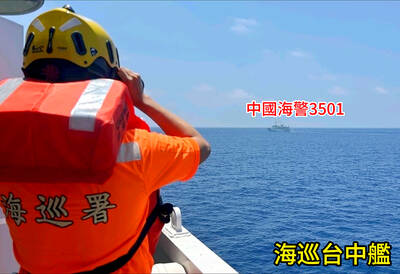
VERBOSE VESSELS: A CGA cutter and a China Coast Guard exchanged verbal barbs for more than a day in Taiwanese-controlled waters before the Chinese vessel left The Taiwanese and Chinese coast guards had a standoff near the strategically located Pratas Islands (Dongsha Islands, 東沙群島) in the north of the South China Sea, the Coast Guard Administration (CGA) said yesterday. The two sides engaged in intense radio exchanges over sovereignty claims during the 33-hour standoff. China Coast Guard vessel 3501 eventually left the restricted waters, 26.6 nautical miles (49.2km) west of the Pratas Islands, at 5pm yesterday, the CGA said. Lying approximately between southern Taiwan and Hong Kong, the Taiwan-controlled Pratas are seen by some security experts as vulnerable to Chinese attack due to their distance — more than


 RSS
RSS