


All 34 defendants indicted by Taichung prosecutors for allegedly forging up to 72.88 percent of signatures in two recall petitions against Democratic Progressive Party (DPP) legislators pleaded guilty at the first court hearing yesterday.
Chinese Nationalist Party (KMT) Taichung chapter secretary-general Chen Chien-feng (陳劍鋒) and executive director Wu Kang-lung (伍康龍) were among those indicted.
Charges include document forgery under the Criminal Code (刑法) and contravening the Personal Data Protection Act (個人資料保護法) for illegal use of private information by a non-government entity.
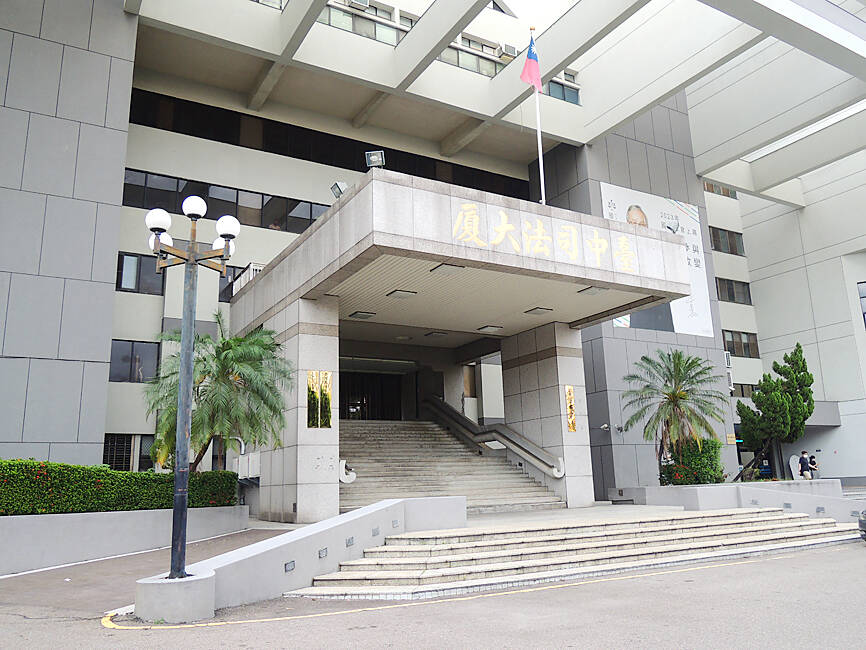
Photo: Chen Chien-chih, Taipei Times
Wu, Chen and two additional party workers were also charged under the Civil Servants Election and Recall Act (公職人員選舉罷免法) with forging or misusing personal information to falsify recall petitions.
During the hearing, Wu and Chen’s lawyers relayed their confessions to the court, seeking more lenient sentencing. The defendants acted in response to demands from KMT headquarters, and under social and political pressure to meet targets in a short timeframe, they said.
The indictment said the Taichung City Election Commission investigated the first recall petition of 2,360 signatures targeting DPP Legislator Tsai Chi-chang (蔡其昌), adding that while the petition surpassed the 2,235 signature threshold, it was later found that only 640 signatures were genuine and 1,720 were forged, yielding a falsification rate of 72.88 percent.
Meanwhile, the petition against DPP Legislator Ho Hsin-chun (何欣純) collected 3,513 signatures, above the 3,297 threshold, but only 975 signatures were real, while 2,538 were forged, giving a falsification rate of 72.25 percent, the indictment said.

SILENCING CRITICS: In addition to blocking Taiwan, China aimed to prevent rights activists from speaking out against authoritarian states, a Cabinet department said The Ministry of Foreign Affairs (MOFA) yesterday condemned transnational repression by Beijing after RightsCon, a major digital human rights conference scheduled to be held in Zambia this week, was abruptly canceled due to Chinese pressure over Taiwanese participation. This year’s RightsCon, the world’s largest conference discussing issues “at the intersection of human rights and technology,” was scheduled to take place from tomorrow to Friday in Lusaka, and expected to draw 2,600 in-person attendees from 150 countries, along with 1,100 online participants. However, organizers were forced to cancel the event due to behind-the-scenes pressure from China, the ministry said, expressing its “strongest condemnation”
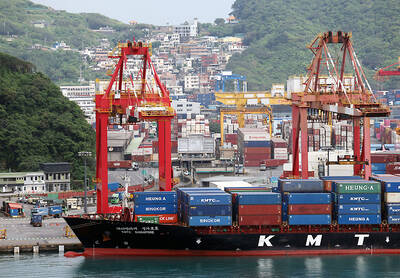
Taiwan’s economy grew far faster than expected in the first quarter, as booming demand for artificial intelligence (AI) applications drove a surge in exports, spilling over into investment and consumption, the Directorate-General of Budget, Accounting and Statistics (DGBAS) said yesterday. GDP growth was 13.69 percent year-on-year during the January-to-March period, beating the DGBAS’ February forecast by 2.23 percentage points and marking the most robust growth in nearly four decades, DGBAS senior official Chiang Hsin-yi (江心怡) told a news conference in Taipei. The result was powered by exports, which remain the backbone of Taiwan’s economy, Chiang said. Outbound shipments jumped 51.12 percent year-on-year to
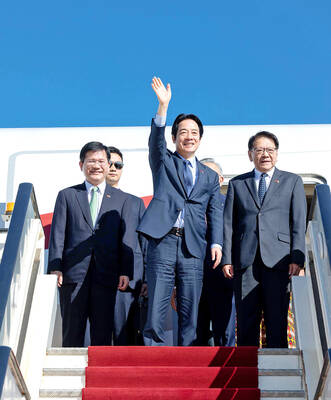
DELAYED BUT DETERMINED: The president’s visit highlights Taiwan’s right to international engagement amid regional pressure from China President Willaim Lai (賴清德) yesterday arrived in Eswatini, more than a week after his planned visit to Taiwan’s sole African ally was suspended because of revoked overflight permits. “The visit, originally scheduled for April 22, was postponed due to unforeseen external factors,” Lai wrote on social media. “After several days of careful arrangements by our diplomatic and national security teams, we successfully arrived today.” Lai said he looked forward to further deepening Taiwan-Eswatini relations through closer cooperation in the economy, agriculture, culture and education, as well as advancing the nation’s international partnerships. The president was initially scheduled to arrive in time to celebrate
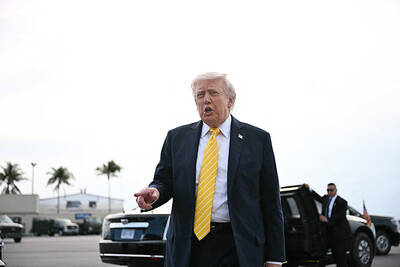
Iran’s Islamic Revolutionary Guard Corp (IRGC) yesterday said the US faced a choice between an “impossible” military operation or a “bad deal” with Tehran, after US President Donald Trump disparaged Iran’s latest peace proposal. Negotiations between the two countries have been deadlocked since a ceasefire came into effect on April 8, with only one round of direct peace talks held so far. Iran’s Tasnim and Fars news agencies reported that Tehran had submitted a 14-point proposal to mediator Pakistan, but Trump was quick to cast doubt on it. “I will soon be reviewing the plan that Iran has just sent to us, but


 RSS
RSS