


President William Lai (賴清德) yesterday in his Lunar New Year message expressed hope for harmony among the ruling and opposition parties, and solidarity among society, to help the nation continue to develop.
Lai made the remarks in a video released last night, before Lunar New Year’s Eve today.
The president expressed his gratitude to “everyone” for their efforts over the past year in overcoming many challenges, which he said allowed Taiwan to progress and play a more important role in international society.
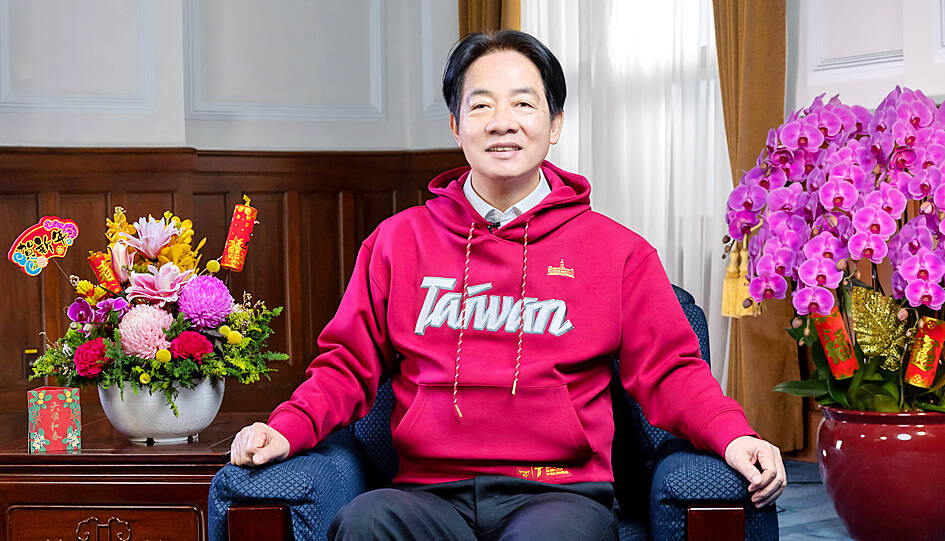
Photo: Screen grab from the Presidential Office’s Flickr page
“Everyone is a Taiwan hero,” he said, adding that in the new year, the government would continue to do its best to develop the country and spur economic growth.
This year, the government would launch the Youth Overseas Dream Fund program aimed at supporting young people to realize their dreams of gaining experience overseas, he said.
Lai pledged to firmly carry out “three main missions” — maintain the nation’s survival and development, protect people’s lives and properties, and take care of the livelihood of more than 23 million people in Taiwan — to make “Taiwan strong and capable.”
Citing a Taiwanese proverb saying that “harmony in a family makes everything successful (家和萬事興),” Lai extended wishes of peace, reunion and happiness to the whole nation.
Lai also said that he hopes there is harmony among the ruling and opposition parties, and solidarity among society, and that Taiwan continues to stride forward.
While Lai won the presidential election last year, his Democratic Progressive Party lost its majority in the Legislative Yuan, giving the opposition control over the legislature that includes spending proposals.
Last week the opposition, citing a need to cut waste, passed spending cuts the government says amount to NT$207.6 billion (US$6.35 billion), or 6.6 percent of the proposed total budget, for central government spending this year.
“I wish everyone a happy new year, as well as prosperity and great success in everything you do in the new year,” he said.
Lai ended his with greetings in Hoklo (commonly known as Taiwanese), Hakka, the Lienchiang County (Matsu) dialect of the Eastern Min (閩東) and English.
Presidents traditionally make a New Year address on Jan. 1 and a Lunar New Year address on the day before Lunar New Year’s Eve.
The Year of the Snake in the Chinese zodiac begins tomorrow, and the nine-day Lunar New Year holiday began on Saturday.
Sources said that the red “Team Taiwan” hoodie worn by Lai in the video is a collaboration between the Presidential Office and the Chinese Professional Baseball League, with all the materials and production made in Taiwan.
The two would later announce when the hoodie would be mass produced, they said.
Additional reporting by Reuters and CNA
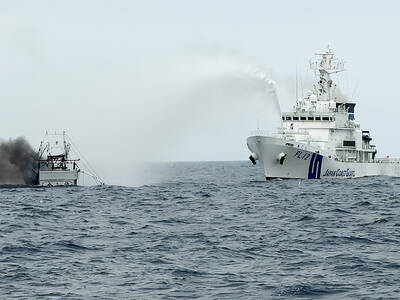
CREDIT-GRABBER: China said its coast guard rescued the crew of a fishing vessel that caught fire, who were actually rescued by a nearby Taiwanese boat and the CGA Maritime search and rescue operations do not have borders, and China should not use a shipwreck to infringe upon Taiwanese sovereignty, the Coast Guard Administration (CGA) said yesterday. The coast guard made the statement in response to the China Coast Guard (CCG) saying it saved a Taiwanese fishing boat. The Chuan Yu No. 6 (全漁6號), a fishing vessel registered in Keelung, on Thursday caught fire and sank in waters northeast of Diaoyutai Islands (釣魚台). The vessel left Keelung’s Badouzih Fishing Harbor (八斗子漁港) at 3:35pm on Sunday last week, with seven people on board — a 62-year-old Taiwanese captain surnamed Chang (張) and six

LEVERAGE: China did not ‘need to fire a shot’ to deny Taiwan airspace over Africa when it owns ‘half the continent’s debt,’ a US official said, calling it economic warfare The EU has raised concerns about overflight rights following the delay of President William Lai’s (賴清德) planned state visit to the Kingdom of Eswatini after three African nations denied overflight clearance for his charter at the last minute. Taiwanese allies Paraguay and Saint Kitts and Nevis, as well as several US lawmakers and the Inter-Parliamentary Alliance on China (IPAC) condemned China for allegedly pressuring the countries. Lai was scheduled to fly directly to Taiwan’s only African ally from yesterday to Sunday to celebrate the 40th anniversary of King Mswati III’s accession and his 58th birthday, but Seychelles, Mauritius and Madagascar suddenly revoked
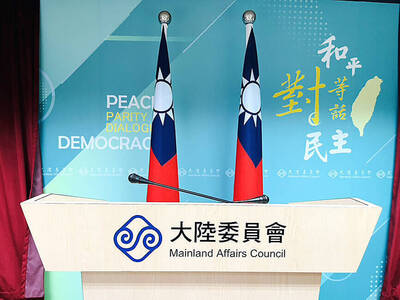
RISKY BUSINESS: The ‘incentives’ include initiatives that get suspended for no reason, creating uncertainty and resulting in considerable losses for Taiwanese, the MAC said China’s “incentives” failed to sway sentiment in Taiwan, as willingness to work in China hit a record low of 1.6 percent, a Ministry of Labor survey showed. The Directorate-General of Budget, Accounting and Statistics (DGBAS) also reported that the number of Taiwanese workers in China has nearly halved from a peak of 430,000 in 2012 to an estimated 231,000 in 2024. That marked a new low in the proportion of Taiwanese going abroad to work. The ministry’s annual survey on “Labor Life and Employment Status” includes questions respondents’ willingness to seek employment overseas. Willingness to work in China has steadily declined from
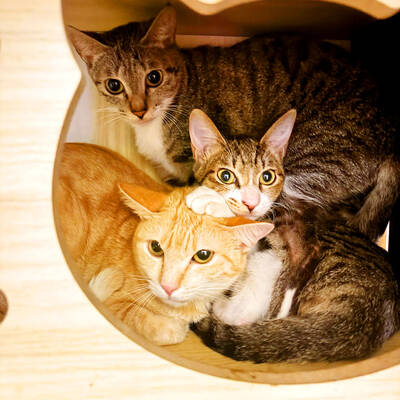
The number of pet cats in Taiwan surpassed that of pet dogs for the first time last year, reaching 1,742,033, a 32.8 percent increase from 2023, the Ministry of Agriculture said yesterday, citing a survey. By contrast, the number of pet dogs declined slightly by 1.2 percent over the same period to 1,462,528, the ministry said. Despite the shift, households with dogs still slightly outnumber those with cats by 1.2 percent. However, while the number of households with multiple dogs has remained relatively stable, households keeping more than two cats have increased, contributing to the overall rise in the feline population. The trend


 RSS
RSS