


Taipei Mayor Chiang Wan-an (蔣萬安) yesterday called for less confrontation between the two sides of the Taiwan Strait, even as Beijing continues to send warships and fighter jets to intimidate Taiwan.
“More dialogue and less confrontation; more olive branches of peace and less sour grapes of conflict. More lights from fishing boats to adorn the sunset; less of the howls of ships and aircraft,” Chiang said at the 15th Taipei-Shanghai Twin-City Forum.
“I always say that the more tense and difficult the moment, the more we need to communicate,” he said.

Photo: Ritchie B. Tongo, EPA-EFE
Between Monday and yesterday, China sent 10 military aircraft and seven other aircraft toward Taiwan, the Ministry of National Defense said, adding that four of the aircraft crossed the median line of the Taiwan Strait.
The forum, first held in 2010, is one of the few high-level venues for talks between Chinese and Taiwanese officials after China cut off a regular dialogue mechanism with the government in 2016 following the election of former president Tsai Ing-wen (蔡英文).
Tsai of the Democratic Progressive Party and her successor, President William Lai (賴清德), refuse to acknowledge Beijing’s position that both China and Taiwan are part of “one China.”
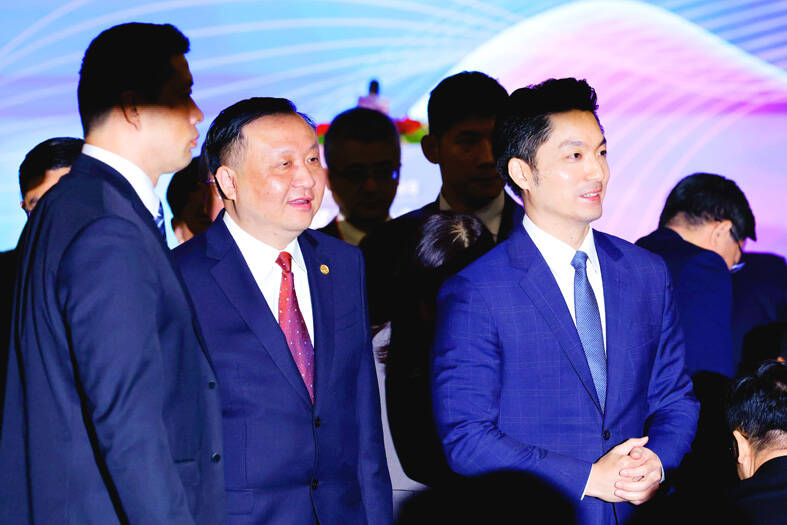
Photo: Ritchie B. Tongo, EPA-EFE
Lai says only Taiwanese can decide their future and rejects Beijing’s claims of sovereignty.
Shanghai Vice Mayor Hua Yuan (華源) told the forum that he hoped for closer practical cooperation.
“Compatriots on both sides of the Taiwan Strait have always been one family. We often come and go, getting closer and closer to each other,” Hua said.
Taiwan banned nine Chinese reporters from the gathering, saying they were superfluous, along with a Shanghai official from China’s Taiwan Affairs Office, in response to harsh new penalties targeting “diehard Taiwan independence separatists.”
The Mainland Affairs Council said that Beijing’s move had severely disrupted already meager bilateral exchanges and put Taiwanese in China at risk.
Taipei Deputy Mayor Lin Yi-hua (林奕華) said that the forum’s theme this year is “intelligent governance and a sustainable future.”
A total of 45 memorandums of understanding are to be signed during the forum, covering topics such as animal welfare, sports, arts, culture and civil exchanges, she said.
Meanwhile, outside the Regent Taipei Hotel where the forum was held, members of the Taiwan Statebuilding Party, the Green Party, the New Power Party, the Northern Taiwan Society and the World United Formosans for Independence held a news conference to protest the forum.
The groups questioned why Chiang invited the Shanghai officials, despite increased military tensions in the Taiwan Strait, and incursions by aircraft and naval vessels.
Citizens should have a clear sense of the enemy and not hold unrealistic expectations of China, Taiwan Statebuilding Party Chairman Wang Hsing-huan (王興煥) said.
The protest is a way of telling China that Taiwan does not accept the idea of unification by force and to communicate to the international community that the nation would stand firm in its defense, he said.
Additional reporting by Ho Yu-hua, Lin Cheng-hung and CNA

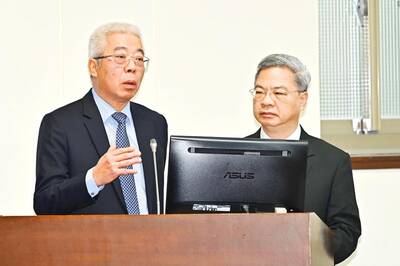
Taiwan has arranged for about 8 million barrels of crude oil, or about one-third of its monthly needs, to be shipped from the Red Sea this month to bypass the Strait of Hormuz and ease domestic supply pressures, CPC Corp, Taiwan (CPC, 台灣中油) said yesterday. The state-run oil company has worked with Middle Eastern suppliers to secure routes other than the Strait of Hormuz, through which about 20 percent of the world’s oil and liquefied natural gas typically passes, CPC chairman Fang Jeng-zen (方振仁) said at a meeting of the legislature’s Economics Committee in Taipei. Suppliers in Saudi Arabia have indicated they
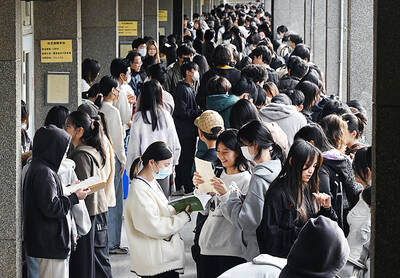
A global survey showed that 60 percent of Taiwanese had attained higher education, second only to Canada, the Ministry of the Interior said. Taiwan easily surpassed the global average of 43 percent and ranked ahead of major economies, including Japan, South Korea and the US, data from the Organisation for Economic Co-operation and Development (OECD) for 2024 showed. Taiwan has a high literacy rate, data released by the ministry showed. As of the end of last year, Taiwan had 20.617 million people aged 15 or older, accounting for 88.5 percent of the total population, with a literacy rate of 99.4 percent, the data
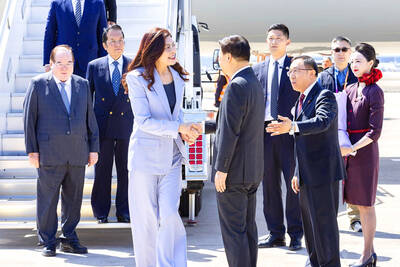
CCP ‘PAWN’? Beijing could use the KMT chairwoman’s visit to signal to the world that many people in Taiwan support the ‘one China’ principle, an academic said Chinese Nationalist Party (KMT) Chairwoman Cheng Li-wun (鄭麗文) yesterday arrived in China for a “peace” mission and potential meeting with Chinese President Xi Jinping (習近平), while a Taiwanese minister detailed the number of Chinese warships currently deployed around the nation. Cheng is visiting at a time of increased Chinese military pressure on Taiwan, as the opposition-dominated Legislative Yuan stalls a government plan for US$40 billion in extra defense spending. Speaking to reporters before going to the airport, Cheng said she was going on a “historic journey for peace,” but added that some people felt uneasy about her trip. “If you truly love Taiwan,
NEW LOW: The council in 2024 based predictions on a pessimistic estimate for the nation’s total fertility rate of 0.84, but last year that rate was 0.69, 17 percent lower An expected National Development Council (NDC) report expects the nation’s population to drop below 12 million by 2065, with the old-age dependency ratio to top 100 percent sooner than 2070, sources said yesterday. The council is slated to release its latest population projections in August, using an ultra-low fertility model, the sources said. The previous report projected that Taiwan’s population would fall to 14.37 million by 2070, but based on a new estimate of the total fertility rate (TFR) — the average number of children born to a woman over her lifetime — the population is expected to reach 12 million by


 RSS
RSS