


A deputy foreign minister is to attend this week’s meeting of Pacific island leaders in Tonga, the Ministry of Foreign Affairs said yesterday, as China and the US jostle for influence in the region.
The Pacific is also an area of competition between Taipei and Beijing, as China whittles away at the number of countries that maintain formal diplomatic relations with Taiwan. Three countries — Palau, Tuvalu and the Marshall Islands — have stuck with Taipei.
Deputy Minister of Foreign Affairs Tien Chung-kwang (田中光) would hold a summit with its three Pacific allies to bolster its partnership with them and other “like-minded countries,” a reference to Western democracies such as the US and Australia, the ministry said.
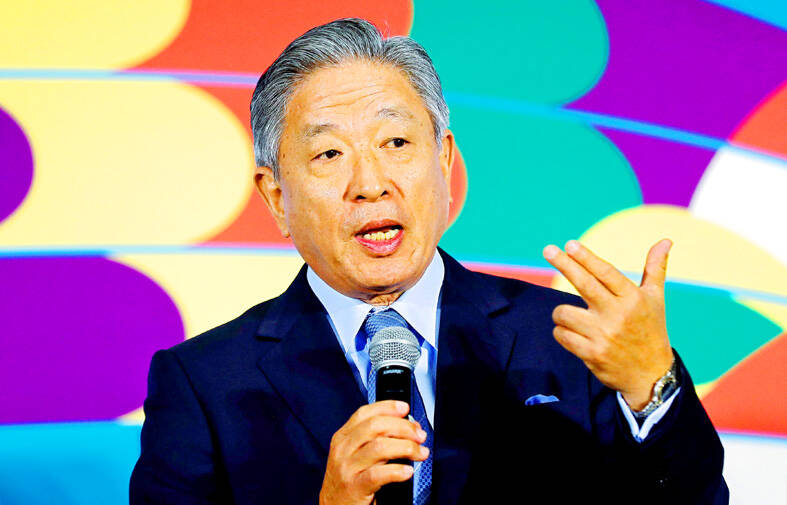
Photo: Reuters
In January, shortly after President William Lai (賴清德) won the presidential election, Nauru switched ties from Taiwan to China, in what Taipei said was part of a sustained Chinese pressure campaign.
In 2018, Nauru, then still an ally of Taiwan, criticized an “insolent” China for speaking out of turn at the Pacific Islands Forum. Nauru had recognized China before, from 2002 to 2005.
Taiwan has participated in the forum since 1993 as a development partner under the name “Taiwan/Republic of China.”
Since they last met, the forum’s 18 scattered members have been buffeted by economic headwinds and escalating competition between the US and China.
Beijing has been painstakingly courting Pacific nations, using its largesse to build government offices, sporting venues, hospitals, highways and more.
Fearful that China could spin this into a permanent military presence, the US and Australia have responded by dishing out aid, inking bilateral agreements and reopening long-dormant embassies.
Climate change and security are expected to dominate discussions at this week’s meeting of the 18 Pacific island leaders. US Deputy Secretary of State Kurt Campbell would also be attending.
Taiwan and Tonga had diplomatic ties from 1972 to 1998 when the country switched recognition to Beijing and broke off relations with Taipei.
Only 12 UN member countries maintain official diplomatic ties with Taiwan.
Additional reporting by AFP

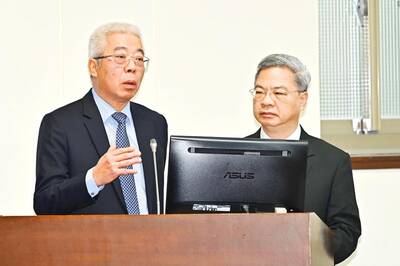
Taiwan has arranged for about 8 million barrels of crude oil, or about one-third of its monthly needs, to be shipped from the Red Sea this month to bypass the Strait of Hormuz and ease domestic supply pressures, CPC Corp, Taiwan (CPC, 台灣中油) said yesterday. The state-run oil company has worked with Middle Eastern suppliers to secure routes other than the Strait of Hormuz, through which about 20 percent of the world’s oil and liquefied natural gas typically passes, CPC chairman Fang Jeng-zen (方振仁) said at a meeting of the legislature’s Economics Committee in Taipei. Suppliers in Saudi Arabia have indicated they
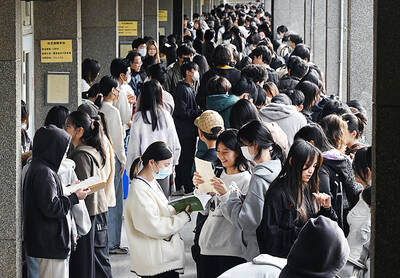
A global survey showed that 60 percent of Taiwanese had attained higher education, second only to Canada, the Ministry of the Interior said. Taiwan easily surpassed the global average of 43 percent and ranked ahead of major economies, including Japan, South Korea and the US, data from the Organisation for Economic Co-operation and Development (OECD) for 2024 showed. Taiwan has a high literacy rate, data released by the ministry showed. As of the end of last year, Taiwan had 20.617 million people aged 15 or older, accounting for 88.5 percent of the total population, with a literacy rate of 99.4 percent, the data
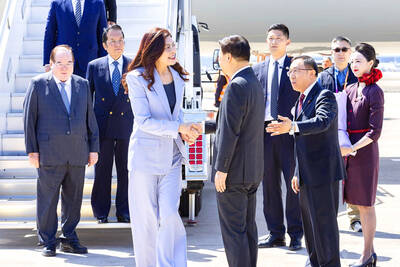
CCP ‘PAWN’? Beijing could use the KMT chairwoman’s visit to signal to the world that many people in Taiwan support the ‘one China’ principle, an academic said Chinese Nationalist Party (KMT) Chairwoman Cheng Li-wun (鄭麗文) yesterday arrived in China for a “peace” mission and potential meeting with Chinese President Xi Jinping (習近平), while a Taiwanese minister detailed the number of Chinese warships currently deployed around the nation. Cheng is visiting at a time of increased Chinese military pressure on Taiwan, as the opposition-dominated Legislative Yuan stalls a government plan for US$40 billion in extra defense spending. Speaking to reporters before going to the airport, Cheng said she was going on a “historic journey for peace,” but added that some people felt uneasy about her trip. “If you truly love Taiwan,

NEW LOW: The council in 2024 based predictions on a pessimistic estimate for the nation’s total fertility rate of 0.84, but last year that rate was 0.69, 17 percent lower An expected National Development Council (NDC) report expects the nation’s population to drop below 12 million by 2065, with the old-age dependency ratio to top 100 percent sooner than 2070, sources said yesterday. The council is slated to release its latest population projections in August, using an ultra-low fertility model, the sources said. The previous report projected that Taiwan’s population would fall to 14.37 million by 2070, but based on a new estimate of the total fertility rate (TFR) — the average number of children born to a woman over her lifetime — the population is expected to reach 12 million by


 RSS
RSS