


The average height of Taiwanese adults of both genders has increased over the past few years, with the exception of two single-age groups: 18-year-old males and 15-year-old females, the latest data from the Nutrition and Health Survey in Taiwan showed.
The latest report, covering 2017 to 2020, showed that the average height of women and men aged 19 or older climbed to 157.0cm and 169.3cm respectively, compared with 156.8cm and 168.7cm in the previous report from 2013 to 2016.
A breakdown showed that the average height of all adult age groups — 19 to 44 years old, 45 to 64 years old, and 65 years and older — followed the same pattern of growth.
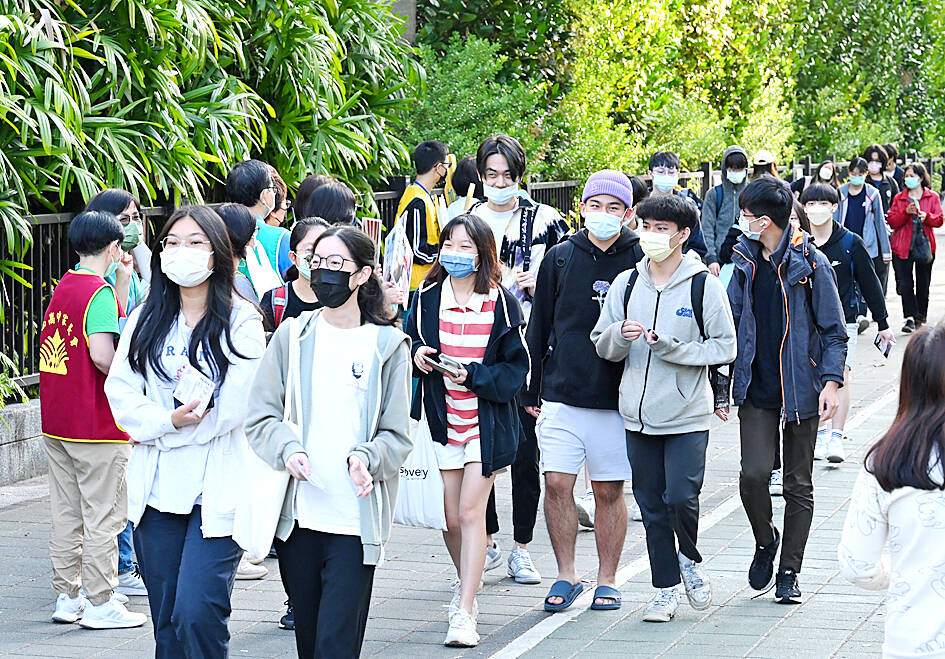
Photo: Liu Hsin-de, Taipei Times
The pattern is also the same in nearly all single-age groups of teenagers aged 13 to 18, with two exceptions — the average height of 18-year-old males was 173.3cm between 2013 and 2016, but dropped to 172.1cm between 2017 and 2020, while the average height of 15-year-old females slid from 160.5cm to 159.4cm in the two reports.
The sample sizes of the two single-aged group in both reports were relatively low at 41 to 79 people, compared with the sample size for other age groups of more than 1,500.
Citing the survey, a Chinese-language United Daily News article noted that the average height of 18-year-old Taiwanese males “shrank” by 1.2cm, while the average height of their female counterparts rose from 160.7cm in the 2013-2016 report to 161.2cm in the 2017-2020 report.
Taiwan Pediatric Association chairman Lee Hung-chang (李宏昌), a pediatrician at Mackay Memorial Hospital in Taipei, said in the article that based on his clinical observations, Taiwanese females have grown taller in recent years, which might be attributed to women exercising more.
In the past, girls were mostly taught to be gentle and docile, and encouraged to do indoor activities only, he said.
However, as Taiwanese break free of gender stereotypes, more girls are exercising and eating a balanced diet, leading to them growing taller, Lee said.
There is a rising trend of adolescents being brought to clinics for mental consultations due to heavy stress and being diagnosed with endocrine disorders, which affect the growth hormones, he said.
Taiwan Pediatric Association member Peng Chun-chih (彭純芝) said there are many factors that determine an adult’s final height, and medical experts suspect that environmental hormones could be one of them, but the evidence is not yet conclusive.
Childhood obesity is another problem due to poor, unhealthy diets, prolonged use of digital devices, staying up late and other factors that might affect children’s growth hormones, the report cited Peng as saying.
The survey was commissioned by the Health Promotion Administration to establish a long-term regular monitoring system to better understand public health and nutrition to use as a reference for drafting healthcare policies.
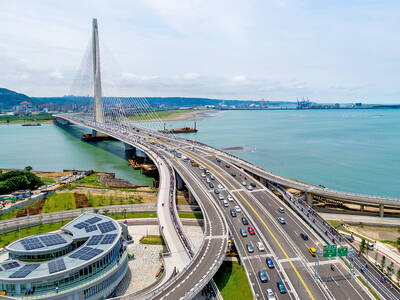
The Ministry of Transportation and Communications yesterday inaugurated the Danjiang Bridge across the Tamsui River in New Taipei City, saying that the structure would be an architectural icon and traffic artery for Taiwan. Feted as a major engineering achievement, the Danjiang Bridge is 920m long, 211m tall at the top of its pylon, and is the longest single-pylon asymmetric cable-stayed bridge in the world, the government’s Web site for the structure said. It was designed by late Iraqi-British architect Zaha Hadid. The structure, with a maximum deck of 70m, accommodates road and light rail traffic, and affords a 200m navigation channel for boats,

Taiwan Semiconductor Manufacturing Co (TSMC, 台積電), the world’s largest foundry service provider, yesterday said that global semiconductor revenue is projected to hit US$1.5 trillion in 2030, after the figure exceeds US$1 trillion this year, as artificial intelligence (AI) demand boosts consumption of token and compute power. “We are still at the beginning of the AI revolution, but we already see a significant impact across the whole semiconductor ecosystem,” TSMC deputy cochief operating officer Kevin Zhang (張曉強) said at the company’s annual technology symposium in Hsinchu City. “It is fair to say that in the past decade, smartphones and other mobile devices were
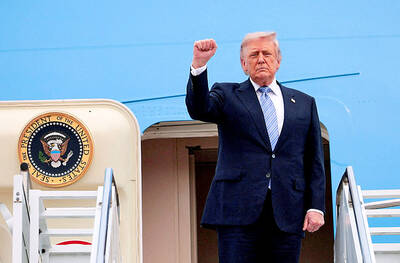
US-CHINA SUMMIT: MOFA welcomed US reassurance of no change in its Taiwan policy; Trump said he did not comment when Xi talked of opposing independence US President Donald Trump yesterday said he has not made a decision on whether to move forward with a major arms package for Taiwan after hearing concerns about it from Chinese President Xi Jinping (習近平). Trump’s comments on Taiwan came as he flew back to Washington after wrapping up critical talks in which both leaders said important progress was made in stabilizing US-China relations even as deep differences persist between the world’s two biggest powers on Iran and Taiwan. “I will make a determination,” Trump said, adding: “I’ll be making decisions. But, you know, I think the last thing we need right
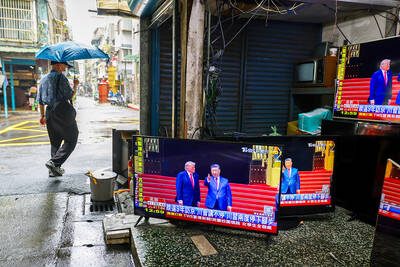
TAIWAN ISSUE: US treasury secretary Scott Bessent said on the first day of meetings that ‘it wouldn’t be a US-China summit without the Taiwan issue coming up’ There were no surprises on the first day of the summit between US President Donald Trump and Chinese President Xi Jinping (習近平), the Mainland Affairs Council (MAC) said yesterday, as the government reiterated that cross-strait stability is crucial to the Asia-Pacific region, as well as the world. As the two presidents met for a highly anticipated summit yesterday, Chinese state media reported that Xi warned Trump that missteps regarding Taiwan could push their two countries into “conflict.” Trump arrived in China with accolades for his host, calling Xi a “great leader” and “friend,” and extending an invitation to visit the White House


 RSS
RSS