


Indian Prime Minister Narendra Modi yesterday said he looks forward to closer ties with Taiwan in a social media post responding directly to President William Lai (賴清德).
Modi thanked Lai, who congratulated him on X his third straight election victory and touted the “fast-growing” India-Taiwan partnership that would contribute to the peace and prosperity in the Indo-Pacific.
“I look forward to closer ties as we work towards mutually beneficial economic and technological partnership,” Modi responded.
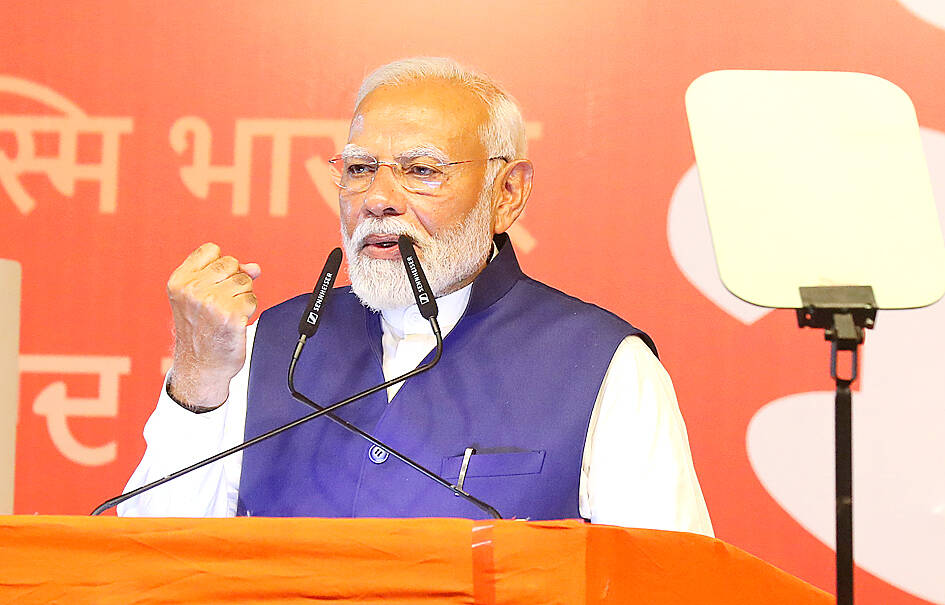
Photo: EPA-EFE
In a statement on Wednesday, Presidential Office spokesperson Kuo Ya-hui (郭雅慧) said Lai sincerely congratulated the Indian government and people for completing the parliamentary vote through a democratic process.
Lai said he hoped the Indian government led by Modi would push for its policies smoothly and boost prosperity in the country, Kuo said.
As India is one of Taiwan’s important partners and shares its democratic values, their collaboration has been strengthened over the past few years, Kuo added.
Lai hoped the two partners would continue to work closely via economic, technology, education and cultural exchanges to forge closer ties, Kuo said.
The president also wished that based on the existing solid foundation of their relationship, the two countries would make contributions to democracy, peace and prosperity in the Indo-Pacific region, she said.
India and Taiwan have been forging closer economic ties under Modi, with the two sides planning a labor-supply pact that could see Taiwan hire as many as 100,000 Indian workers.
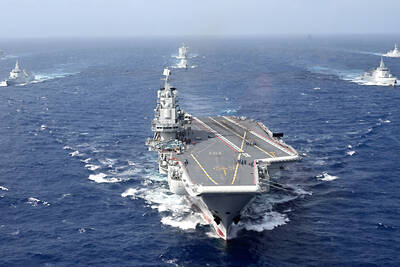
PROVOCATIVE: Chinese Deputy Ambassador to the UN Sun Lei accused Japan of sending military vessels to deliberately provoke tensions in the Taiwan Strait China denounced remarks by Japan and the EU about the South China Sea at a UN Security Council meeting on Monday, and accused Tokyo of provocative behavior in the Taiwan Strait and planning military expansion. Ayano Kunimitsu, a Japanese vice foreign minister, told the Council meeting on maritime security that Tokyo was seriously concerned about the situation in the East China and South China seas, and reiterated Japan’s opposition to any attempt to change the “status quo” by force, and obstruction of freedom of navigation and overflight. Stavros Lambrinidis, head of the EU delegation to the UN, also highlighted South China Sea
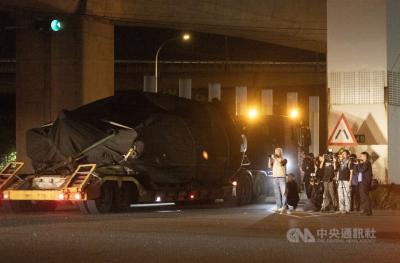
The final batch of 28 M1A2T Abrams tanks purchased from the US arrived at Taipei Port last night and were transported to the Armor Training Command in Hsinchu County’s Hukou Township (湖口), completing the military’s multi-year procurement of 108 of the tanks. Starting at 12:10am today, reporters observed more than a dozen civilian flatbed trailers departing from Taipei Port, each carrying an M1A2T tank covered with black waterproof tarps. Escorted by military vehicles, the convoy traveled via the West Coast Expressway to the Armor Training Command, with police implementing traffic control. The army operates about 1,000 tanks, including CM-11 Brave Tiger
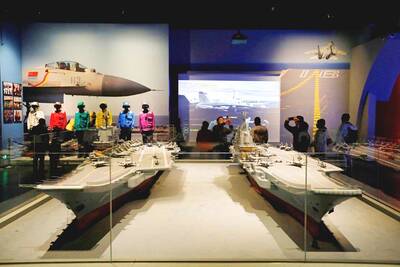
China on Wednesday teased in a video an aircraft carrier that could be its fourth, and the first using nuclear power, while making an allusion to Taiwan and vowing to further build up its islands, as it looks to boost maritime power, secure resources and bolster territorial claims. The video, issued on the eve of the 77th founding anniversary of the Chinese People’s Liberation Army Navy, featured fictional officers with names that are homophones of three commissioned aircraft carriers, the Liaoning (遼寧), Shandong (山東) and Fujian (福建). Titled Into the Deep, it showed a 19-year-old named “Hejian” (何劍) joining the group, sparking
BIG YEAR: The company said it would also release its A12 chip the same year to keep a ‘reliable stream of new silicon technologies’ flowing to its customers Taiwan Semiconductor Manufacturing Co (TSMC, 台積電) yesterday said its newest A13 chip is to enter volume production in 2029 as the chipmaker seeks to hold onto its tech leadership and demand for next-generation chips used in artificial intelligence (AI), high-performance-computing (HPC) and mobile applications. TSMC, the world’s biggest contract chipmaker, also unveiled its A12 chip at its annual technology symposium in Santa Clara, California. The A12 chip, which features TSMC’s super-power-rail technology to provide backside power delivery for AI and HPC applications, is also to enter volume production in 2029, a year after the scheduled release of the A14 chip. The technology moves


 RSS
RSS