


Taiwan is an indispensable member of the international community in ensuring global health security, President William Lai (賴清德) said yesterday, pointing to increasing support for Taiwan’s participation in the World Health Assembly (WHA).
The annual meeting of the decisionmaking body of the WHO was held from Monday through yesterday, but due to pressure from China, Taiwan was not invited to attend as an observer for the eighth year in a row.
Although it was regretful that Taiwan could not attend the meeting, the nation’s years of efforts were apparent in the strong international support it received this year, Lai said while meeting with the WHA Action Team at the Presidential Office in Taipei.
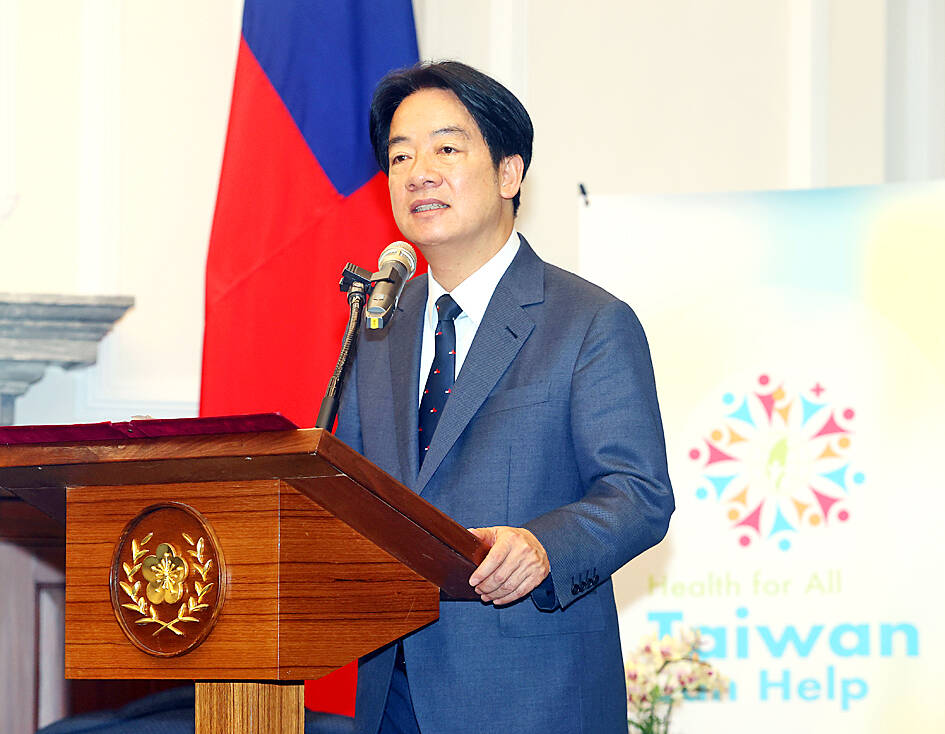
Photo: CNA
He thanked the team of health officials and experts for striving for better health and human rights for Taiwan and the world.
Minister of Health and Welfare Chiu Tai-yuan (邱泰源) led the delegation to attend meetings on the sidelines of the WHA in Geneva, Switzerland, with the aim of gaining international recognition and support.
The team this year attended 43 bilateral meetings, and more countries voiced support for Taiwan’s WHA bid this year, Chiu said.
Upon returning to Taiwan, Chiu and officials yesterday held a news conference in Taipei to report on the team’s accomplishments in Geneva.
Health ministers from some of Taiwan’s diplomatic allies — including Belize, Saint Vincent and the Grenadines, Saint Lucia and the Marshall Islands — debated with China, arguing that Taiwan should be allowed to participate as an observer, but the WHO refused to include the proposal on the agenda, Chiu said.
The Ministry of Health and Welfare expresses deep regret and discontent regarding the WHO’s decision, he said.
The delegation on Monday submitted a letter to the WHO Secretariat protesting its decision and expressing Taiwan’s determination to strive for international participation, he said.
At this year’s WHA, 26 diplomatic allies and like-minded countries voiced support for Taiwan, more support than in previous years, he said.
The team met with more high-ranking health officials than in previous years, including from Taiwan’s diplomatic allies, as well as Australia, the Czech Republic, Germany, Lithuania, the US and several important international organizations, Chiu said.
The cooperation and exchanges discussed in the meetings was also more substantial, involving National Health Insurance, infectious disease prevention, health promotion, cancer prevention, mental health, healthcare professionals’ training and other issues, he said.
“Taiwan has positively expressed its demand to participate in the WHO and global health affairs, demonstrated the nation’s healthcare soft power and held several professional forums in Geneva,” he said.
“It is a shame that Taiwan, being a top student, is not allowed to enter the class and share its knowledge and expertise with its global classmates,” Chiu said, adding that excluding Taiwan from the WHA not only affects the right of Taiwanese to health, but is also a huge loss to the international community.
The combined efforts of the Ministry of Foreign Affairs, lawmakers, healthcare professionals, non-governmental groups, youth groups and overseas Taiwanese, are each small successes that would contribute to the eventual big success of WHA participation, he said.
Additional reporting by Su Yong-yao
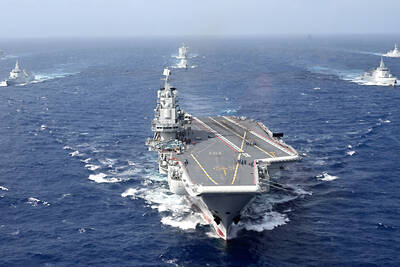
PROVOCATIVE: Chinese Deputy Ambassador to the UN Sun Lei accused Japan of sending military vessels to deliberately provoke tensions in the Taiwan Strait China denounced remarks by Japan and the EU about the South China Sea at a UN Security Council meeting on Monday, and accused Tokyo of provocative behavior in the Taiwan Strait and planning military expansion. Ayano Kunimitsu, a Japanese vice foreign minister, told the Council meeting on maritime security that Tokyo was seriously concerned about the situation in the East China and South China seas, and reiterated Japan’s opposition to any attempt to change the “status quo” by force, and obstruction of freedom of navigation and overflight. Stavros Lambrinidis, head of the EU delegation to the UN, also highlighted South China Sea
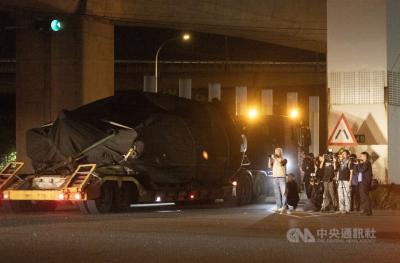
The final batch of 28 M1A2T Abrams tanks purchased from the US arrived at Taipei Port last night and were transported to the Armor Training Command in Hsinchu County’s Hukou Township (湖口), completing the military’s multi-year procurement of 108 of the tanks. Starting at 12:10am today, reporters observed more than a dozen civilian flatbed trailers departing from Taipei Port, each carrying an M1A2T tank covered with black waterproof tarps. Escorted by military vehicles, the convoy traveled via the West Coast Expressway to the Armor Training Command, with police implementing traffic control. The army operates about 1,000 tanks, including CM-11 Brave Tiger
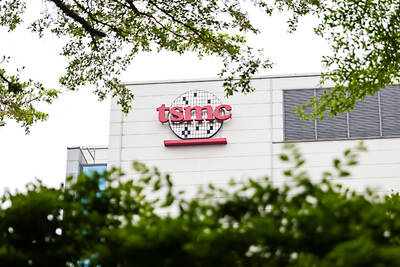
Taiwan Semiconductor Manufacturing Co (TSMC, 台積電), the world’s largest contract chipmaker, said it expects its 2-nanometer (2nm) chip capacity to grow at a compound annual rate of 70 percent from this year to 2028. The projection comes as five fabs begin volume production of 2-nanometer chips this year — two in Hsinchu and three in Kaohsiung — TSMC senior vice president and deputy cochief operating officer Cliff Hou (侯永清) said at the company’s annual technology symposium in Silicon Valley, California, last week. Output in the first year of 2-nanometer production, which began in the fourth quarter of last year, is expected to
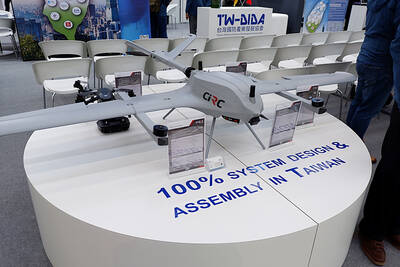
Taiwan’s drone exports surged past US$100 million in the first quarter, exceeding last year’s full-year total, with the Czech Republic emerging as the largest buyer, the Ministry of Economic Affairs said. Exports of complete drones reached US$115.85 million in the period, about 1.2 times the total recorded for all of last year, the ministry said in a report. Exports to the Czech Republic accounted for about US$100 million, far outpacing other markets. Poland, last year’s top destination, recorded about US$11.75 million in the first quarter. Taiwan’s drone exports have expanded rapidly in the past few years, with last year’s total


 RSS
RSS