


US and Filipino troops yesterday fired missiles and artillery at an imaginary “invasion” force during war games on the Philippines’ northern coast, days after their governments objected to China’s “dangerous” actions in regional waters.
Thousands of troops are conducting land, sea and air maneuvers against a backdrop of increased confrontations between Chinese and Philippine vessels around shoals in the South China Sea claimed by Manila, as well as stepped-up Chinese air and naval activity around nearby Taiwan.
US troops massed at a strip of sand dunes on Luzon island’s northwest coast — about 400km south of Taiwan — letting loose more than 50 live 155mm howitzer rounds at floating targets about 5km off the coast, journalists reported.
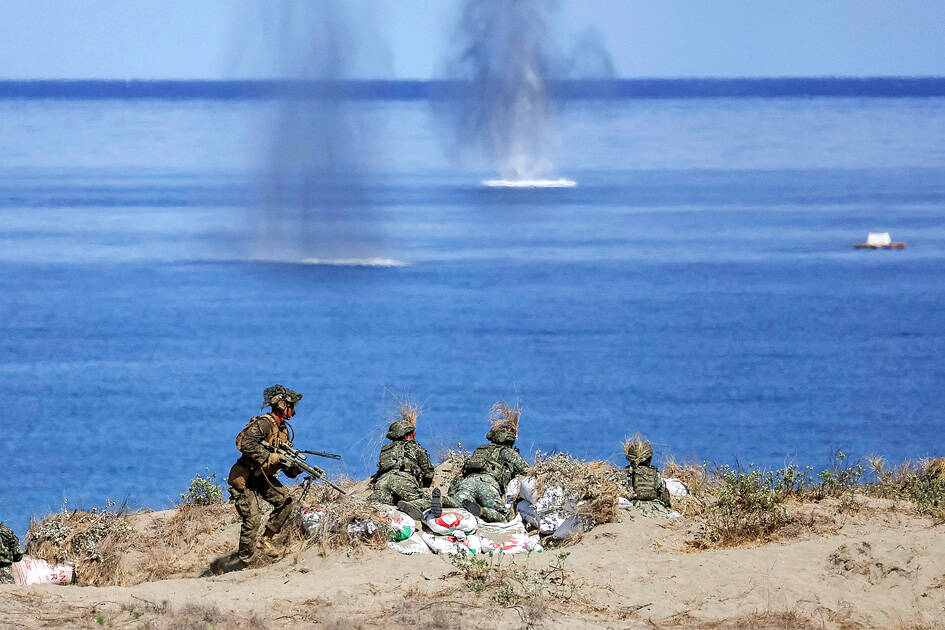
Photo: Reuters
Filipino troops followed up by firing rockets aimed at wearing down the attackers, before the two forces finished the job with machine guns, Javelin missiles and more artillery rounds.
Lieutenant General Michael Cederholm, commander of the US First Marine Expeditionary Force, said the exercise was “to prepare for the worst” by “securing key maritime terrain.”
“It’s designed to repel an invasion,” Cederholm told reporters at the exercise site.
“Our northwestern side is more exposed,” Major General Marvin Licudine, exercise director for the Philippines, said ahead of the live firing at the La Paz sand dunes near Laoag.
“Because of the regional problems that we have... we have to already practice and orient ourselves in our own land in these parts,” he said.
Beijing claims almost the entire South China Sea despite an international ruling that its assertion has no legal basis.
It deploys hundreds of coast guard, navy and other vessels to patrol and militarize the waters.
Asked about yesterday’s drills, the Chinese Ministry of Foreign Affairs said that “any military exercise should not be targeted at or harm the interests of third parties.”
“Countries in the region can all see clearly who is currently provoking military confrontation and escalating tensions in the region,” ministry spokesman Lin Jian (林劍) said.
More than 16,700 Filipino and US troops are taking part in the annual military drills dubbed Balikatan, or “shoulder to shoulder” in Filipino.

‘NO SECURITY RISK’: The Railway Bureau reassured the public that the technicians’ activities were limited to technical guidance and did not involve sensitive systems The Railway Bureau yesterday said it had invited eight Chinese technicians to assist with an airport MRT construction project. The bureau issued the confirmation after an Internet user said Chinese nationals had entered the construction zone of Taiwan Taoyuan International Airport’s Terminal 3 project. They asked why “individuals from an enemy state” were allowed access to such a major national infrastructure project, which raised serious concerns over Taiwan’s industrial safety, sensitive systems and information security. The bureau’s Northern Region Engineering Branch Office said subcontractor Taiwan Handle Industrial Co (台灣手把工業) of the Taoyuan airport MRT’s “Contract No. CU05 Project A14 Station Civil, MEP &

The National Chungshan Institute of Science and Technology yesterday showcased its locally developed variants of the Vision 60 robotic patrol dog, which it plans to deploy on the nation’s outlying territories in the South China Sea. The variants were produced under the Joint Lab project — created by the institute and domestic companies — and assembled with domestically produced motors, lenses and artificial intelligence (AI) systems alongside licensed tech from the US, Missile and Rocket Systems Research Division deputy director Jen Kuo-kang (任國光) told the media event at a military base in Taipei’s Dazhi (大直) area. Taiwan has built up its strengths
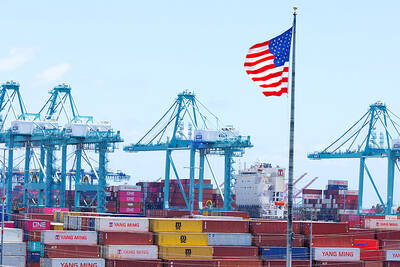
NOT IMMEDIATE: Taiwan has a chance to appeal the proposed 10 percent tariff before it starts, while other countries face a 12.5 percent tariff from the trade office Taiwan is among 60 economies determined by the US to have failed to impose or enforce a ban on the importation of goods produced with forced labor, according to a notice released on Tuesday by the Office of the US Trade Representative (USTR), which proposed imposing an additional 10 percent or more tariff on them. The USTR in a statement said that following an investigation, it had determined under Section 301 of the Trade Act of 1974 that the failure of the 60 economies to impose and effectively enforce a prohibition on the importation of goods produced with forced labor is
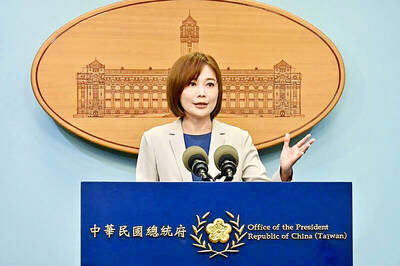
TIT-FOR-TAT: The US allegedly revoked the visa of a Chinese national working at Xinhua News Agency in the US in response to Beijing’s expulsion of Vivian Wang The Presidential Office yesterday condemned China for expelling a New York Times correspondent from Beijing following the newspaper’s interview with President William Lai (賴清德), saying the move highlighted Beijing’s suppression of press freedom and its threat to international news media. Taiwan has noted a series of recent incidents in which Beijing used similar tactics to “threaten and pressure international media outlets and journalists,” Presidential Office spokeswoman Karen Kuo (郭雅慧) said in a statement. “This concerns not only press freedom and freedom of expression, but also the safety of journalists, and Taiwan and relevant partners are paying close attention to the situation,” she


 RSS
RSS