


The Constitutional Court yesterday ruled that any candidate running for public office can request a recount if the result of an election is within a certain margin, after a township representative candidate who lost by two votes was ineligible to request a recount last year.
The court determined that Article 69 of the Public Officials Election and Recall Act (公職人員舉罷免法) was unconstitutional and should be amended immediately.
The article applies to elections for central government public officials, municipal mayors, city mayors and county commissioners.
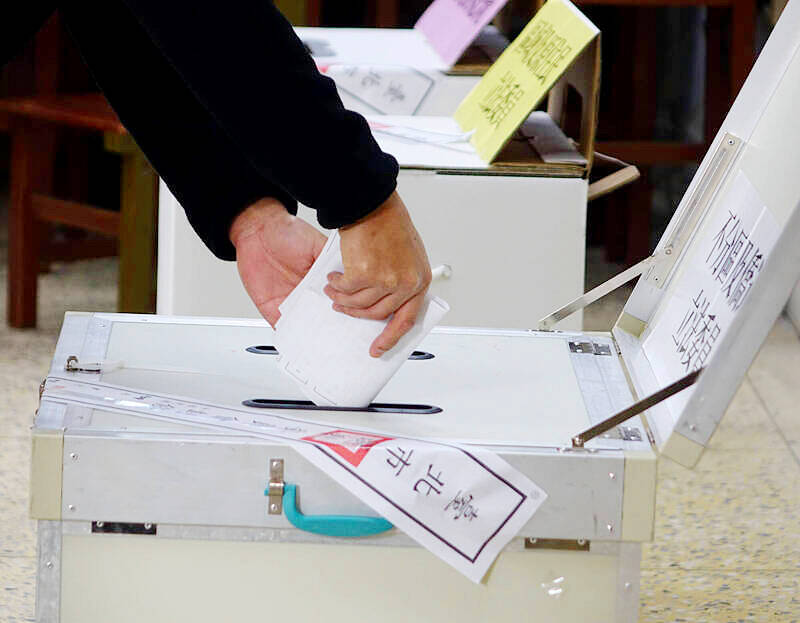
Photo: Taipei Times
Democratic Progressive Party (DPP) member Yeh Kao-chieh (葉高潔), who ran last year to represent Hsinchu County’s Sinfong Township (新豐), filed a lawsuit for a recount after losing the election by two votes, claiming that the article violated the principles of equality and proportion.
The Hsinchu County District Court denied the request, saying that recounts did not apply to township representative elections and that the intention of the law was to separate categories of elected officials.
Yeh filed for a constitutional interpretation after the High Court upheld the first appellate court’s ruling.
The Constitutional Court reviewed the case on Oct. 20 and ruled that the Central Election Commission’s Hsinchu branch should retain the candidate roster and ballots for six months until the review was concluded or when the Constitutional Court revoked such an order without the plaintiff requesting a provisional injunction.
The ruling yesterday marked the first time the Constitutional Court made a judgement on the merits of an election-related case.
The court decided that the article’s preclusion of certain candidates from applying for a recount — if the difference in votes received by the candidate elected with the lowest number of votes and the candidate not elected with the highest number of votes is within 0.3 percent — was unconstitutional.
The recount system seeks to uphold the fairness of elections and protect people’s electoral rights, and should not have different standards based on elected offices, the court said.
The ruling also stated that until amendments to the act are completed, candidates in public elections who have lost, but whose number of votes was within the 0.003 margin of error, may apply to their district court to seal all or a portion of the ballots and call for a recount, which should be completed within 20 days.
The court stated that the legal grounds of the High Court ruling had been rendered null and remanded the case back to the High Court for a retrial.
Additional reporting by CNA
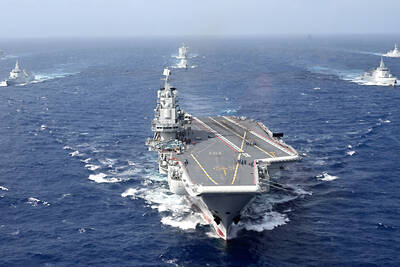
PROVOCATIVE: Chinese Deputy Ambassador to the UN Sun Lei accused Japan of sending military vessels to deliberately provoke tensions in the Taiwan Strait China denounced remarks by Japan and the EU about the South China Sea at a UN Security Council meeting on Monday, and accused Tokyo of provocative behavior in the Taiwan Strait and planning military expansion. Ayano Kunimitsu, a Japanese vice foreign minister, told the Council meeting on maritime security that Tokyo was seriously concerned about the situation in the East China and South China seas, and reiterated Japan’s opposition to any attempt to change the “status quo” by force, and obstruction of freedom of navigation and overflight. Stavros Lambrinidis, head of the EU delegation to the UN, also highlighted South China Sea
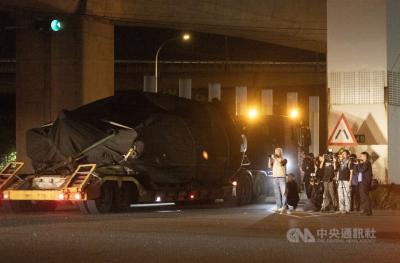
The final batch of 28 M1A2T Abrams tanks purchased from the US arrived at Taipei Port last night and were transported to the Armor Training Command in Hsinchu County’s Hukou Township (湖口), completing the military’s multi-year procurement of 108 of the tanks. Starting at 12:10am today, reporters observed more than a dozen civilian flatbed trailers departing from Taipei Port, each carrying an M1A2T tank covered with black waterproof tarps. Escorted by military vehicles, the convoy traveled via the West Coast Expressway to the Armor Training Command, with police implementing traffic control. The army operates about 1,000 tanks, including CM-11 Brave Tiger
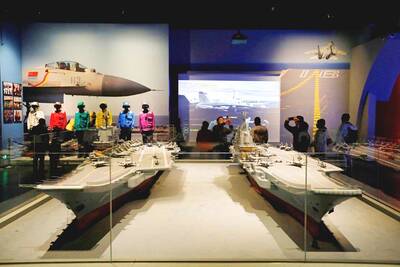
China on Wednesday teased in a video an aircraft carrier that could be its fourth, and the first using nuclear power, while making an allusion to Taiwan and vowing to further build up its islands, as it looks to boost maritime power, secure resources and bolster territorial claims. The video, issued on the eve of the 77th founding anniversary of the Chinese People’s Liberation Army Navy, featured fictional officers with names that are homophones of three commissioned aircraft carriers, the Liaoning (遼寧), Shandong (山東) and Fujian (福建). Titled Into the Deep, it showed a 19-year-old named “Hejian” (何劍) joining the group, sparking
Taiwan Semiconductor Manufacturing Co (TSMC, 台積電), the world’s largest contract chipmaker, said it expects its 2-nanometer (2nm) chip capacity to grow at a compound annual rate of 70 percent from this year to 2028. The projection comes as five fabs begin volume production of 2-nanometer chips this year — two in Hsinchu and three in Kaohsiung — TSMC senior vice president and deputy cochief operating officer Cliff Hou (侯永清) said at the company’s annual technology symposium in Silicon Valley, California, last week. Output in the first year of 2-nanometer production, which began in the fourth quarter of last year, is expected to


 RSS
RSS