


The three most common causes of death among newborns are genetic disease, premature birth and accidents, including putting a baby down to sleep on their stomach, Minister of Health and Welfare Hsueh Jui-yuan (薛瑞元) said yesterday as he called for greater awareness.
Hsueh made the remarks at a conference on reducing the nation’s neonatal mortality rate, organized by the Taiwan Society of Neonatology and the Taiwan Pediatric Association in Taipei.
Of the top causes of death among newborns, genetic disease caused by gene or chromosome mutation can be avoided if discovered during prenatal care checkups, but it could raise ethical issues, so it might be unacceptable for some parents, he said.
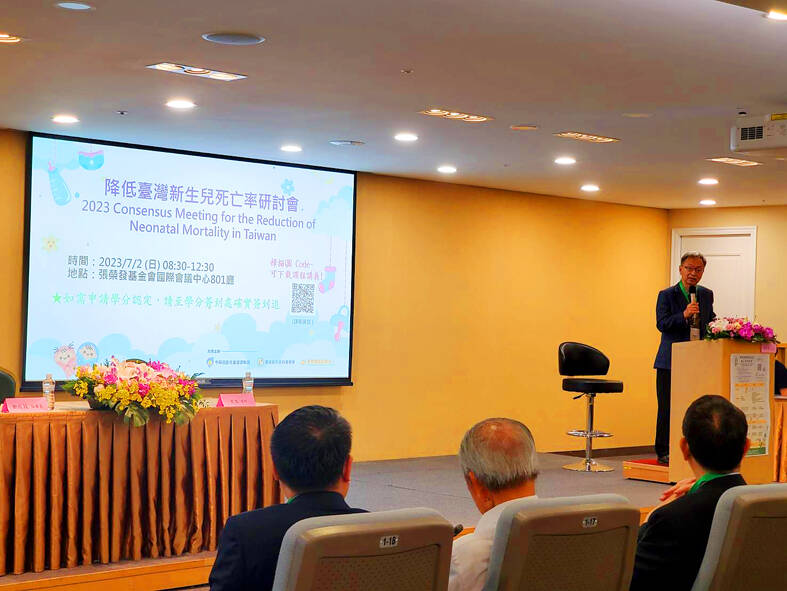
Photo: Lin Hui-chin, Taipei Times
Hsueh said the two other causes can be more easily avoided, as medical professionals strive to prevent premature births and to provide better medical assistance to premature babies.
Some accidents, including sudden infant death syndrome (SIDS) caused by laying a baby to sleep on their stomach, can also be prevented, he said.
Some parents believe that letting their newborn sleep on their stomach would help them have a round head, which is a “ridiculous” reason, Hsueh said.
The Health Promotion Administration (HPA) urges parents to avoid putting babies down to sleep on their bellies, he said, adding that the government would continue to raise public awareness about SIDS.
Child Welfare League Foundation president Lin Jih-jia (林志嘉) said Taiwan’s birthrate has fallen to almost the lowest in the world, but its neonatal mortality rate is higher than those in Japan and South Korea.
He urged the ministry to set up a specialized agency to assess and deal with the problem.
National Taiwan University Children Hospital’s Division of Neonatology attending physician Chou Hung-chieh (周弘傑) said the neonatal mortality rate has been increasing in the past three years.
The rate is about 2.4 deaths per 1,000 live births, which is 2.7 times that in Japan and 1.6 times that in South Korea, Chou said, calling on the government to pay attention to the problem.
Another common cause of neonatal death are perinatal respiratory disorders, he said.
A neonatal death database should be established to analyze the cases and improve critical issues, he added.
An HPA analysis suggested that a higher neonatal mortality rate is associated with a higher average maternal age, so medical care and support for pregnancy at an advanced maternal age is also important, Chou said.
National Health Insurance Administration Director-General Shih Chung-liang (石崇良) said the National Health Insurance (NHI) system would cover “high-risk pregnancy neonatal emergency treatment fees,” following calls by medical professionals.
The decision was made at Thursday’ meeting of the National Health Insurance Pharmaceutical Benefit and Reimbursement Standard.
The NHI would cover three types of high-risk pregnancy neonatal emergency treatment fees, based on high, medium and low risk levels, Shih said.
The policy might take affect in September at the earliest, as it requires administrative review and final approval by the Ministry of Health and Welfare.

‘NO SECURITY RISK’: The Railway Bureau reassured the public that the technicians’ activities were limited to technical guidance and did not involve sensitive systems The Railway Bureau yesterday said it had invited eight Chinese technicians to assist with an airport MRT construction project. The bureau issued the confirmation after an Internet user said Chinese nationals had entered the construction zone of Taiwan Taoyuan International Airport’s Terminal 3 project. They asked why “individuals from an enemy state” were allowed access to such a major national infrastructure project, which raised serious concerns over Taiwan’s industrial safety, sensitive systems and information security. The bureau’s Northern Region Engineering Branch Office said subcontractor Taiwan Handle Industrial Co (台灣手把工業) of the Taoyuan airport MRT’s “Contract No. CU05 Project A14 Station Civil, MEP &

The National Chungshan Institute of Science and Technology yesterday showcased its locally developed variants of the Vision 60 robotic patrol dog, which it plans to deploy on the nation’s outlying territories in the South China Sea. The variants were produced under the Joint Lab project — created by the institute and domestic companies — and assembled with domestically produced motors, lenses and artificial intelligence (AI) systems alongside licensed tech from the US, Missile and Rocket Systems Research Division deputy director Jen Kuo-kang (任國光) told the media event at a military base in Taipei’s Dazhi (大直) area. Taiwan has built up its strengths
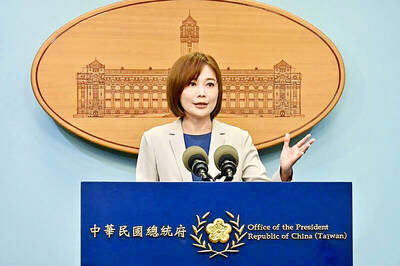
TIT-FOR-TAT: The US allegedly revoked the visa of a Chinese national working at Xinhua News Agency in the US in response to Beijing’s expulsion of Vivian Wang The Presidential Office yesterday condemned China for expelling a New York Times correspondent from Beijing following the newspaper’s interview with President William Lai (賴清德), saying the move highlighted Beijing’s suppression of press freedom and its threat to international news media. Taiwan has noted a series of recent incidents in which Beijing used similar tactics to “threaten and pressure international media outlets and journalists,” Presidential Office spokeswoman Karen Kuo (郭雅慧) said in a statement. “This concerns not only press freedom and freedom of expression, but also the safety of journalists, and Taiwan and relevant partners are paying close attention to the situation,” she
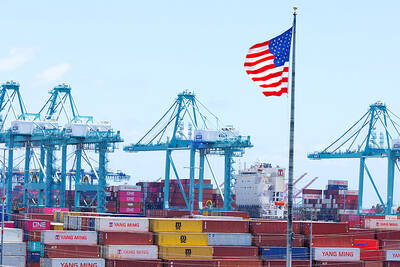
NOT IMMEDIATE: Taiwan has a chance to appeal the proposed 10 percent tariff before it starts, while other countries face a 12.5 percent tariff from the trade office Taiwan is among 60 economies determined by the US to have failed to impose or enforce a ban on the importation of goods produced with forced labor, according to a notice released on Tuesday by the Office of the US Trade Representative (USTR), which proposed imposing an additional 10 percent or more tariff on them. The USTR in a statement said that following an investigation, it had determined under Section 301 of the Trade Act of 1974 that the failure of the 60 economies to impose and effectively enforce a prohibition on the importation of goods produced with forced labor is


 RSS
RSS