


Thirty-two cases of serious flu complications and seven flu-related deaths were confirmed last week, while the daily number of new hospitalized COVID-19 cases continued to increase and is expected to remain at a peak next month, the Centers for Disease Control (CDC) said yesterday.
CDC Epidemic Intelligence Center Deputy Director Lee Chia-lin (李佳琳) said that the respiratory viruses identified from last week showed flu viruses accounted for 53.5 percent of the total, and that both the influenza A(H1N1) virus and the influenza A(H3N2) virus were the dominant circulating viruses.
There were 75,897 hospital visits for flu-like illnesses last week, up 4.4 percent from the previous week, she said, adding that an analysis of the trend shows that it would continue increasing.
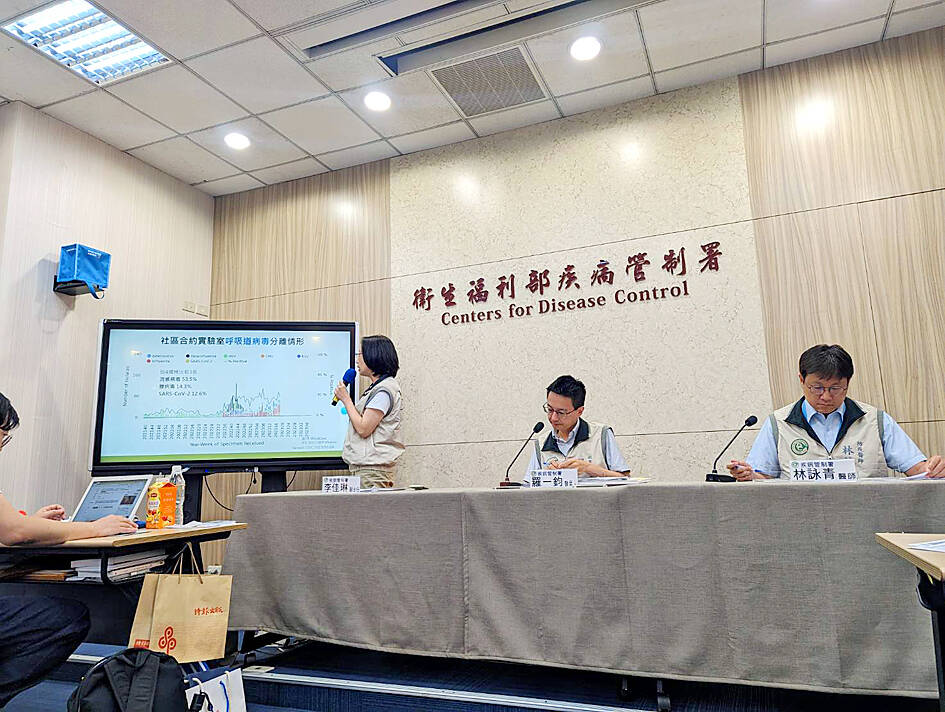
Photo: Wu Liang-yi, Taipei Times
Among the seven flu-related deaths reported, six had contracted the influenza A(H1N1) virus and one the influenza A(H3N2) virus, she said.
Four of them were not vaccinated, she added.
CDC Deputy Director-General Philip Lo (羅一鈞) said the serious cases and deaths mark the highest weekly numbers this flu season, which started in October last year.
Case numbers might decline as the weather gets warmer, but it is difficult to predict when it would start to drop, he said, adding that after the Dragon Boat Festival on June 22 is a possible period.
CDC physician Lin Yung-ching (林詠青) said the youngest person who died from flu last week was a seven-year-old girl in southern Taiwan, who did not have underlying health conditions and received a flu vaccine this flu season.
The girl developed encephalitis and myocarditis after contracting the flu, and died two days after the onset of symptoms, Lin said.
The CDC also reported a daily average of 208 new cases of moderate-to-severe COVID-19 for last week, an increase of 3 percent from the previous week.
There were also 20 COVID-19-related deaths on average per day last week, higher than the previous week, which Lee said indicates that new COVID-19 cases are still rising.
Genomic sequencing from the past four weeks showed that the Omicron XBB variant was the dominant strain, accounting for 59 percent of the cases, followed by the Omicron BA.2.75 variant at 39 percent, the CDC said.
Similar to the flu, COVID-19 infections are expected to remain at a peak next month, Lo said, reminding people to follow hygiene protocols to prevent infections.
People should cover their nose and mouth when sneezing, wash their hands frequently with soap and water, wear masks in crowded places and seek medical attention if they develop respiratory symptoms, he said.
Wearing a mask is mandatory at healthcare and elderly welfare facilities, and people should seek emergency treatment if they develop symptoms of serious complications, such as difficulty breathing, chest pain and low blood pressure, if they contract the disease, he said.
As for enterovirus infection, Lee said that it is at an epidemic level, with 12,924 hospital visits reported last week, 4 percent higher than the previous week.
However, the pace of increase has slowed in the past two weeks, Lee said, adding that the coxsackie A virus accounted for the majority of the cases, Lee said.
There were also 17 new local mpox cases last week — men aged 20 to 50, with 15 residing in the north and two in central Taiwan.
The CDC urged eligible people to get vaccinated at one of the 93 contracted healthcare facilities across the nation as soon as possible.
A total of 128 mpox cases — 116 local and 12 imported cases — have been confirmed since June 23 last year. Sixty of them have recovered, 15 people are still hospitalized and 53 are under self-health management at home, the CDC said.
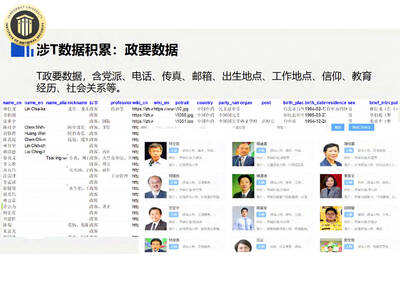
NETWORK-MAPPING PROJECT: The database contains 170 detailed files of Taiwanese politicians and about 23 million records of household registration data in Taiwan China has developed a network-mapping project targeting political figures and parties in Taiwan to monitor public opinion during elections and to craft tailored influence campaigns aimed at dividing Taiwanese society, according to documents leaked by Chinese technology firm GoLaxy (中科天璣). The documents, collected by Taipei-based Doublethink Lab, showed a database was specifically created to gather detailed information on Taiwanese political figures, including their political affiliations, job histories, birthplaces, residences, education, religion and a brief biography about them. Several notable Taiwanese politicians are in the database, including President William Lai (賴清德), former president Tsai Ing-wen (蔡英文), Minister of Foreign Affairs Lin Chia-lung (林佳龍),

RECOGNITION: Former Fijian prime minister Mahendra Chaudhry said that Taiwan’s New Southbound Policy serves as a stabilizing force in the Indo-Pacific region Taiwan can lead the unification of the Chinese people, Nobel Peace Prize laureate and former Polish president Lech Walesa said in Taipei yesterday, adding that as the world order is changing, peaceful discussion would find good solutions, and that the use of force and coercion would always fail. Walesa made the remarks during his keynote address at a luncheon of the Yushan Forum in Taipei, titled “Indo-Pacific Partnership Prospects: Taiwan’s Values, Technology and Resilience,” organized by the Taiwan-Asia Exchange Foundation with the Ministry of Foreign Affairs. Walesa said that he had been at the forefront of a big peaceful revolution and “if
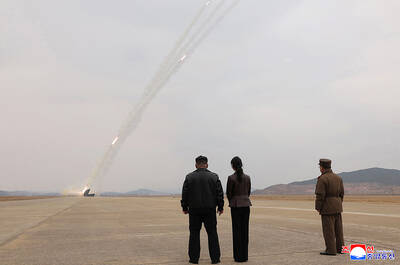
North Korea tested nuclear-capable rocket launchers, state media reported yesterday, a day after Seoul detected the launch of about 10 ballistic missiles. The test comes after South Korean and US forces launched their springtime military drills, due to run until Thursday. North Korean leader Kim Jong-un on Saturday oversaw the testing of the multiple rocket launcher system (MRLS), the Korean Central News Agency (KCNA) said. The test involved 12 600mm-caliber ultra-precision multiple rocket launchers and two artillery companies, it said. Kim said the drill gave Pyongyang’s enemies, within the 420km striking range, a sense of “uneasiness” and “a deep understanding

North Korea yesterday fired about 10 ballistic missiles to the sea toward Japan, the South Korean Joint Chiefs of Staff (JCS) said, days after Pyongyang warned of “terrible consequences” over ongoing South Korea-US military drills. Pyongyang recently dashed hopes of a diplomatic thaw with Seoul, Washington’s security ally, describing its latest peace efforts as a “clumsy, deceptive farce.” Seoul’s military detected “around 10 ballistic missiles launched from the Sunan area in North Korea toward the East Sea [Sea of Japan] at around 1:20pm,” JCS said in a statement, referring to South Korea’s name for the body of water. The missiles


 RSS
RSS