


The administration of US President Joe Biden formally declared that Russia has committed “crimes against humanity” during its nearly year-long invasion of Ukraine, US Vice President Kamala Harris told the Munich Security Conference in Germany yesterday.
“In the case of Russia’s actions in Ukraine we have examined the evidence, we know the legal standards, and there is no doubt: These are crimes against humanity,” Harris, a former prosecutor, said in prepared remarks. “And I say to all those who have perpetrated these crimes, and to their superiors who are complicit in those crimes, you will be held to account.”
The official determination, which was the result of a legal and factual analysis led by the US Department of State, carries with it no immediate consequences for the ongoing war.
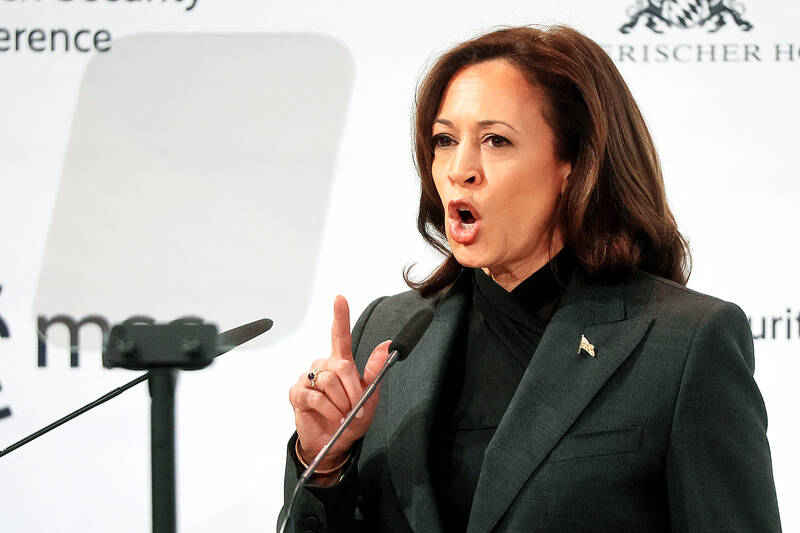
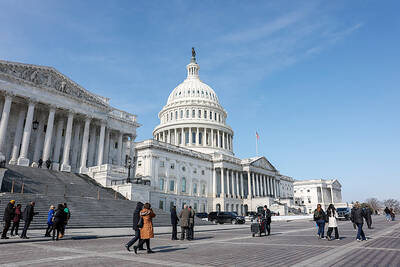
Photo: REUTERS
However, Washington hopes that it could help further isolate Russian President Vladimir Putin and galvanize legal efforts to hold members of his government accountable through international courts and sanctions.
Harris’ speech came as senior Western leaders met in Munich to assess Europe’s worst conflict since World War II.
She said Russia is a “weakened” country after Biden led a coalition to punish Putin for the invasion, but Russia is only intensifying assaults in Ukraine’s east.
Meanwhile, Ukraine is planning a spring counteroffensive, for which it is seeking more, heavier and longer-range weapons from its Western allies.
The nearly year-long war has killed tens of thousands, uprooted millions from their homes, pummeled the global economy and made Putin a pariah in the West.
Washington earlier concluded that Russian forces were guilty of war crimes, as has a UN-mandated investigation, but the Biden administration conclusion that Russia’s actions amount to “crimes against humanity” implies a legal analysis that acts from murder to rape are widespread, systematic and intentionally directed against civilians.
In international law, it is seen as a more serious offense.
The UN-backed Commission of Inquiry on Ukraine has not yet concluded that the war crimes it says it has identified amount to crimes against humanity.
In her remarks, Harris cited as “barbaric and inhumane” the scores of victims found in Bucha, Ukraine, shortly after Russia’s invasion began in February last year, the March 9 bombing of a Mariupol maternity hospital that killed three people, including a child, and the sexual assault of a four-year-old by a Russian soldier that was identified by the UN report.
Organizations supported by the US Agency for International Development have documented more than 30,000 war crimes since the invasion, the US government said.
Ukrainian officials said they were investigating the shelling of the city of Bakhmut in the past few days as a possible war crime.
Russia, which says it is conducting a “special military operation” in Ukraine to eliminate threats to its security and protect Russian-speakers, has denied intentionally targeting civilians or committing war crimes.
“Let us all agree: On behalf of all the victims, known and unknown, justice must be served,” Harris said.
The Biden administration has sought to bring alleged war criminals to justice, including training Ukrainian investigators, imposing sanctions, blocking visas and increasing penalties under US war crimes laws.
Washington has spent about US$40 million on the efforts so far and says it is working with the US Congress to secure an additional US$38 million for the efforts.
However, the Biden administration’s ability to enforce any such efforts beyond its borders — especially within Russia — is limited. Collecting evidence in war-torn Ukraine has also proven difficult.
International legal bodies are also constrained. At the International Criminal Court, jurisdiction extends only to member states and states that have agreed to its jurisdiction, such as Ukraine, but not Russia.
Kyiv has been pushing for a new international war crimes organization to focus on the Russian invasion, which Moscow has opposed.
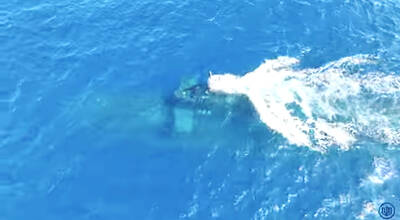
CSBC Corp, Taiwan (台灣國際造船) yesterday released the first video documenting the submerged sea trials of Taiwan’s indigenous defense submarine prototype, the Hai Kun (海鯤), or Narwhal, showing underwater navigation and the launch of countermeasures. The footage shows the vessel’s first dive, steering and control system tests, and the raising and lowering of the periscope and antenna masts. It offered a rare look at the progress in the submarine’s sea acceptance tests. The Hai Kun carried out its first shallow-water diving trial late last month and has since completed four submerged tests, CSBC said. The newly released video compiles images recorded from Jan. 29 to
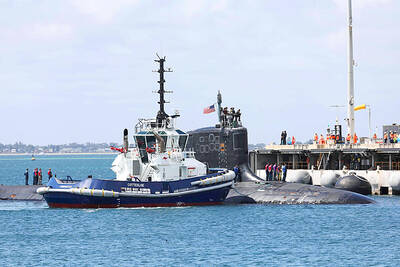
DETERRENCE EFFORTS: Washington and partners hope demonstrations of force would convince Beijing that military action against Taiwan would carry high costs The US is considering using HMAS Stirling in Western Australia as a forward base to strengthen its naval posture in a potential conflict with China, particularly over Taiwan, the Wall Street Journal reported on Saturday. As part of its Indo-Pacific strategy, Washington plans to deploy up to four nuclear-powered submarines at Stirling starting in 2027, providing a base near potential hot spots such as Taiwan and the South China Sea. The move also aims to enhance military integration with Pacific allies under the Australia-UK-US trilateral security partnership, the report said. Currently, US submarines operate from Guam, but the island could
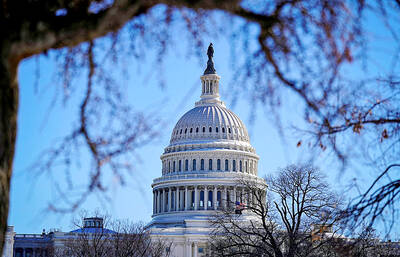
RESTRAINTS: Should China’s actions pose any threat to Taiwan’s security, economic or social systems, China would be excluded from major financial institutions, the bill says The US House of Representatives on Monday passed the PROTECT Taiwan Act, which states that Washington would exclude China from participating in major global financial organizations if its actions directly threaten Taiwan’s security. The bill, proposed by Republican Representative Frank Lucas, passed with 395 votes in favor and two against. It stipulates that if China’s actions pose any threat to Taiwan’s security, economic or social systems, the US would, “to the maximum extent practicable,” exclude Beijing from international financial institutions, including the G20, the Bank for International Settlements and the Financial Stability Board. The bill makes it clear that China must be prepared
The partisan standoff over President William Lai’s (賴清德) proposed defense budget has raised questions about the nation’s ability to adequately fund its own defense, the US Congressional Research Service (CRS) said in a report released on Tuesday. The report, titled Taiwan: Defense and Military Issues, said the government has increased its defense budget at an average annual rate of 5 percent from 2019 to 2023, with about 2.5 percent of its GDP spent on defense in 2024. Lai in November last year proposed a special budget of about US$40 billion over eight years, and said he intends to increase defense spending to


 RSS
RSS