


The White House is planning to hold secret talks with a Taiwanese delegation in the coming days, the Financial Times reported yesterday.
Minister of Foreign Affairs Joseph Wu (吳釗燮) and National Security Council Secretary-General Wellington Koo (顧立雄) would lead the delegation, it reported, citing “five people familiar with the secret talks — known as the ‘special channel.’”
The delegation is expected to meet with US Deputy National Security Adviser Jon Finer and US Deputy Secretary of State Wendy Sherman, the newspaper said.
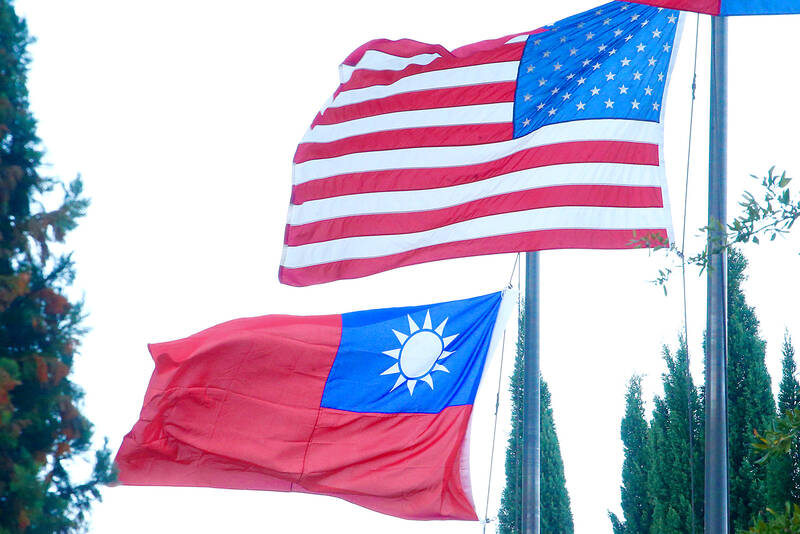
Photo: CNA
The meetings would take place at the Virginia headquarters of the American Institute in Taiwan (AIT), a foundation that serves as the de facto US embassy in the nation, it said.
The newspaper said that Laura Rosenberger is to head the institute’s US branch after she leaves her post as special assistant to the president and senior director for China and Taiwan at the US National Security Council.
At the AIT, Rosenberger would succeed James Moriarty, who has been the branch’s chairman since 2016, the newspaper said.
The White House and the Taipei Economic and Cultural Representative Office, Taiwan’s de facto embassy in the US, declined to comment on the report, it said.
In Taipei, Wu said: “I’m not able to comment on that, and I’m not able to confirm that.”
In other developments, top Taiwanese officials yesterday declined to comment on a reported visit to Taipei by US Department of Defense Deputy Assistant Secretary for China Michael Chase.
On Friday, the Financial Times cited a source as saying that the Pentagon’s top China official has arrived in the nation.
A Reuters report also cited two sources familiar with the matter as saying that Chase is in Taiwan.
Asked about the report, Minister of National Defense Chiu Kuo-cheng (邱國正) said he was “not certain” about the purported trip, adding that Taiwan is open to receive productive and beneficial advice on its defense preparedness efforts.
Asked about Chase’s visit, a Ministry of Foreign Affairs official said: “I really don’t know.”
Chase would be the second-most senior US defense official to visit Taiwan since 2019, when Heino Klinck, who served as deputy assistant secretary of defense for East Asia in the administration of former US president Donald Trump, visited the nation.
The US’ Taiwan Travel Act, which Trump signed into law in 2018, authorizes exchanges of Taiwanese and senior US officials, ending an implicit restriction that had been in effect for close to four decades.
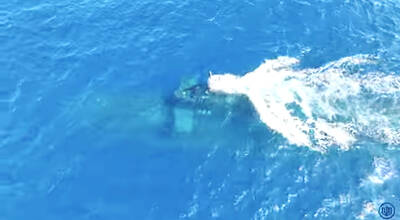
CSBC Corp, Taiwan (台灣國際造船) yesterday released the first video documenting the submerged sea trials of Taiwan’s indigenous defense submarine prototype, the Hai Kun (海鯤), or Narwhal, showing underwater navigation and the launch of countermeasures. The footage shows the vessel’s first dive, steering and control system tests, and the raising and lowering of the periscope and antenna masts. It offered a rare look at the progress in the submarine’s sea acceptance tests. The Hai Kun carried out its first shallow-water diving trial late last month and has since completed four submerged tests, CSBC said. The newly released video compiles images recorded from Jan. 29 to
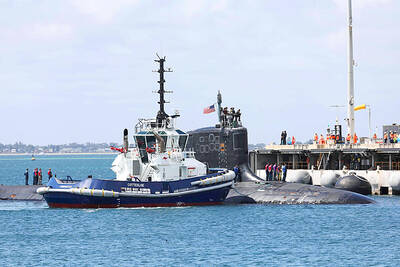
DETERRENCE EFFORTS: Washington and partners hope demonstrations of force would convince Beijing that military action against Taiwan would carry high costs The US is considering using HMAS Stirling in Western Australia as a forward base to strengthen its naval posture in a potential conflict with China, particularly over Taiwan, the Wall Street Journal reported on Saturday. As part of its Indo-Pacific strategy, Washington plans to deploy up to four nuclear-powered submarines at Stirling starting in 2027, providing a base near potential hot spots such as Taiwan and the South China Sea. The move also aims to enhance military integration with Pacific allies under the Australia-UK-US trilateral security partnership, the report said. Currently, US submarines operate from Guam, but the island could
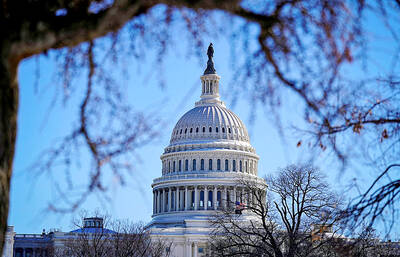
RESTRAINTS: Should China’s actions pose any threat to Taiwan’s security, economic or social systems, China would be excluded from major financial institutions, the bill says The US House of Representatives on Monday passed the PROTECT Taiwan Act, which states that Washington would exclude China from participating in major global financial organizations if its actions directly threaten Taiwan’s security. The bill, proposed by Republican Representative Frank Lucas, passed with 395 votes in favor and two against. It stipulates that if China’s actions pose any threat to Taiwan’s security, economic or social systems, the US would, “to the maximum extent practicable,” exclude Beijing from international financial institutions, including the G20, the Bank for International Settlements and the Financial Stability Board. The bill makes it clear that China must be prepared
The partisan standoff over President William Lai’s (賴清德) proposed defense budget has raised questions about the nation’s ability to adequately fund its own defense, the US Congressional Research Service (CRS) said in a report released on Tuesday. The report, titled Taiwan: Defense and Military Issues, said the government has increased its defense budget at an average annual rate of 5 percent from 2019 to 2023, with about 2.5 percent of its GDP spent on defense in 2024. Lai in November last year proposed a special budget of about US$40 billion over eight years, and said he intends to increase defense spending to


 RSS
RSS