


Ukraine late on Wednesday said its aerial defense units had detected half a dozen balloons, apparently launched by Russia, over the capital, Kyiv, and shot most of them down.
Kyiv authorities said the balloons could carry reconnaissance equipment and were launched to “detect and exhaust our air defense forces.”
“Most of the probes have been shot down,” they said in a statement, adding that they would carefully examine the debris.
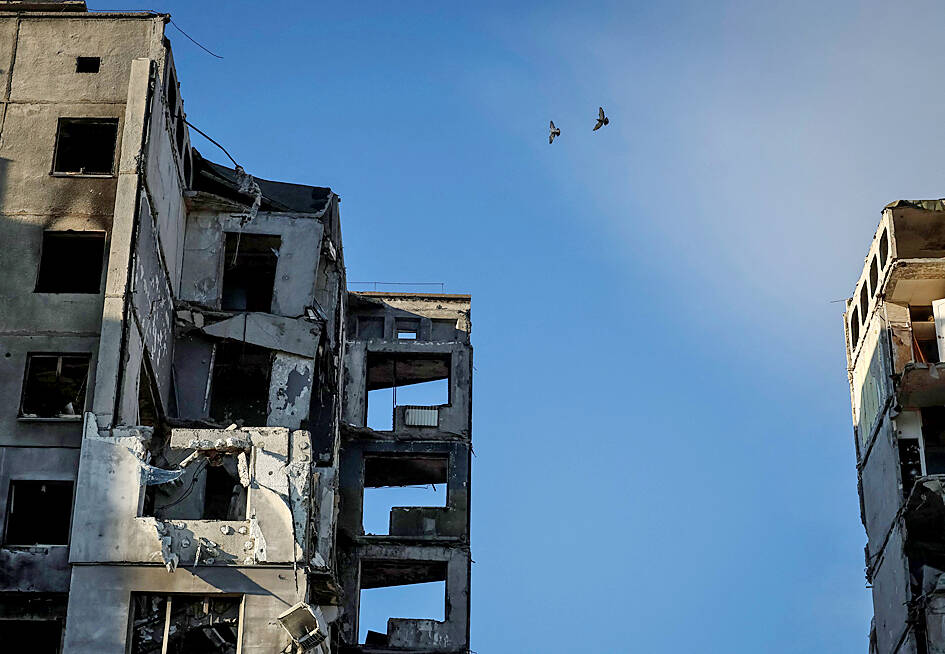
Photo: REUTERS
The balloons prompted sirens to go off in the Ukrainian capital, which usually happens when missiles are approaching.
Ukrainian Air Force spokesman Yuriy Ignat said that Russia uses balloons to exhaust Ukrainian anti-aircraft missiles.
“The Russians will use all available methods of warfare to achieve their goals,” he said. “It cannot be ruled out that these devices can conduct some kind of surveillance, so it is important to see what they are and understand them.”
Since the start of the Russian invasion in February last year, Ukrainian authorities have repeatedly reported Russian balloons drifting in the country’s airspace.
On Tuesday, Moldova temporarily closed its airspace due to the presence of a flying object resembling a weather balloon amid heightened tensions with Moscow.
The US has been in a state of alarm since a balloon from China was spotted tracking over a series of top secret nuclear weapons sites, before being shot down off the east coast early this month.
Meanwhile, the UN General Assembly is planning to vote on a draft resolution on “the need to reach, as soon as possible, a comprehensive, just and lasting peace” in Ukraine, as it marks one year since Russia invaded the country.
The resolution would demand Moscow withdraw its troops and call for a halt to hostilities.
The 193-member General Assembly is likely to vote on it next week after two days of speeches by country representaives to mark the anniversary of the start of the war.
Ukraine and its supporters hope to deepen Russia’s diplomatic isolation by seeking yes votes from nearly three-quarters of the General Assembly to match — if not better — the support received for several resolutions last year.
“We count on very broad support from the membership. What is at stake is not just the fate of Ukraine, it is the respect of the independence, sovereignty and territorial integrity of every state,” said EU Ambassador to the UN Olof Skoog, who codrafted the resolution.
Russian Deputy Ambassador to the UN Dmitry Polyanskiy declined to comment on the draft, which was sent to UN members on Wednesday.
The General Assembly has been the focus for UN action on Ukraine because the 15-member UN Security Council has been paralyzed by Russia, which holds a veto power along with the US, China, France and the UK.
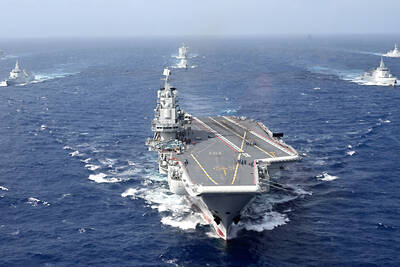
PROVOCATIVE: Chinese Deputy Ambassador to the UN Sun Lei accused Japan of sending military vessels to deliberately provoke tensions in the Taiwan Strait China denounced remarks by Japan and the EU about the South China Sea at a UN Security Council meeting on Monday, and accused Tokyo of provocative behavior in the Taiwan Strait and planning military expansion. Ayano Kunimitsu, a Japanese vice foreign minister, told the Council meeting on maritime security that Tokyo was seriously concerned about the situation in the East China and South China seas, and reiterated Japan’s opposition to any attempt to change the “status quo” by force, and obstruction of freedom of navigation and overflight. Stavros Lambrinidis, head of the EU delegation to the UN, also highlighted South China Sea
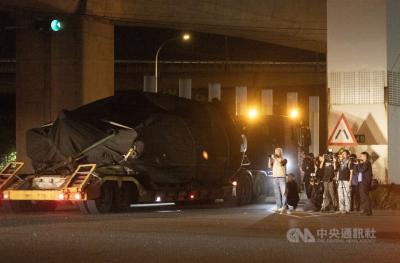
The final batch of 28 M1A2T Abrams tanks purchased from the US arrived at Taipei Port last night and were transported to the Armor Training Command in Hsinchu County’s Hukou Township (湖口), completing the military’s multi-year procurement of 108 of the tanks. Starting at 12:10am today, reporters observed more than a dozen civilian flatbed trailers departing from Taipei Port, each carrying an M1A2T tank covered with black waterproof tarps. Escorted by military vehicles, the convoy traveled via the West Coast Expressway to the Armor Training Command, with police implementing traffic control. The army operates about 1,000 tanks, including CM-11 Brave Tiger
Taiwan Semiconductor Manufacturing Co (TSMC, 台積電), the world’s largest contract chipmaker, said it expects its 2-nanometer (2nm) chip capacity to grow at a compound annual rate of 70 percent from this year to 2028. The projection comes as five fabs begin volume production of 2-nanometer chips this year — two in Hsinchu and three in Kaohsiung — TSMC senior vice president and deputy cochief operating officer Cliff Hou (侯永清) said at the company’s annual technology symposium in Silicon Valley, California, last week. Output in the first year of 2-nanometer production, which began in the fourth quarter of last year, is expected to
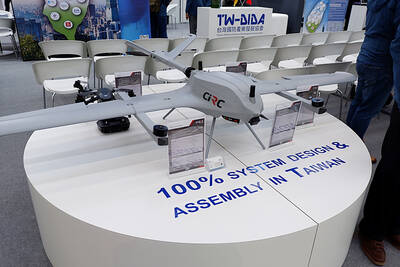
Taiwan’s drone exports surged past US$100 million in the first quarter, exceeding last year’s full-year total, with the Czech Republic emerging as the largest buyer, the Ministry of Economic Affairs said. Exports of complete drones reached US$115.85 million in the period, about 1.2 times the total recorded for all of last year, the ministry said in a report. Exports to the Czech Republic accounted for about US$100 million, far outpacing other markets. Poland, last year’s top destination, recorded about US$11.75 million in the first quarter. Taiwan’s drone exports have expanded rapidly in the past few years, with last year’s total


 RSS
RSS