


A requirement that Taiwanese and residents should provide a negative polymerase chain reaction (PCR) test for COVID-19 to enter Taiwan is to end on Thursday next week, the Central Epidemic Command Center (CECC) said yesterday as it increased the cap for inbound travelers to 40,000 people per week.
“Although the BA.4 and BA.5 Omicron subvariants [of SARS-CoV-2] are highly contagious, they do not lead to a surge in the rate of severe symptoms,” said Minister of Health and Welfare Chen Shih-chung (陳時中), who heads the center. “As such, restrictions on inbound travelers should be eased.”
The purpose of requiring a negative PCR test was to avoid a domestic outbreak caused by people arriving from overseas, which would increase the burden on healthcare providers, Chen added.
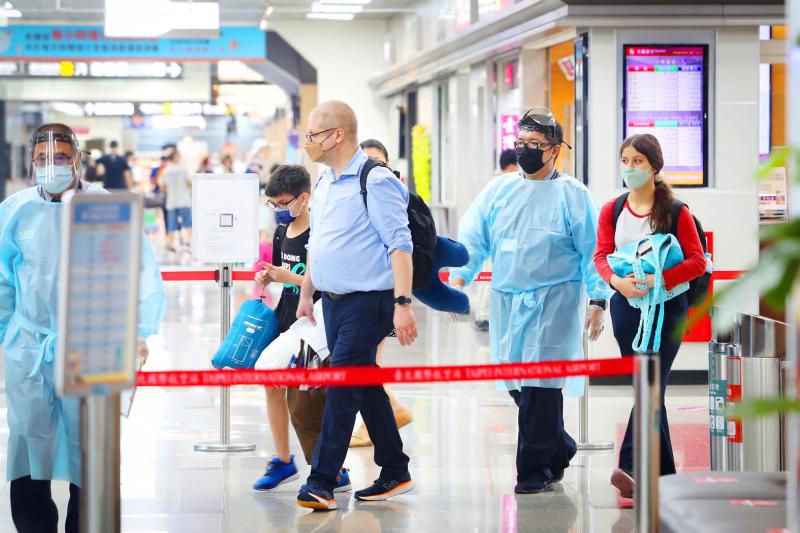
Photo: CNA
However, the government has waived the requirement for Taiwanese, residents and transit passengers for practical reasons, he said.
“Although there has been a significant increase in the number of outbound travelers, most of them are spending only one to two weeks abroad before returning,” he said. “While they are abroad, it might not be easy to locate medical facilities to undergo a PCR test, and other problems arise if they test positive for COVID-19 and are not allowed to board a return flight to Taiwan.”
Despite the end of the PCR test requirement, all travelers returning from abroad must still take a saliva test upon arrival, Chen said.
Civil Aeronautics Administration Director-General Lin Kuo-hsien (林國顯) said that testing capacity would be bolstered.
“We will increase our capacity to process saliva test samples at Taiwan Taoyuan International Airport so that 1, 570 passengers can be tested per hour, which should meet demand during peak arrival hours,” Lin said.
Meanwhile, the weekly cap for arrivals was increased to 40,000 from 25,000.
The number of international arrivals has gradually risen due to the summer break and increased economic activity, Chen said.
“Prior to the enforcement of the policy, we had estimated that COVID-19 cases caused by Omicron subvariants could reach 100,000 to 200,000 per day,” Chen said.
“However, while there was a period in May when more than 90,000 cases were reported per day, the daily count has never exceeded 100,000,” he said. “The development of the domestic COVID-19 outbreak has been consistent with our forecasts.”
Lin said that quarantine hotels can accommodate 41,300 people per week, or 55 percent of inbound travelers.
The rest would quarantine at home based on the “one person per residence” principle, Lin said.
To address cases of people contracting the virus after picking up family members returning from abroad, the main airports in Taipei, Taoyuan, Taichung and Kaohsiung have installed electronic scrolling message boards to remind people that they need to observe disease prevention guidelines, he said.
Chen said that excitement might be a factor.
“People might be too excited at seeing family members so they forget that there are risks of contracting the virus by coming in close contact with people returning from pandemic-affected countries,” Chen said, adding that they should observe social distancing guidelines and wear masks.
Asked about quarantine requirements and a possible shift from three days of home quarantine plus four days of self-initiated disease prevention to seven days of self-initiated disease prevention, Chen said that the CECC would “take it one step at a time” over policy changes.
“We understand what people want and would make the best arrangement by closely monitoring the situation,” he said.

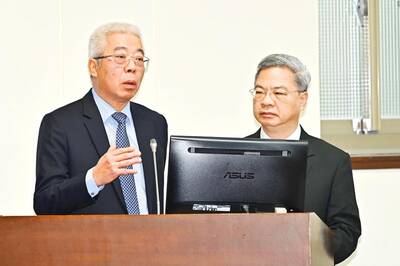
Taiwan has arranged for about 8 million barrels of crude oil, or about one-third of its monthly needs, to be shipped from the Red Sea this month to bypass the Strait of Hormuz and ease domestic supply pressures, CPC Corp, Taiwan (CPC, 台灣中油) said yesterday. The state-run oil company has worked with Middle Eastern suppliers to secure routes other than the Strait of Hormuz, through which about 20 percent of the world’s oil and liquefied natural gas typically passes, CPC chairman Fang Jeng-zen (方振仁) said at a meeting of the legislature’s Economics Committee in Taipei. Suppliers in Saudi Arabia have indicated they
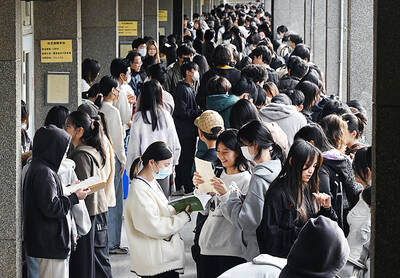
A global survey showed that 60 percent of Taiwanese had attained higher education, second only to Canada, the Ministry of the Interior said. Taiwan easily surpassed the global average of 43 percent and ranked ahead of major economies, including Japan, South Korea and the US, data from the Organisation for Economic Co-operation and Development (OECD) for 2024 showed. Taiwan has a high literacy rate, data released by the ministry showed. As of the end of last year, Taiwan had 20.617 million people aged 15 or older, accounting for 88.5 percent of the total population, with a literacy rate of 99.4 percent, the data

CCP ‘PAWN’? Beijing could use the KMT chairwoman’s visit to signal to the world that many people in Taiwan support the ‘one China’ principle, an academic said Chinese Nationalist Party (KMT) Chairwoman Cheng Li-wun (鄭麗文) yesterday arrived in China for a “peace” mission and potential meeting with Chinese President Xi Jinping (習近平), while a Taiwanese minister detailed the number of Chinese warships currently deployed around the nation. Cheng is visiting at a time of increased Chinese military pressure on Taiwan, as the opposition-dominated Legislative Yuan stalls a government plan for US$40 billion in extra defense spending. Speaking to reporters before going to the airport, Cheng said she was going on a “historic journey for peace,” but added that some people felt uneasy about her trip. “If you truly love Taiwan,

NEW LOW: The council in 2024 based predictions on a pessimistic estimate for the nation’s total fertility rate of 0.84, but last year that rate was 0.69, 17 percent lower An expected National Development Council (NDC) report expects the nation’s population to drop below 12 million by 2065, with the old-age dependency ratio to top 100 percent sooner than 2070, sources said yesterday. The council is slated to release its latest population projections in August, using an ultra-low fertility model, the sources said. The previous report projected that Taiwan’s population would fall to 14.37 million by 2070, but based on a new estimate of the total fertility rate (TFR) — the average number of children born to a woman over her lifetime — the population is expected to reach 12 million by


 RSS
RSS