


People fleeing besieged Mariupol described weeks of bombardments and deprivations as they arrived yesterday in Ukrainian-held territory, where relief workers awaited the first group of civilians freed from a steel plant that is last redoubt of Ukrainian fighters in the devastated port city.
Video posted online on Sunday by Ukrainian forces showed elderly women and mothers with small children climbing over a steep pile of rubble from the sprawling Azovstal steel plant and eventually boarding a bus.
More than 100 civilians from the plant were yesterday expected to arrive in Zaporizhzhia, 230km northwest of Mariupol, Ukrainian President Volodymyr Zelenskiy said.
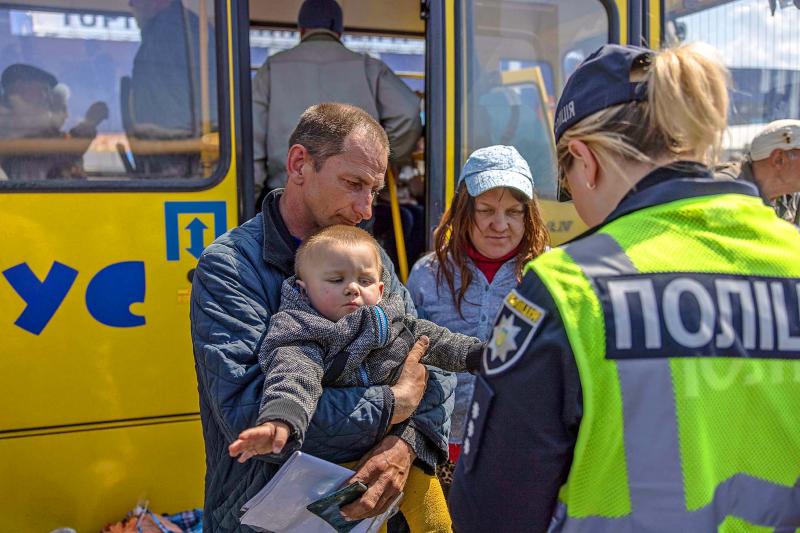
Photo: EPA-EFE
The evacuation, if successful, would represent rare progress in easing the human cost of the war, which has caused particular suffering in Mariupol.
Previous attempts to open safe corridors out of the city on the Sea of Azov and other places have broken down.
“Today, for the first time in all the days of the war, this vitally needed green corridor has started working,” Zelenskiy said on Sunday in a prerecorded address on Telegram.
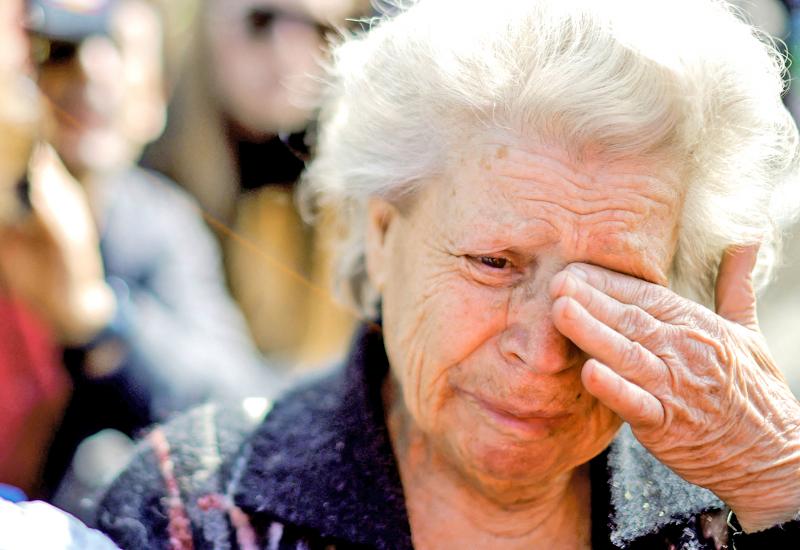
Photo: Reuters
At least some of the people evacuated from the plant were apparently taken to a village controlled by Moscow-backed separatists, although Russian state media reported that they would be allowed to continue on to Ukrainian-held territory if they wanted to.
In the past, Ukrainian officials have accused Moscow’s troops of forcibly relocating civilians from areas they have captured to Russia; Moscow has said the people wanted to go to Russia.
Many people have managed to flee Mariupol under their own steam in the past few weeks, but others have been unable to escape.

OPTIMISTIC: The DGBAS sharply upgraded its GDP growth estimate from 3.54 percent to 7.71 percent after the Taiwan-US trade agreement signing and given AI optimism The US imported more from Taiwan than China for the first time in decades, as US President Donald Trump’s tariffs reshape trade flows while a global boom in artificial intelligence (AI) fuels demand for tech products. US purchases of goods from China plunged almost 44 percent in December last year from 2024 to US$21.1 billion, US Department of Commerce data showed on Thursday. By contrast, shipments from Taiwan more than doubled during the same period to US$24.7 billion. The soaring Taiwanese shipments to the US reflect the huge expansion in supplies of chips and servers for AI companies, which has completely changed
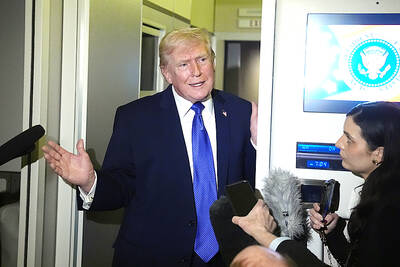
NON-NEGOTIABLE: The US president’s action ran counter to one of the US’ ‘six assurances’ on not consulting China about arms sales to Taiwan, US lawmakers said US President Donald Trump’s admission that he is discussing arms sales to Taiwan with Chinese President Xi Jinping (習近平) is “alarming and a blatant violation of US policy and the six assurances,” US Representative Ro Khanna said on Tuesday. Trump on Monday said he would decide soon on whether to send more weapons to Taiwan, after Xi warned him not to do so. “I’m talking to him about it. We had a good conversation, and we’ll make a determination pretty soon,” Trump told reporters aboard Air Force One when asked about warnings raised by Beijing during a phone call with Xi over
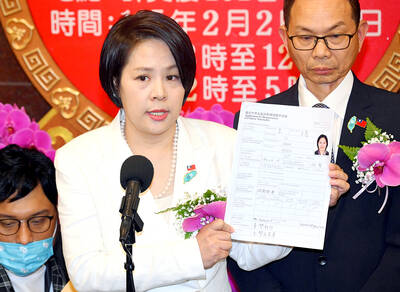
The Central Election Commission has amended election and recall regulations to require elected office candidates to provide proof that they have no Chinese citizenship, a Cabinet report said. The commission on Oct. 29 last year revised the Measures for the Permission of Family-based Residence, Long-term Residence and Settlement of People from the Mainland Area in the Taiwan Area (大陸地區人民在台灣地區依親居留長期居留或定居許可辦法), the Executive Yuan said in a report it submitted to the legislature for review. The revision requires Chinese citizens applying for permanent residency to submit notarial documents showing that they have lost their Chinese household record and have renounced — or have never
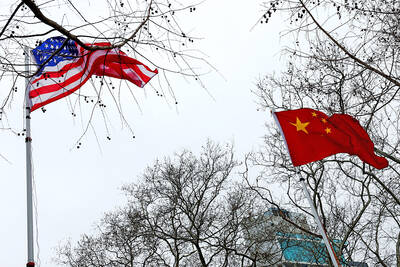
US and Chinese fighter jets briefly faced off above waters near the Korean Peninsula this week, Yonhap News agency reported, marking a rare confrontation in that area between the two superpowers. About 10 US fighter jets on Wednesday departed an airbase in Pyeongtaek, South Korea, for drills above international waters off South Korea’s western coast, the news outlet cited unidentified military sources as saying. While the US planes did not enter China’s air defense identification zone, Beijing scrambled planes as they neared that region, the report said. “The Chinese People’s Liberation Army organized naval and air forces to monitor and effectively respond


 RSS
RSS